Showing posts with label potatoes. Show all posts

Wednesday, October 22, 2014

Beyond Pumpkin: 10 Other Fall Foods to Eat Right Now

Pumpkin gets all of the love when it comes to fall food, but fall flavors go way beyond that beautiful orange squash. Find these fall foods at your farmers market!

Don’t get me wrong. I love pumpkin and pumpkin spice. But you can’t live on pumpkin alone, as much as we all may want to.

Fall is such a bountiful season, and there are tons of delicious, seasonal fall foods that I could have listed below. The foods on this list are in season right now, and they’re some of my favorites to pile onto my plate. Cheers!

10 Fall Foods in Season Now


1. Arugula – Arugula gets a lot of love as a spring green, but you can also often find it at local markets in early fall. Pair bitter arugula with a bright lemon vinaigrette or try it on a sandwich in place of lettuce.


2. Eggplant – Eggplant's subtle and distinctive combination of textures and flavors - smooth, fleshy, creamy, smoky - make it a versatile and beguiling component of many great dishes. Try it in any of these vegan and vegetarian eggplant recipes.


3. Grapes – Grapes are in season now all over the U.S. and will stay in season until about December. See what types of grapes are available at your local market. You can eat them as-is, of course, or use them to make delicious food art.


4. Cabbage – Cabbage is the humblest of the uber healthy cruciferous vegetables. It’s affordable, healthy, and in season right this second! If you’re sick of slaw, try making your own fermented sauerkraut. It’s good on sandwiches, stirred into a bowl of stew, or on top of grain bowls.


5. Pecans – Snatch up those seasonal pecans now! Pecans are lovely stirred into oatmeal or baked in a pie, but you can also use them in recipes like these homemade chocolate energy bars.


6. Carrots – Pumpkins aren’t the only orange fall foods that deserve your attention. Early fall is peak carrot season. If you need a little carrot inspiration, try shredding them into a pan-full of carrot muffins.


7. Brussels Sprouts – People tend to love or hate these tiny cabbages, and I fall squarely onto the love end of the spectrum. Try roasting them up with olive oil and a touch of balsamic vinegar at 425F for about 45 minutes. Stir every 10-15  minutes until they’re soft and a little bit brown.


8. Potatoes – White potatoes don’t get a lot of attention, but I am a big potato fan. They’re filling, affordable, and surprisingly healthy. Bake ‘em, mash ‘em, or cook ‘em into fritters. If you want to replace the egg in that fritter recipe, just whisk 1 tablespoon flax meal into 3 tablespoons of water, and let it sit for about 5 minutes. Boom! Flax egg.


9. Turnips – As root veggies go, turnips don’t get the limelight too often, but I love them. If you’re sick of using turnips in soups and stews, try using them in place of radishes in this recipe. I have done it, and it was amazing.


10. Leeks – Adding sauteed leeks to any recipe somehow makes it instantly special. Leeks are one of those fall foods that seem expensive, but don’t have to be. A little goes a long way, so just grab one or two leeks instead of a whole, pricey bunch. If you need a little bit of help including seasonal leeks in your cooking, try one of these leek recipes.

Tuesday, April 8, 2014

6 Food Myths Debunked

Don't completely ditch fat-free dressings, and feel free to eat some white vegetables.

Nutrition advice comes so fast and furious, sometimes it’s hard to keep track of what’s good and what’s bad for you. And oftentimes when that advice is boiled down to a hard and fast rule, that rule becomes, well, slightly untrue. So TIME asked some nutrition experts to identify the more common food myths we hear, and the truth behind them.

MYTH: Microwaving foods kills nutrients

Microwaving is actually among the more preferable ways of keeping all the good things in foods like vegetables intact. Boiling can leech out valuable vitamins and minerals, but because microwaving heats up food without using a lot of water, it helps foods to stay nutrient-packed.

MYTH: The more grains, the better

While grains are certainly preferable to refined white flour because they contain more fiber and vitamin B, don’t fall into the multigrain trap. Just because a product has multiple different grains doesn’t mean those grains aren’t processed and stripped of many of the good things you want from them. “In processing grains for convenience, you’re potentially losing the nutrients and changing the degree to which they are absorbed,” says Nicolette Pace, spokesperson for the New York State Dietetic Association.

Check the label and look for the word “whole” before any grains listed. And make sure the whole grains are the first thing among the ingredients, which confirms that they make up the most important part of the food.

Another clue is the fiber content. “If you’re seeing than an 11-cracker serving contains 1g of fiber, there’s probably not a lot of whole grain in there,” says Pace.

MYTH: Fat-free salad dressings are healthier

Fruits and vegetables have fat-soluble nutrients that need fat in order to work–like the lycopene in tomatoes, which has been linked to lower cancer and stroke risk. Opting for a fat-free dressing may deprive you of those benefits. Try olive oil-based options instead, or add avocados and nuts, both of which contain healthy fats, to your salad instead.

MYTH: Avoid white vegetables

Nutrition experts advocate for colorful foods – the brighter, and more diverse the rainbow on your plate, the better. And that’s still true; carrots and strawberries are high in beta carotene, an important antioxidant that fights damaging inflammation in cells, and dark green produce is a rich source of antioxidants, fiber, calcium, and vitamins like C and K.

But that doesn’t mean that their white cousins are nutritional failures. In fact, cauliflower, garlic, onions, mushrooms, and, yes, even potatoes are good sources of fiber, antioxidants, and potassium. And while the white potato has become tuber non grata for dieters, adding a moderate amount of potato to your diet won’t derail weight entirely. In fact, because it’s so full of fiber, a little goes a long way toward making you feel full and eating less overall. “It’s something you can use as a vehicle to build a meal,” says McDaniel. “If you add broccoli and little bit of cheese, it can be a satisfying meal for someone trying to lose weight.”

MYTH: Juice cleanses are cleansing

“People think juice cleanses are a good way to detox the body,” says Jennifer McDaniel, spokesperson for the Academy of Nutrition and Dietetics. “But I remind my clients that you have a built-in detox organ, the liver, and it’s very good at what it does.” It probably won’t harm you if you go on a juice cleanse for a day or so, but as a way to lose weight, it’s not such a good idea, since it deprives you of proteins and fats, and may lead to losing muscle.

MYTH: Coffee will only make you thirstier

While the caffeine in coffee is a diuretic, meaning it draws water out of your body, the amount of water in coffee means that overall, it can be a thirst quencher. Water is still your best option to stay hydrated, but don’t avoid coffee if you’re a regular java drinker because you think it dehydrate you.

[via TIME]

Thursday, January 30, 2014

Pesticides and Potatoes: 3rd Grader’s Science Project Convinces Us to Choose Organic


Watch out world, the next generation of organic food activists is getting started young. Meet Elise. She’s here to show you through her 3nd grade science project (put together with the help of her grandmother) that potatoes and sweet potatoes may look healthy, but if they’re not organic, they could be doused with a scary, tumor-causing chemical called bud nip.

Sweet Elise did an experiment to see how long it would take a sweet potato to sprout in water. She just couldn’t wait for her tater to grow vines, but after waiting three weeks with one sweet potato and another three weeks with another sweet potato, she saw zero growth. When she asked the produce man at the grocery store why her sweet potato was sprout-free, she was informed that these conventional sweet potatoes will never grow vines because of the use of the chemical bud nip.

Bud nip, also called chlorpropham, is a sprout inhibitor that’s applied a month after harvest. Bud nip is not allowed in organic farming, which is obvious from the other two sprout-friendly sweet potatoes she uses later on in the video. It’s definitely not something that you want on your fruits and vegetables because it gets into the meat of the crop as well. And it can poison laboratory animals by causing inflammation of the stomach and intestinal bleeding. Long term exposure can also cause tumors. Bud nip can be found on potatoes, kale, peaches, broccoli and other common fruits and vegetables. Though from my research, it isn’t used on sweet potatoes commonly like it is potatoes.

Watch the video:


Tuesday, January 7, 2014

White Asparagus & Blue Potatoes: Veggie Color Variations Explained

What's going on with that freaky white asparagus and neon-purple cauliflower? Believe it or not, this is creative agriculture at work — and thankfully doesn’t have anything to do with genetic modifications or additives. We investigated the science behind these natural phenomena, examining just how much the various color varieties differ in the way they’re farmed, their nutrition and their taste.

Purple and Blue Potatoes


You know those awesome bright blue potato chips Jet Blue serves on its flights? The Terra Chip company uses potatoes that really start out that blue. The vibrant color you see in purple and blue potatoes is due to healthy pigments known as carotenoids and flavonoids, which are associated with a reduced risk of cancer and a lower mortality rate from numerous diseases.

While all potatoes are nutritious — they’re a good source of complex carbohydrates, potassium, vitamin C, folic acid and iron — the more colorful ones contain the highest amount of carotenoids and flavonoids. Those blue Terra chips get their cool color from the flavonoids in particular.  According to Whole Foods, the darker the starchy yellow flesh of the yellow potato, the greater quantity of carotenoids, including beta-carotene — and in some cases, lutein.

White Asparagus


You may have noticed ghost-white stalks of asparagus at the market before. It looks exactly the same as its green counterpart but for the color — and nutritionally, they’re very similar. Though studies have shown white asparagus may contain fewer antioxidants than green, both kinds are a very good source of protein, vitamins A and C, folate and potassium.

White asparagus gets its color — or lack thereof — from the strange way it’s grown: It’s covered with mulch and plastic to block out all sunlight, so photosynthesis never occurs and the crop’s chlorophyll pigment never absorbs enough sunlight to turn it green.

While the taste of these two asparagus varieties is comparable, white asparagus has a slightly more delicate flavor, with thicker, bitter skin. 

Orange and Purple Cauliflower


Cauliflower breeders fairly recently discovered a way to drastically alter the color of the vegetable without genetically modifying it. It took decades, but they used traditional selective breeding to produce the unusually bright orange and purple varieties you’ve probably seen in stores.

Orange and purple cauliflower generally taste the same as white, but the different varieties vary in nutrients. Part of the reason orange cauliflower is orange is because it contains a high concentration of beta-carotene, a form of vitamin A contained in carrots, pumpkins and sweet potatoes that promotes healthy skin. In fact, the orange variety contains 25 times the amount of beta-carotene found in the normal white variety. 

Colorful Heirloom Tomatoes


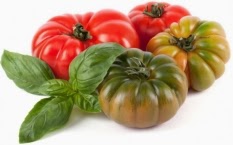
If you’ve ever been to a farmers market, you’ve noticed that heirloom tomatoes barely resemble the ones you see in the grocery — they’re odd shapes and sizes, and they come in a range of colors. As you may have guessed, this is because the mass food industry realized that consumers prefer “pretty,” so they’ve altered their tomatoes to look as perfectly round and as intensely red as possible.

In order to produce tomatoes with that bright red color, tomato breeders bred them with a specific gene — unfortunately, this gene also diminishes flavor and results in tomatoes’ lower concentrations of carotenoids.

This is yet another reason — in addition to low cost, organic produce and helping local farmers — to go to the farmers market. Heirloom tomatoes might not look as perfect, but they offer more flavor and health benefits. 

Green, Red, Orange & Yellow Bell Peppers


We always want to grab the beautiful red, orange and yellow bell peppers when shopping for dinner ingredients, but we so often end up with green bell peppers because of the price. It turns out there’s a very logical reason green bell peppers are cheaper than their colorful counterparts: They don’t take as long to grow.

The reason bell peppers come in different colors is because they’re harvested at different times, according to Whole Foods. Green peppers are plucked from the plant before they’re fully ripe. If left on the plant, they usually change to yellow-orange and then red.

This also explains the slight difference in taste. Because the pepper’s sugar content increases at the fruit ripens on the plant, the green varieties are the least sweet and have a sharper, almost bitter, taste.

All four colors have their own nutritional benefits: Green peppers are packed with chlorophyll; yellow peppers contain plenty of lutein and zeaxanthin carotenoids; orange peppers offer alpha-, beta- and gamm-carotene; and red peppers provide lycopene and astaxanthin (two other carotenoids).

[via Hella Wella]

Thursday, July 18, 2013

7 Foods You Should Always Avoid


Clean eating means choosing fruits, vegetables, and meats that are raised, grown, and sold with minimal processing.

Often they're organic, and rarely (if ever) should they contain additives. But in some cases, the methods of today's food producers are neither clean nor sustainable. The result is damage to our health, the environment, or both. So we decided to take a fresh look at food through the eyes of the people who spend their lives uncovering what's safe—or not—to eat. We asked them a simple question: "What foods do you avoid?" Their answers don't necessarily make up a "banned foods" list. But reaching for the suggested alternatives might bring you better health—and peace of mind.

1. Canned Tomatoes

Fredrick Vom Saal, PhD, an endocrinologist at the University of Missouri who studies bisphenol-A, gives us the scoop:

The problem: The resin linings of tin cans contain bisphenol-A, a synthetic estrogen that has been linked to ailments ranging from reproductive problems to heart disease, diabetes, and obesity. Unfortunately, acidity (a prominent characteristic of tomatoes) causes BPA to leach into your food. Studies show that the BPA in most people's body exceeds the amount that suppresses sperm production or causes chromosomal damage to the eggs of animals. "You can get 50 mcg of BPA per liter out of a tomato can, and that's a level that is going to impact people, particularly the young," says vom Saal. "I won't go near canned tomatoes."

The solution: Choose tomatoes in glass bottles (which do not need resin linings), such as the brands Bionaturae and Coluccio. You can also get several types in Tetra Pak boxes, like Trader Joe's and Pomi.

Budget tip: If your recipe allows, substitute bottled pasta sauce for canned tomatoes. Look for pasta sauces with low sodium and few added ingredients, or you may have to adjust the recipe.


2. Corn-Fed Beef

Joel Salatin, co-owner of Polyface Farms and author of half a dozen books on sustainable farming, gives us the scoop:

The problem: Cattle evolved to eat grass, not grains. But farmers today feed their animals corn and soybeans, which fatten up the animals faster for slaughter. But more money for cattle farmers (and lower prices at the grocery store) means a lot less nutrition for us. A recent comprehensive study conducted by the USDA and researchers from Clemson University found that compared with corn-fed beef, grass-fed beef is higher in beta-carotene, vitamin E, omega-3s, conjugated linoleic acid (CLA), calcium, magnesium, and potassium; lower in inflammatory omega-6s; and lower in saturated fats that have been linked to heart disease. "We need to respect the fact that cows are herbivores, and that does not mean feeding them corn and chicken manure," says Salatin.

The solution:
Buy grass-fed beef, which can be found at specialty grocers, farmers' markets, and nationally at Whole Foods. It's usually labeled because it demands a premium, but if you don't see it, ask your butcher.

Budget tip:
Cuts on the bone are cheaper because processors charge extra for deboning. You can also buy direct from a local farmer, which can be as cheap as $5 per pound. To find a farmer near you, search allorganiclinks.com.

3. Microwave Popcorn

Olga Naidenko, PhD, a senior scientist for the Environmental Working Group, gives us the scoop:

The problem:
Chemicals, including perfluorooctanoic acid (PFOA), in the lining of the bag, are part of a class of compounds that may be linked to infertility in humans, according to a recent study from UCLA. In animal testing, the chemicals cause liver, testicular, and pancreatic cancer. Studies show that microwaving causes the chemicals to vaporize—and migrate into your popcorn. "They stay in your body for years and accumulate there," says Naidenko, which is why researchers worry that levels in humans could approach the amounts causing cancers in laboratory animals. DuPont and other manufacturers have promised to phase out PFOA by 2015 under a voluntary EPA plan, but millions of bags of popcorn will be sold between now and then.

The solution: Pop natural kernels the old-fashioned way: in a skillet. For flavorings, you can add real butter or dried seasonings, such as dillweed, vegetable flakes, or soup mix.

Budget tip: Popping your own popcorn is dirt cheap.

4. Non-Organic Potatoes

Jeffrey Moyer, chair of the National Organic Standards Board, gives us the scoop:

The problem:
Root vegetables absorb herbicides, pesticides, and fungicides that wind up in soil. In the case of potatoes—the nation's most popular vegetable—they're treated with fungicides during the growing season, then sprayed with herbicides to kill off the fibrous vines before harvesting. After they're dug up, the potatoes are treated yet again to prevent them from sprouting. " Try this experiment: Buy a conventional potato in a store, and try to get it to sprout. It won't," says Moyer, who is also farm director of the Rodale Institute (also owned by Rodale Inc., the publisher of Prevention). "I've talked with potato growers who say point-blank they would never eat the potatoes they sell. They have separate plots where they grow potatoes for themselves without all the chemicals."

The solution: Buy organic potatoes. Washing isn't good enough if you're trying to remove chemicals that have been absorbed into the flesh.

Budget tip: Organic potatoes are only $1 to $2 a pound, slightly more expensive than conventional spuds.

5. Farmed Salmon

David Carpenter, MD, director of the Institute for Health and the Environment at the University at Albany and publisher of a major study in the journal Science on contamination in fish, gives us the scoop:

The problem:
Nature didn't intend for salmon to be crammed into pens and fed soy, poultry litter, and hydrolyzed chicken feathers. As a result, farmed salmon is lower in vitamin D and higher in contaminants, including carcinogens, PCBs, brominated flame retardants, and pesticides such as dioxin and DDT. According to Carpenter, the most contaminated fish come from Northern Europe, which can be found on American menus. "You could eat one of these salmon dinners every 5 months without increasing your risk of cancer," says Carpenter, whose 2004 fish contamination study got broad media attention. "It's that bad." Preliminary science has also linked DDT to diabetes and obesity, but some nutritionists believe the benefits of omega-3s outweigh the risks. There is also concern about the high level of antibiotics and pesticides used to treat these fish. When you eat farmed salmon, you get dosed with the same drugs and chemicals.

The solution:
Switch to wild-caught Alaska salmon. If the package says fresh Atlantic, it's farmed. There are no commercial fisheries left for wild Atlantic salmon.

Budget tip: Canned salmon, almost exclusively from wild catch, can be found for as little as $3 a can.

6. Milk Produced with Artificial Hormones

Rick North, project director of the Campaign for Safe Food at the Oregon Physicians for Social Responsibility and former CEO of the Oregon division of the American Cancer Society, gives us the scoop:

The problem: Milk producers treat their dairy cattle with recombinant bovine growth hormone (rBGH or rBST, as it is also known) to boost milk production. But rBGH also increases udder infections and even pus in the milk. It also leads to higher levels of a hormone called insulin-like growth factor in milk. In people, high levels of IGF-1 may contribute to breast, prostate, and colon cancers. "When the government approved rBGH, it was thought that IGF-1 from milk would be broken down in the human digestive tract," says North. As it turns out, the casein in milk protects most of it, according to several independent studies. "There's not 100% proof that this is increasing cancer in humans," admits North. "However, it's banned in most industrialized countries."

The solution: Check labels for rBGH-free, rBST-free, produced without artificial hormones, or organic milk. These phrases indicate rBGH-free products.

Budget tip: Try your grocer's private label, but make sure it does not use rBGH.

7. Conventional Apples

Mark Kastel, former executive for agribusiness and codirector of the Cornucopia Institute, a farm-policy research group that supports organic foods, gives us the scoop:

The problem: If fall fruits held a "most doused in pesticides contest," apples would win. Why? They are individually grafted (descended from a single tree) so that each variety maintains its distinctive flavor. As such, apples don't develop resistance to pests and are sprayed frequently. The industry maintains that these residues are not harmful. But Kastel counters that it's just common sense to minimize exposure by avoiding the most doused produce, like apples. "Farm workers have higher rates of many cancers," he says. And increasing numbers of studies are starting to link a higher body burden of pesticides (from all sources) with Parkinson's disease.

The solution: Buy organic apples.

Budget tip: If you can't afford organic, be sure to wash and peel them. But Kastel personally refuses to compromise. "I would rather see the trade-off being that I don't buy that expensive electronic gadget," he says. "Just a few of these decisions will accommodate an organic diet for a family."

[via Prevention]

Friday, March 1, 2013

16 Foods That Will Re-Grow from Kitchen Scraps


By Andy Whiteley, Co- Founder of Wake Up World

Looking for a healthy way to get more from your garden? Like to know your food is free of the pesticides and other nasties that are often sprayed on commercial crops? Re-growing food from your kitchen scraps is a good way to do it!
There’s nothing like eating your own homegrown veggies, and there are heaps of different foods that will re- grow from the scrap pieces that you’d normally throw out or put into your compost bin.
It’s fun. And very simple…if you know how to do it.
Just remember…the quality of the “parent” vegetable scrap will help to determine the quality of the re-growth. So, wherever possible, I recommend buying local organic produce, so you know your re-grown plants are fresh, healthy and free of chemical and genetic meddling.

Leeks, Scallions, Spring Onions and Fennel

You can either use the white root end of a vegetable that you have already cut, or buy a handful of new vegetables to use specifically for growing.
Simply place the white root end in a glass jar with a little water, and leave it in a sunny position. I keep mine in the kitchen window. The green leafy part of the plant will continue to shoot. When it’s time to cook, just snip off what you need from the green growth and leave the white root end in water to keep growing. Freshen up the water each week or so, and you’ll never have to buy them again.

Lemongrass

Lemongrass grows just like any other grass. To propagate it, place the root end (after you’ve cut the rest off) in a glass jar with a little water, and leave it in a sunny position.
Within a week or so, new growth will start to appear. Transplant your lemongrass into a pot and leave it in a sunny outdoor position. You can harvest your lemongrass when the stalks reach around a foot tall – just cut off what you need and leave the plant to keep growing.

Celery, Bok Choi, Romaine Lettuce & Cabbage

Similar to leeks, these vegetables will re-grow from the white root end. Cut the stalks off as you normally would, and place the root end in a shallow bowl of water – enough to cover the roots but not the top of your cutting. Place it in a sunny window position, occasionally spraying your cutting with water to keep the top moist.
After a few days, you should start to see roots and new leaves appear. After a week or so, transplant it into soil with just the leaves showing above the level of the soil. The plant will continue to grow, and within a few weeks it will sprout a whole new head.
Alternatively you can plant your cutting directly into soil (without starting the process in water) but you will need to keep the soil very moist for the first week until the new shoots start to appear.

Ginger

Ginger is very easy to re-grow. Simply plant a spare piece of ginger rhizome (the thick knobbly bit you cook with) in potting soil with the newest (ie. smallest) buds facing upward. Ginger enjoys filtered, not direct, sunlight in a warm moist environment.
Before long it will start to grow new shoots and roots. Once the plant is established and you’re ready to harvest, pull up the whole plant, roots and all. Remove a piece of the rhizome, and re-plant it to repeat the process.
Ginger also makes a very attractive house-plant, so if you don’t use a lot of ginger in your cooking you can still enjoy the lovely plant between harvests.

Potatoes

Re-growing potatoes is a great way to avoid waste, as you can re-grow potatoes from any old potato that has ‘eyes’ growing on it. Pick a potato that has robust eyes, and cut it into pieces around 2 inches square, ensuring each piece has at least one or two eyes. Leave the cut pieces to sit at room temperature for a day or two, which allows the cut areas to dry and callous over. This prevents the potato piece from rotting after you plant it, ensuring that the new shoots get the maximum nutrition from each potato piece.
Potato plants enjoy a high-nutrient environment, so it is best to turn compost through your soil before you plant them. Plant your potato pieces around 8 inches deep with the eye facing upward, and cover it with around 4 inches of soil, leaving the other 4 inches empty. As your plant begins to grow and more roots appear, add more soil. If your plant really takes off, mound more soil around the base of the plant to help support its growth.

Garlic

You can re-grow a plant from just a single clove – just plant it, root-end down, in a warm position with plenty of direct sunlight. The garlic will root itself and produce new shoots. Once established, cut back the shoots and the plant will put all its energy into producing a tasty big garlic bulb. And like ginger, you can repeat the process with your new bulb.

Onions

Onions are one of the easiest vegetables to propagate. Just cut off the root end of your onion, leaving a ½ inch of onion on the roots. Place it in a sunny position in your garden and cover the top with soil. Ensure the soil is kept moist. Onions prefer a warm sunny environment, so if you live in a colder climate, keep them in pots and move them indoors during frostier months.
As you use your home-grown onions, keep re-planting the root ends you cut off, and you’ll never need to buy onions again.

Sweet Potatoes

When planted, sweet potato will produce eye-shoots much like a potato. Bury all or part of a sweet potato under a thin layer of soil in a moist sunny location. New shoots will start to appear through the soil in a week or so. Once the shoots reach around four inches in height, remove them and re-plant them, allowing about 12 inches space between each plant. It will take around 4 months for your sweet potatoes to be ready. In the meantime, keep an eye out for slugs… they love sweet potatoes.
To propagate sweet potatoes, it is essential to use an organic source since most commercial growers spray their sweet potatoes to prevent them from shooting.

Mushroom

Mushrooms can be propagated from cuttings, but they’re one of the more difficult vegies to re-grow. They enjoy warm humidity and nutrient-rich soil, but have to compete with other fungus for survival in that environment. Although it is not their preferred climate, cooler environments give mushrooms a better chance of winning the race against other fungi.
Prepare a mix of soil and compost in a pot (not in the ground) so your re-growth is portable and you can control the temperature of your mushroom. I have found most success with a warm filtered light during the day and a cool temperature at night. Just remove the head of the mushroom and plant the stalk in the soil, leaving just the top exposed. In the right conditions, the base will grow a whole new head. (In my experience, you’ll know fairly quickly if your mushroom has taken to the soil as it will either start to grow or start to rot in the first few days).

Pineapple

To re-grow pineapples, you need to remove the green leafy piece at the top and ensure that no fruit remains attached. Either hold the crown firmly by the leaves and twist the stalk out, or you can cut the top off the pineapple and remove the remaining fruit flesh with a knife (otherwise it will rot after planting and may kill your plant). Carefully slice small, horizontal sections from the bottom of the crown until you see root buds (the small circles on the flat base of the stalk). Remove the bottom few layers of leaves leaving about an inch base at the bottom of the stalk.
Plant your pineapple crown in a warm and well drained environment. Water your plant regularly at first, reducing to weekly watering once the plant is established. You will see growth in the first few months but it will take around 2-3 years before you are eating your own home-grown pineapples.

And one for the kids….. ‘Pet’ Carrot Tops!!

I call this a ‘pet’ because the plant that re-grows from planting a carrot top will NOT produce edible carrots, only a new carrot plant. The vegetable itself is a taproot which can’t re-grow once it has been removed from the plant. But it makes an attractive flowering plant for the kitchen, and they’re easy and lots of fun to grow…for kids of all ages!
Cut the top off your carrot, leaving about an inch of vegetable at the root. Stick toothpicks into the sides of the carrot stump and balance it in a glass or jar. Fill the glass with water so that the level reaches the bottom of the cutting. Leave the glass in filtered, not direct, sunlight and ensure water is topped up to keep the bottom of your cutting wet. You’ll see roots sprout in a few days, and you can transplant your ‘pet’ carrot into soil after a week or so.
Your success re-growing lovely fresh vegies from scrap may vary, depending on your climate, the season, soil quality and sunlight available in your home or garden. And some vegies just propagate easier than others do. In my experience, a bit of trial and error is required, so don’t be afraid to do some experimenting. Get your hands dirty. It’s lots of fun! And there’s nothing like eating your own home-grown veggies.