Showing posts with label tomatoes. Show all posts

Wednesday, November 11, 2015

How to Correctly Plant Tomatoes to Get 5–8ft Plants

How do we plant a tomato, you might ask?  With a ridiculous amount of stuff in the hole, is the answer.  When someone ropes me into telling them and I start the long answer, I eventually see their eyes glaze over.  That’s the point where I say, “Then you throw in the kitchen sink and cover it all up.”  To date, no one has laughed at that joke. I think they’re just either too overwhelmed by the real stuff we put in there, or they actually believe we’re throwing in a sink.

This is how we plant a tomato.  First off, let’s take a look at our sexy specimen here on the left.

We started this beauty in our heated greenhouse in late January. We potted it up to a gallon container about 3 or 4 weeks ago.  It will go into one of our freshly prepared beds, shown to the right.

The tomatoes are placed three feet apart. I’ve learned over the years that spacing them closer than that means less fruit.  We dig a nice deep hole to accommodate all the additions – the exact depth is dependent upon how tall the seedling is that you start with.  We want the plant to be almost completely submerged into the soil, and the fish head and amendments put into the hole need to be covered with a bit of soil, so we plan accordingly for the depth.  This particular hole ends up being almost two feet deep, and is ready for our first goody, these impressive fish heads.


We get them from the restaurant we grow for, Manresa.  You might be able to get them free from a good butcher or fishmonger.  I even know of someone who called a few restaurants in their area and was quickly rewarded with a nice bounty of juicy fish heads.  Fish tails, spines, guts, as well as shrimp, crab, or lobster shells are all good as well.  Some of you may worry about critters digging these up later.  We’ve never had a problem with animals digging up my tomatoes, and we’ve got three dogs, two cats, and what seem like an endless supply of raccoons living on the property.  I stress the point that this is the first thing that goes into our very deep planting hole.  That may help keep it from getting dug up.  You can see the six inch long fish head staring up at us from the bottom of the hole here.


If you’re reticent to put the fish head in the hole, or simply can’t get your mitts on any, we recommend using fish meal as a substitute. Two handfuls is about right. We get ours from Gardner & Bloome.

The next thing that goes into the hole are a couple of aspirin tablets and some crushed chicken egg shells. The aspirin is to help jump start the plant’s immune system.  You can read more about that science here.  We’ll put three or four crushed egg shells into the hole as well. You can see our three colors of eggs from our fancy chickens – yes, those are green eggs in there. The eggs supply a nice calcium boost, which will help prevent blossom end rot, that nasty brown patch on the bottom of tomatoes that lack calcium (the fish head bones and bone meal also help with that).


Bone meal is the next to go into the hole.  We put in a heaping handful of bone meal.  This is a nice organic phosphorus source, which is essential for blossom production.  More blossoms, more fruit.  Bone meal also increases calcium availability for the tomato. This is also a Gardner & Bloome product.

We then put in two handfuls of Gardner & Bloome’s Tomato, Vegetable and Herb Fertilizer. It’s an all-purpose  organic fertilizer that contains the essential macronutrients of nitrogen, phosphorus and potassiun. Their mix is a very nice 4-6-3 of those nutrients.

We also recommend putting a handful of pure worm castings in the bottom of the hole.  We amend our beds with worm castings and we also spray a worm casting tea on the plants while they grow.  Really great stuff.  Worm castings are available for sale at our tomato plant sale.

The hole is complete (sans kitchen sink) and we’re now ready to pop in the tomato plant.  We trim off the lower leaves, be there one, two, three or more, leaving only the top-most leaves.

We put an inch or two of soil on top of the amendments in the hole.  The plant is eased out of the pot, and before it’s placed in the hole, I sprinkle a third of a cup or more on the rootball with a product called Xtreme Gardening’s Mykos, which is a mycorrhizal fungi that attaches to the roots, growing as the root ball grows.  It protects the plant from some diseases, such as verticillium and fusarium wilts.  If there are any “silver bullets” here, it is this healthy addition of mycorrhizal fungi.

Once the tomato is in the hole, we double check the depth by judging how far out of the ground the plant will be sticking.


If it’s going to be too far down, we’ll remove the plant and add some more soil.  If it looks like it’ll be up above the soil more than we want, that’s too bad because we ain’t gonna be fishing them fish parts and all that other stuff up out of that hole and digging it deeper.  No siree.  So we try our best to gauge the depth of the hole according to the height of the plant we’re putting in.

We then back fill GENTLY – only one quasi-firm push settles the soil around the plant.


Please do not man-handle the soil around the plant by stomping on it or pressing too hard.  That’s not necessary and it expels all the air out of the soil.  Believe it or not, the roots need oxygen down there just as much as they need nutrients and water.


A temporary well is then made around the plant base to catch the first watering. The first watering is the most critical.  We do it multiple times.  Water it in once, twice, three times at least.  Wait a few minutes to allow the water to drain through.  If you have a deep hole, likely way more than 12 inches deep, you will be amazed at how much water it will take to wet the root ball a foot or more under the ground.  So don’t be stingy with the water the first day. Thereafter, you can back off the watering.  Here’s our finished bed.  You can see the tomatoes are spaced pretty far apart:

Drip irrigation will be repositioned on the bed, and staking and mulching has yet to be done.  In the meantime, please feel free to email us or leave a comment below with any questions.

If you’re still not getting the results you want, then consider taking this Tomato Masters class.

You can find more information all about tomatoes on the World Tomato Society website.

Good luck, folks!

[via RealFarmacy, Grow Better Veggies]

Tuesday, August 19, 2014

The Food Trends to End Summer in Style


This past summer, we've been noshing at and enjoying wine, beer and food festivals in the area. Booze and food just about makes any summer event near perfect. After all, summer is all about great eats against the backdrop of the season's longer days and warmer weather.

With it all about to come to a close with August's end, here are the hot late summer food trends to wrap your summer up in style and kick off fall right when it comes to what you're eating:

1. Peppers -- The pepper has always held a place in the food world, whether it were hot and spicy or crisp and sweet. Cayenne pepper is turning up in everything at the moment from chocolate to beverages and drinks, and just about everything in between. Whole peppers stuffed with everything from cheese to meats are equally as trendy. The great part is this is an easy trend to play with at home -- just add a little cayenne to whatever it is you're eating.

2. Leaf Vegetables in Unexpected Pairings -- Leafy vegetables might seem to be standard and a little bland or plain, but the new way to eat this classic food item is in ways you wouldn't expect. It goes beyond the lettuce wrap to leafy greens paired with everything from pasta to couscous or quinoa. Mustard greens and beet greens are also on trend at the moment -- try them sautéed with a little olive oil as a side to any dish.

3. Root Vegetables at Breakfast
-- The explosion of low carb eating has brought a lot of unexpected vegetables to the breakfast table. Tomatoes on the side has always been a classic, but now roasted or even raw root vegetables are fast making a spectacular appearance.

4. Herbs -- Many herbs are in season during August through early fall, but the trend of using herbs of all kinds has been a big thing in the food and drink world this past year. Sprigs of rosemary, fresh sage, thyme, you name it -- especially in desserts and sweets. It's a savory twist to a lot of classics. Have fun and experiment!

5. Fruit at Dinner -- The appearance of fruits at the dinner table isn't new, but it's certainly making the rounds as a chic menu play. Grilled peaches with meat or fish, persimmon served in a savory sweet sauce over chicken and rice, apples raw or baked into everything from turkey dishes to sandwiches, have been popular.

6. Creative Vegetarian -- The vegan and vegetarian dishes at the moment are incredible -- and rarely signal to being completely free of meat. Long gone are the days of bland and strange tastes and textures! There are so many incredible pairings, creative ideas, and unexpected dishes everywhere. Even meat eaters will crave it! It's particularly popular in cheese alternatives -- cashew cheese is so good, you won't know you're eating something dairy free.

Tuesday, July 8, 2014

6 Vegetables You Can Grow Indoors


Ah, summer. You are the most popular season. You’re the time that everyone spends outside on their porches, watching the sun go down. Which is really the only comfortable time to be outside, since daytime consists of 95% humidity and nighttime is a swarm of mosquitos. As a result, gardening can be a bit of a challenge.

Of course, just because July and August may not be the best time to be outside doesn’t mean you need to give up on your gardening dreams. You may need to do a little bit of prep work, of course, but an indoor garden can turn your home into an oasis in the summer, and a tropical wonderland in winter. If you’d like your indoor garden close to where you’ll be cooking, you’ll need quite a bit of light.

Tomatoes

Pretty much any variety of tomato plant will grow well in a container. Of course, tomatoes are heavy, and they’ll need some support, but you’d have to do a trellis outside as well. Cherry tomatoes will spawn the biggest yield as far as sheer numbers go, and they’re wonderful if you have a few smaller helpers. Children are much more likely to enjoy cherry tomatoes, since they’re just their size. Plus, the weight of the fruit is less likely to break the stems.

Carrots

Root vegetables are surprisingly simple to grow inside. Plus, carrots can be used in almost any recipe, so you don’t have to worry about a surplus. Round carrot varieties or a deep window box will allow you to grow your carrots indoors. Most of the time, it’s easiest to find them as seeds (your local grocery store will probably have them). When grown inside, carrots don’t have much of a season. Therefore, if you harvest one crop, you can simply plant the next batch and expect fresh carrots year-round.

Garlic

Another root, garlic has some huge health benefits. However, it also grows with almost no help. Ever gotten too many garlic cloves and seen them sprout? That’s just from sitting around! Imagine how well they can do with a little soil and water to help them out. By simply planting whole cloves of garlic (instead of adding them to the spaghetti sauce), you can end up with a whole plethora! In order to make it edible, the new garlic cloves will need to be dried and stored. Luckily, all that is easily accomplished in a basement or storage shed.

Salad Greens

The only warning I would give with growing salad greens is to keep an eye on the kind you choose. Some of these lettuces can get pretty big, and unless you have a rabbit, you may find that you’ve planted too much to make use of. Greens also need plenty of space in the pot, so once they begin sprouting, pull out all but the healthiest ones. This will ensure that you have a good crop, and that you don’t end up overcrowding them. Then just lop off what you need for salads!

Mushrooms

Pretty much the only plant that you can water and literally toss in a dark closet, mushrooms are ideal for a beginning, or lazy, gardener. You can buy a bag of compost and some spores, water them, and then toss them in a closet or cupboard somewhere. A few weeks later, they’ll be ready to harvest. Since mushrooms are delicious but deadly to get wrong, this is a much safer option than trying to learn how to gather them on your own.

Herbs

Ok, so herbs aren’t technically a vegetable. However, they are excellent to grow indoors, you can use them year-round, and they’ll make your home smell amazing. Mint is a great one for indoor growing. Outside, mint likes to take over, and your herb garden may easily become a mint problem. Keeping them in pots prevents this.

Oregano, thyme, verbena and rosemary also grow well inside. Individual planter boxes are the best ways to keep them separate, but some varieties will do quite well together. Figure out what you’d most like to have first, then decide how to plant them. Ones that like similar amounts of water and sun (and won’t crowd each other out) are best to combine.

If you’ve decided to start an indoor garden, you’ve chosen one hobby that’s sure to get some attention. There's not many people who have fresh vegetables in the middle of winter, or who manage to bring in the harvest without breaking a sweat. So roll up your sleeves, get the brightest areas of the kitchen set, and start looking forward to fresh produce, and a lower grocery bill.

Tuesday, January 7, 2014

White Asparagus & Blue Potatoes: Veggie Color Variations Explained

What's going on with that freaky white asparagus and neon-purple cauliflower? Believe it or not, this is creative agriculture at work — and thankfully doesn’t have anything to do with genetic modifications or additives. We investigated the science behind these natural phenomena, examining just how much the various color varieties differ in the way they’re farmed, their nutrition and their taste.

Purple and Blue Potatoes


You know those awesome bright blue potato chips Jet Blue serves on its flights? The Terra Chip company uses potatoes that really start out that blue. The vibrant color you see in purple and blue potatoes is due to healthy pigments known as carotenoids and flavonoids, which are associated with a reduced risk of cancer and a lower mortality rate from numerous diseases.

While all potatoes are nutritious — they’re a good source of complex carbohydrates, potassium, vitamin C, folic acid and iron — the more colorful ones contain the highest amount of carotenoids and flavonoids. Those blue Terra chips get their cool color from the flavonoids in particular.  According to Whole Foods, the darker the starchy yellow flesh of the yellow potato, the greater quantity of carotenoids, including beta-carotene — and in some cases, lutein.

White Asparagus


You may have noticed ghost-white stalks of asparagus at the market before. It looks exactly the same as its green counterpart but for the color — and nutritionally, they’re very similar. Though studies have shown white asparagus may contain fewer antioxidants than green, both kinds are a very good source of protein, vitamins A and C, folate and potassium.

White asparagus gets its color — or lack thereof — from the strange way it’s grown: It’s covered with mulch and plastic to block out all sunlight, so photosynthesis never occurs and the crop’s chlorophyll pigment never absorbs enough sunlight to turn it green.

While the taste of these two asparagus varieties is comparable, white asparagus has a slightly more delicate flavor, with thicker, bitter skin. 

Orange and Purple Cauliflower


Cauliflower breeders fairly recently discovered a way to drastically alter the color of the vegetable without genetically modifying it. It took decades, but they used traditional selective breeding to produce the unusually bright orange and purple varieties you’ve probably seen in stores.

Orange and purple cauliflower generally taste the same as white, but the different varieties vary in nutrients. Part of the reason orange cauliflower is orange is because it contains a high concentration of beta-carotene, a form of vitamin A contained in carrots, pumpkins and sweet potatoes that promotes healthy skin. In fact, the orange variety contains 25 times the amount of beta-carotene found in the normal white variety. 

Colorful Heirloom Tomatoes


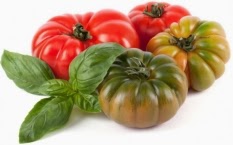
If you’ve ever been to a farmers market, you’ve noticed that heirloom tomatoes barely resemble the ones you see in the grocery — they’re odd shapes and sizes, and they come in a range of colors. As you may have guessed, this is because the mass food industry realized that consumers prefer “pretty,” so they’ve altered their tomatoes to look as perfectly round and as intensely red as possible.

In order to produce tomatoes with that bright red color, tomato breeders bred them with a specific gene — unfortunately, this gene also diminishes flavor and results in tomatoes’ lower concentrations of carotenoids.

This is yet another reason — in addition to low cost, organic produce and helping local farmers — to go to the farmers market. Heirloom tomatoes might not look as perfect, but they offer more flavor and health benefits. 

Green, Red, Orange & Yellow Bell Peppers


We always want to grab the beautiful red, orange and yellow bell peppers when shopping for dinner ingredients, but we so often end up with green bell peppers because of the price. It turns out there’s a very logical reason green bell peppers are cheaper than their colorful counterparts: They don’t take as long to grow.

The reason bell peppers come in different colors is because they’re harvested at different times, according to Whole Foods. Green peppers are plucked from the plant before they’re fully ripe. If left on the plant, they usually change to yellow-orange and then red.

This also explains the slight difference in taste. Because the pepper’s sugar content increases at the fruit ripens on the plant, the green varieties are the least sweet and have a sharper, almost bitter, taste.

All four colors have their own nutritional benefits: Green peppers are packed with chlorophyll; yellow peppers contain plenty of lutein and zeaxanthin carotenoids; orange peppers offer alpha-, beta- and gamm-carotene; and red peppers provide lycopene and astaxanthin (two other carotenoids).

[via Hella Wella]

Thursday, March 14, 2013

Smaller But Better! Organic Tomatoes Pack More Nutritional Punch


Research results yield further proof that organic produce is endowed with enhanced nutritional properties.

Organic tomatoes are 40 percent smaller in size and mass than their conventional cousins, but they pack in more nutritional compounds such as Vitamin C, lycopene and other phenolics, a new study has found.

Researchers published their findings Wednesday in the journal PLOS ONE advising conventional fruit and vegetable farmers that if they want better quality tomatoes with higher concentrations of nutritious chemical compounds, they should follow the organic way and stop "systematically" trying to maximize yields by using pesticides and other chemicals to treat diseases, fight pesticides, and battle other environmental stresses.

The report said environmental factors represent a "powerful lever to increase the concentrations in phytochemicals."

The study referenced previous research that shows supplementing a diet with processed tomato products, containing the phytochemical lycopene, has shown to lower biomarkers of oxidative stress and carcinogenesis in healthy and type II diabetic patients, and prostate cancer patients, respectively.

The federal ban on powerful pesticides common in conventional farming systems means organic tomato plants have to work harder to withstand the insects and mites, as well as other eco-factors like drought, nutrient deficiency and damage from the cold and wind.

These "stressing" conditions shorten the developmental period for organic tomatoes, producing lower size and mass, but accelerate ripening, producing more nutritional compounds.

The researchers studies organic and conventional crops grown in Brazil. The organic farm used a compost of animal manure, legume cocktail and sugar cane bagasse incorporated into soil just before sowing.

In the conventional system, the pesticide FASTAC100 was applied when needed and inorganic fertilizer was used as recommended to control stress and maximize yield.

The study pointed out existing research demonstrating that fruits and vegetables from organic farming generally are endowed with enhanced nutritional properties.

A recent comparative study from UC Davis showed that organic tomato juice has a higher phenolic content and hydrophilic antioxidant activity when compared to conventional tomato juice.

Another previous study showed organic strawberries had higher antioxidant concentrations and the ability to inhibit the proliferation of human colon and breast cancer cells more effectively than conventional ones.