Showing posts with label asparagus. Show all posts

Tuesday, January 7, 2014

White Asparagus & Blue Potatoes: Veggie Color Variations Explained

What's going on with that freaky white asparagus and neon-purple cauliflower? Believe it or not, this is creative agriculture at work — and thankfully doesn’t have anything to do with genetic modifications or additives. We investigated the science behind these natural phenomena, examining just how much the various color varieties differ in the way they’re farmed, their nutrition and their taste.

Purple and Blue Potatoes


You know those awesome bright blue potato chips Jet Blue serves on its flights? The Terra Chip company uses potatoes that really start out that blue. The vibrant color you see in purple and blue potatoes is due to healthy pigments known as carotenoids and flavonoids, which are associated with a reduced risk of cancer and a lower mortality rate from numerous diseases.

While all potatoes are nutritious — they’re a good source of complex carbohydrates, potassium, vitamin C, folic acid and iron — the more colorful ones contain the highest amount of carotenoids and flavonoids. Those blue Terra chips get their cool color from the flavonoids in particular.  According to Whole Foods, the darker the starchy yellow flesh of the yellow potato, the greater quantity of carotenoids, including beta-carotene — and in some cases, lutein.

White Asparagus


You may have noticed ghost-white stalks of asparagus at the market before. It looks exactly the same as its green counterpart but for the color — and nutritionally, they’re very similar. Though studies have shown white asparagus may contain fewer antioxidants than green, both kinds are a very good source of protein, vitamins A and C, folate and potassium.

White asparagus gets its color — or lack thereof — from the strange way it’s grown: It’s covered with mulch and plastic to block out all sunlight, so photosynthesis never occurs and the crop’s chlorophyll pigment never absorbs enough sunlight to turn it green.

While the taste of these two asparagus varieties is comparable, white asparagus has a slightly more delicate flavor, with thicker, bitter skin. 

Orange and Purple Cauliflower


Cauliflower breeders fairly recently discovered a way to drastically alter the color of the vegetable without genetically modifying it. It took decades, but they used traditional selective breeding to produce the unusually bright orange and purple varieties you’ve probably seen in stores.

Orange and purple cauliflower generally taste the same as white, but the different varieties vary in nutrients. Part of the reason orange cauliflower is orange is because it contains a high concentration of beta-carotene, a form of vitamin A contained in carrots, pumpkins and sweet potatoes that promotes healthy skin. In fact, the orange variety contains 25 times the amount of beta-carotene found in the normal white variety. 

Colorful Heirloom Tomatoes
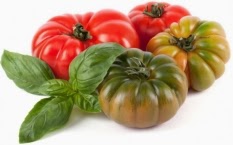


If you’ve ever been to a farmers market, you’ve noticed that heirloom tomatoes barely resemble the ones you see in the grocery — they’re odd shapes and sizes, and they come in a range of colors. As you may have guessed, this is because the mass food industry realized that consumers prefer “pretty,” so they’ve altered their tomatoes to look as perfectly round and as intensely red as possible.

In order to produce tomatoes with that bright red color, tomato breeders bred them with a specific gene — unfortunately, this gene also diminishes flavor and results in tomatoes’ lower concentrations of carotenoids.

This is yet another reason — in addition to low cost, organic produce and helping local farmers — to go to the farmers market. Heirloom tomatoes might not look as perfect, but they offer more flavor and health benefits. 

Green, Red, Orange & Yellow Bell Peppers


We always want to grab the beautiful red, orange and yellow bell peppers when shopping for dinner ingredients, but we so often end up with green bell peppers because of the price. It turns out there’s a very logical reason green bell peppers are cheaper than their colorful counterparts: They don’t take as long to grow.

The reason bell peppers come in different colors is because they’re harvested at different times, according to Whole Foods. Green peppers are plucked from the plant before they’re fully ripe. If left on the plant, they usually change to yellow-orange and then red.

This also explains the slight difference in taste. Because the pepper’s sugar content increases at the fruit ripens on the plant, the green varieties are the least sweet and have a sharper, almost bitter, taste.

All four colors have their own nutritional benefits: Green peppers are packed with chlorophyll; yellow peppers contain plenty of lutein and zeaxanthin carotenoids; orange peppers offer alpha-, beta- and gamm-carotene; and red peppers provide lycopene and astaxanthin (two other carotenoids).

[via Hella Wella]

Wednesday, May 29, 2013

Health Powers of Asparagus


Asparagus found to have anti-cancer properties.

A new study published in the Indian Journal of Pharmacology found asparagus contains certain compounds that have substantial anticancer properties. Researchers tested the compounds, known as shatavarins, on test tubes of human breast, colon and kidney cancer, as well as on mice with breast cancer.
All the results showed that shatavarins had potent toxicity against cancer cells. Extract of asparagus administered orally in doses of 250 and 500 mg/kg body weight for 10 days caused a significant reduction in tumor volume and tumor cell count.

Asparagus may help prevent diabetes.

In addition to the anticancer properties of asparagus, it may have some anti-diabetic properties as well. Researchers at the University of Karachi in Pakistan found that high doses of asparagus extract had a positive effect on insulin output by the pancreas. The findings add to a 2006 study by the British Medical Journal that found the vegetable triggered an 81 percent increase in glucose uptake by body tissues. Therefore, asparagus can help diabetes by stimulating an increased production of insulin, in addition to enabling the body to absorb more glucose.

Asparagus may prevent a hangover.

Those who celebrate the New Year by drinking too much alcohol may prevent a hangover by taking asparagus extract. Chronic drinking can cause detrimental changes in the liver, as well as the unpleasant symptoms of a hangover. Scientists at the Institute of Medical Science and Jeju National University in Korea found the asparagus extracts “significantly alleviated” the cellular toxicity of alcohol, a benefit that translates to lessening of a hangover and protection of liver cells.

Asparagus offers up tremendous cardiovascular benefits.

This vegetable contains a compound called rutin that can help prevent deadly blood clots, which can lead to heart attacks and strokes. Moreover, asparagus is a good food source of folic acid, a nutrient that helps counter the bad effects of homocysteine, an amino acid in the blood linked to increased cardiovascular risk.

Asparagus can help balance out your electrolytes

Adding to the list of impressive health properties are three more benefits. Asparagus is a rich source of potassium, a mineral that regulates fluid balance; so the diuretic effects of asparagus can reduce bloating in the tummy area that sometimes occurs after eating a big meal. The vegetable also has anti-inflammatory and antifungal properties.