Showing posts with label Non-GMO. Show all posts

Monday, January 13, 2014

Organic Trade Association's New CEO on the Future of Organics


In the midst of the frenzy kicked up by Cheerios’ GMO-free announcement, the organic world has been buzzing with its own important news after the Organic Trade Association named longtime industry veteran Laura Batcha to become the association’s CEO and executive director.

Batcha will take the helm of the North American organization at a time when the organic sector is beginning to regain stronger annual growth numbers while continuing to face challenges in promoting, clarifying and differentiating the attributes of the organic seal in relation to the non-GMO, local and natural categories.

Batcha has had her hands in the organic industry for more than 20 years, beginning in 1989 when she worked on an organic farm in Santa Cruz, Calif. Later on, she started her own herbal business and held several leadership positions at Tom’s of Maine before joining the Organic Trade Association six years ago. She began as the association's marketing and public relations director and climbed the ranks to become executive vice president before her most recent promotion.

Batcha said one of the association's top priorities will be continuing to support the National Organic Program and its oversight of the organic seal. That work has recently included pushing for a provision in the upcoming Farm Bill to provide one-time financial assistance to the National Organic Program to update its technology systems.

Marketing the Organic Message

On a broader market-level view, the OTA's industry analysis describes a continued challenge in overcoming consumer confusion over the different benefits of organic food versus natural, non-GMO and local alternatives. Many consumers don't understand that the organic certification prohibits the use of GMOs, for example, the report said.

It's a challenge the OTA is taking on through education and promotional efforts that include advocating for policies that protect the rights of organic producers and handlers to make claims around, for example, the non-GMO guarantee that organics offer. There’s also movement to form an organic checkoff program, a quasi-government structure that allows the industry to self-pool money to fund education, promotion and research to support the industry รก la the Got Milk? campaign.

“It’s a way for the industry to really have a big enough megaphone to communicate that message to the public consistently,” Batcha said. “At any given time, 30 percent of shoppers choosing organic have only been buying organic for less than two years, so our burden for education won’t go away.”

On mounting energy behind national or state-driven GMO labeling efforts, Batcha acknowledged they have the potential to increase competition with the green organic seal. But they also have spurred consumer desire to make more informed choices about their food which is a positive. It’s the job of organics to educate consumers about the additional benefits the organic label brings to the table, she said.

“What we have to do as an organic industry is make sure the consumer understands that it’s not apples to apples. The organic field offers more,” she said.

Taking Organic to the Masses

The increase in shelf space devoted to organic products at mass-market retailers and the growth in private label organic products are both trends Batcha said will likely continue. Eight of twelve private label categories tracked in 2012 experienced double-digit growth that year, according to the OTA's 2013 industry survey. A combination of trust, convenience and price has driven consumers to choose those brands, the report said.

On the international stage, mass-market retailers like Costco are becoming key players in bringing U.S. produce to other countries, Batcha said.

“As long as the trend for the consumer is more organic products, which it will continue to be, more outlets are going to be interested in attracting those shoppers to their stores,” she said. 

Tuesday, January 7, 2014

White Asparagus & Blue Potatoes: Veggie Color Variations Explained

What's going on with that freaky white asparagus and neon-purple cauliflower? Believe it or not, this is creative agriculture at work — and thankfully doesn’t have anything to do with genetic modifications or additives. We investigated the science behind these natural phenomena, examining just how much the various color varieties differ in the way they’re farmed, their nutrition and their taste.

Purple and Blue Potatoes


You know those awesome bright blue potato chips Jet Blue serves on its flights? The Terra Chip company uses potatoes that really start out that blue. The vibrant color you see in purple and blue potatoes is due to healthy pigments known as carotenoids and flavonoids, which are associated with a reduced risk of cancer and a lower mortality rate from numerous diseases.

While all potatoes are nutritious — they’re a good source of complex carbohydrates, potassium, vitamin C, folic acid and iron — the more colorful ones contain the highest amount of carotenoids and flavonoids. Those blue Terra chips get their cool color from the flavonoids in particular.  According to Whole Foods, the darker the starchy yellow flesh of the yellow potato, the greater quantity of carotenoids, including beta-carotene — and in some cases, lutein.

White Asparagus


You may have noticed ghost-white stalks of asparagus at the market before. It looks exactly the same as its green counterpart but for the color — and nutritionally, they’re very similar. Though studies have shown white asparagus may contain fewer antioxidants than green, both kinds are a very good source of protein, vitamins A and C, folate and potassium.

White asparagus gets its color — or lack thereof — from the strange way it’s grown: It’s covered with mulch and plastic to block out all sunlight, so photosynthesis never occurs and the crop’s chlorophyll pigment never absorbs enough sunlight to turn it green.

While the taste of these two asparagus varieties is comparable, white asparagus has a slightly more delicate flavor, with thicker, bitter skin. 

Orange and Purple Cauliflower


Cauliflower breeders fairly recently discovered a way to drastically alter the color of the vegetable without genetically modifying it. It took decades, but they used traditional selective breeding to produce the unusually bright orange and purple varieties you’ve probably seen in stores.

Orange and purple cauliflower generally taste the same as white, but the different varieties vary in nutrients. Part of the reason orange cauliflower is orange is because it contains a high concentration of beta-carotene, a form of vitamin A contained in carrots, pumpkins and sweet potatoes that promotes healthy skin. In fact, the orange variety contains 25 times the amount of beta-carotene found in the normal white variety. 

Colorful Heirloom Tomatoes


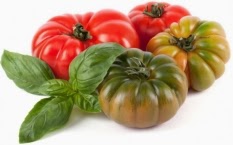
If you’ve ever been to a farmers market, you’ve noticed that heirloom tomatoes barely resemble the ones you see in the grocery — they’re odd shapes and sizes, and they come in a range of colors. As you may have guessed, this is because the mass food industry realized that consumers prefer “pretty,” so they’ve altered their tomatoes to look as perfectly round and as intensely red as possible.

In order to produce tomatoes with that bright red color, tomato breeders bred them with a specific gene — unfortunately, this gene also diminishes flavor and results in tomatoes’ lower concentrations of carotenoids.

This is yet another reason — in addition to low cost, organic produce and helping local farmers — to go to the farmers market. Heirloom tomatoes might not look as perfect, but they offer more flavor and health benefits. 

Green, Red, Orange & Yellow Bell Peppers


We always want to grab the beautiful red, orange and yellow bell peppers when shopping for dinner ingredients, but we so often end up with green bell peppers because of the price. It turns out there’s a very logical reason green bell peppers are cheaper than their colorful counterparts: They don’t take as long to grow.

The reason bell peppers come in different colors is because they’re harvested at different times, according to Whole Foods. Green peppers are plucked from the plant before they’re fully ripe. If left on the plant, they usually change to yellow-orange and then red.

This also explains the slight difference in taste. Because the pepper’s sugar content increases at the fruit ripens on the plant, the green varieties are the least sweet and have a sharper, almost bitter, taste.

All four colors have their own nutritional benefits: Green peppers are packed with chlorophyll; yellow peppers contain plenty of lutein and zeaxanthin carotenoids; orange peppers offer alpha-, beta- and gamm-carotene; and red peppers provide lycopene and astaxanthin (two other carotenoids).

[via Hella Wella]

Thursday, October 31, 2013

The Power of Labeling: Preserving & Building a Non-GMO Food Supply


When California Proposition 37 failed to pass at the polls last November, all of us who advocate for the right to know were profoundly disappointed. However, the measure, which would have mandated labeling of foods containing genetically engineered ingredients, garnered more than 6 million votes, and was actually a great case of "losing forward." Despite outspending of nearly 5 to 1, the initiative lost by just 2 percentage points and attracted a significant amount of national media attention.

Inspired by California's effort, nearly 40 states are now working on mandatory labeling of GMOs (genetically modified organisms). In June, Connecticut and Maine became the first states to pass mandatory GMO labeling -- though in both cases additional states need to pass similar measures in order for the laws to take effect.

This November, voters in Washington State will have a chance to pass I-522, a similar but improved version of the Prop 37 legislation. Since January, organizers in California have been sharing lessons learned with their peers in Washington, giving I-522 a solid foundation for success. As a state with an economy focused on exports--a lot of which go to countries with GMO bans--Washington is uniquely concerned about GMO contamination. With the looming threat of genetically engineered apples, salmon, and wheat--all quintessential Washington crops--even conventional farmers in the state are becoming concerned about the economic impact of GMOs.

The non-GMO movement is, at its core, about the right to know. Because GMOs are unstable and experimental, they are subject to mandatory labeling in more than 60 countries around the world, including Australia, Japan, Russia, China, and all of the European Union. More research is needed to understand the long-term health and environmental implications of genetic engineering, but in the United States that research is essentially being conducted on the public, without consent.

Despite biotechnology industry promises, none of the GMO traits currently on the market offers increased yield, drought tolerance, enhanced nutrition, or any consumer benefit. Meanwhile, a growing body of evidence connecting GMOs to health problems and environmental damage has triggered a massive public backlash.

At the federal level, the Just Label It campaign has collected more than 1.3 million signatures on a Food and Drug Administration (FDA) petition demanding mandatory GMO labeling. Although the FDA has yet to respond, this is more than twice as many signatures as have ever been received on any food petition in the agency's history.

Americans are also voting in record numbers with their wallets. The Non-GMO Project--a nonprofit organization that oversees North America's only third-party non-GMO verification, including ongoing ingredient testing--has quickly seen its label become the fastest growing in the natural products industry. With annual sales of well over $3.5 billion, Non-GMO Project Verified products are now found everywhere from independent food co-ops to big-box retailers.

When the Non-GMO Project was founded in 2007, mandatory labeling efforts had almost completely stalled. In that void, the project's strategy was to leverage the power of the marketplace, using supply and demand principles to preserve and build a non-GMO food supply. When it began, skeptics far outweighed supporters; many said it would be impossible to get a critical mass of food companies to voluntarily adopt such rigorous standards. Six years later, the progress is astonishing. More than 1,000 brands are now enrolled in the Non-GMO Project's Product Verification Program, and more than 14,000 products have successfully earned the verification.

This market demand and the corresponding rekindling of mandatory labeling efforts clearly show Americans are not willing to remain in the dark when it comes to the food we're eating and feeding to our loved ones. The momentum will continue until we have the same right to know about GMOs in our food as our peers around the world.

Wednesday, October 30, 2013

Enjoy Halloween without Frightful GMOs


GMOs are the scariest elements of Halloween, so here are some tips from The Non-GMO Project on how to ward off frightful GMOs this year!

Choose Non-GMO Project Verified Treats for the Trick-or-Treat Basket

  • Nature’s Path Crispy Treats
  • Endangered Species chocolates
  • Bakery on Main granola bars
  • Funky Monkey snacks
  • Simply Fruit
  • HomeFree cookies
  • Yogavive snacks
  • Licious Organics snacks
  • EnviroKids
  • Pro Bar snack bars
  • Pure Organics snacks
  • Righteously Raw bars
  • Tasty Brand snacks
  • Theo Chocolates
  • Bites of Bliss

Non-GMO Treats & Treasures

Halloween is meant to be fun—so get creative as you look for new ways to celebrate with the kids in your life.
  • Stickers
  • Beeswax crayons
  • Non-GMO Project Verified treats
  • Polished rocks
  • Friendship bracelets
  • Coupons
  • Seed packets
  • Homemade playdough

GMOs and Children—What You Need to Know

What are GMOs?

GMOs, or “genetically modified organisms,” are plants or animals created through the gene splicing techniques of biotechnology (also called genetic engineering, or GE). This experimental technology merges DNA from different species, creating unstable combinations of plant, animal, bacterial and viral genes that cannot occur in nature or in traditional crossbreeding.

What foods are GMO?

According to the USDA, in 2009, 93% of soy, 93% of cotton, and 86% of corn grown in the U.S. were GMO. It is estimated that over 90% of canola grown is GMO, and there are also commercially produced GM varieties of sugar beets, squash and Hawaiian Papaya. As a result, it is estimated that GMOs are now present in more than 80% of packaged products in the average U.S. or Canadian grocery store.

Are my children eating GMOs?

The sad truth is many of the foods that are most popular with children contain GMOs. Cereals, snack
bars, snack boxes, cookies, processed lunchmeats, and crackers all contain large amounts of high risk food ingredients. In North America, over 80% of our food contains GMOs. If you are not buying foods that are Non-GMO Project Verified, most likely GMOs are present at breakfast, lunch, and dinner.

Are GMOs safe for my family to eat?

Most developed nations do not consider GMOs to be safe. In nearly 50 countries around the world, including Australia, Japan, and all of the countries in the European Union, there are significant restrictions or outright bans on the production and sale of GMOs. In the U.S., the government has approved GMOs based on studies conducted by the same corporations that created them and profit from their sale.

Beyond Non-GMO: More Tricks for Healthy, Green Treats

Giving away Non-GMO goodies to trick-or-treaters is a great start, but there are other people and planet-friendly choices to consider. When buying Halloween treats and party fare, look for
  • Organic
  • Locally grown/produced
  • No high fructose corn syrup (HFCS)
  • Palm-oil free
  • No artificial colors, flavors or preservatives
In addition, you may wan to consider giving away goodies or serving foods that are peanut-free, gluten-free, dairy free and/or egg fress. These are some of the the most common food allergens and with 1 in 13 kids suffering from food allergies, limiting highly allergic foods is one way to ensure that Haolloween is safe and fun for everyone.

Does your child want to go door-to-door, but you don't want him/her to consume it all? Consider trading candy fro "pumpkin points" good towards a special gift or activity or invite the Sugar Sprite to come. The Sugar Sprite (or Switch Witch) exchanges candy for a special gift! Dentists across the country also take part in Halloween Candy Buy Back Program in which uneaten candy is collected (usually at $1 a pound) and sent overseas to American Troops. Uneaten candy can also be composted (remove wrapper first).


Would GMO Labeling Jack Up Food Prices?


The push to require labels for genetically modified food, which flared up in California before drowning under a flood of industry cash last year, is now underway in Washington state. Predictably, agrichemical and organic interests are pouring money into, respectively, defeating and supporting a ballot initiative called I-522, which would require foods containing GMO ingredients to bear labels. Just as predictably, the agribusiness interests are garnering much more money to kill the effort than their organic peers are in supporting it—outspending them $17.1 million to $4.6 million, the Spokane-Review reported.

Meanwhile, in a development that broke late Wednesday, the Washington state attorney general has filed a complaint alleging that the Grocery Manufacturers Association, a trade group that donated $2 million to the effort to defeat California's labeling initiative, violated state campaign laws and "spent more than $7 million while shielding the identity of its contributors," according to its press release.

As in California, the effect on food prices is emerging as a point of contention. Opponents of labeling, pointing to a 2012 study prepared during the California fight by Northbridge Environmental Management Consultants, say that the new rules would cost consumers $350 to $400 annually per household. The Northbridge paper, though, was funded by the industry-dominated campaign to stop Prop 37, as the California initiative was known. Campaign records show that Northridge received a total of $97,371 in five payments during 2012.

Supporters of the Washington initiative, in turn, point to a rival 2012 study, this one prepared by Joanna M. Shepherd of Emory University School of Law, which found that "food prices [are] likely to remain unchanged for consumers." That study was commissioned by the Alliance for Natural Health, a group that advocates for "the right of natural-health practitioners to practice and the right of consumers to choose the healthcare options they prefer."

So which is right? Over at Grist, Michael Lipsky, a distinguished senior fellow at the progressive think tank Demos, argues that labeling wouldn't likely cost consumers much at all. The cost of changing labels would be trivial, he writes—food manufacturers "do it all the time." Ever seen the words "new and improved" on some boxed delicacy?

The Northbridge study, he shows, is based on the assumption that, in order to avoid having to declare that their products contain GMOs, food manufactures will rapidly switch over to non-GMO ingredients, which would cost more to procure. That's because upwards of 80 percent of US corn, soybeans, and sugar beets are genetically modified—and iterations of these three crops suffuse US processed foods, providing sweeteners (high-fructose corn syrup and beet sugar), fats (corn and soy oil), and a litany of ingredients like various thickeners. For food manufacturers to get non-GMO versions of these substances, they'd have to pay a premium in the marketplace—hence higher ingredient costs that they'd want to pass on to consumers.

But that effect wouldn't last long, Lipsky argues. "If labeling were required, particularly if (and when) the labeling requirement is adopted by other states, demand for non-GMO versions of corn, soybeans, and sugar beets—the basic GMO crops—would increase, production would expand, and prices for non-GMO ingredients would decline," he writes. That makes good sense: basic supply and demand.

And here's something Lipsky didn't get to: Even in the short term, the effect on retail prices would likely be small. That's because ingredients make up a tiny portion of the expenses incurred by manufactures to process food and move it to grocery store shelves. Transportation, marketing, processing—all of these things cost more than the actual food in the box of cereal or frozen dinner at Walmart.

How tiny are the costs of ingredients? Consider a box of corn flakes—which are presumably made largely of GMO corn (it's impossible to know for sure, because no US state requires labeling). In this 2008 report (currently available online because it has been republished on a non-government server) on the effect of ethanol on food prices, a US Department of Agriculture researcher crunched the numbers (pun fully intended) on the how much money companies spend on corn to make your cereal:
[A]n 18-ounce box of corn flakes contains about 12.9 ounces of milled field corn. When field corn is priced at $2.28 per bushel (the 20-year average), the actual value of corn represented in the box of corn flakes is about 3.3 cents.
And what happened after the corn ethanol program pushed corn prices up to $3.49 per bushel—a 49 percent jump? The total cost of corn in the cereal box rose to 4.9 cents. In other words, paying a 49 percent premium pushed up the corn cost in a box of corn flakes a grand total of 1.6 cents. An 18-ounce box of corn flakes contains 18 servings—meaning that much-pricier corn translated to an increase of less than 0.1 cents per bowl. For a family of four that consumes four bowls of flakes every day, that's about $1.46 extra for the year.

So even if manufacturers had to pay a hefty premium for non-GMO corn, the retail price of food would barely budge. Whatever you think about GMO labeling, the concern that it would significantly jack up food prices is probably specious.

Thursday, October 17, 2013

Organic vs. Local Produce: How To Choose, When You Have To


It’s a bourgeois dilemma, to be sure, but it’s one many produce-loving healthy eaters face: If your neighborhood farmer’s market only sells local blueberries grown with pesticides and the organic ones at your grocer have been flown in from Chile, which do you buy? In an ideal world you’d always have access to berries that fulfill both criteria, but that’s not generally the case.

“I dealt with this yesterday with a client,” culinary nutritionist Stefanie Sacks, MS, CNS, CDN, told me as soon as I presented her with the question. “It’s all about learning how to negotiate.”

We spoke with Sacks, along with local-leaning Juice Generation founder Eric Helms, and the health coach Urban Detox Club co-founder Jen Morris for a well-rounded perspective on the many factors to consider, plus easy tips to help you pick:

FACTORS TO CONSIDER

1. Pesticides and nutrients. 

To avoid gross chemicals altogether, organic is definitely the way to go. But small farmers selling roadside cucumbers may also be using less pesticides than a giant industrial operation; they may even be partially organic, but not up to USDA-certification standards. And if you’re buying the veggies through a third party, they may be checking for you. “We take great pains to meet our farmers and ensure that, certified or not, they’re using sustainable methods and following organic best-practices,” says Juice Generation founder Eric Helms, a huge proponent of local sourcing. It’s just hard to know. Local produce is also going to be richer in nutrients, since it’s been picked more recently.

2. Environment and community.

“If you’re trying to be a conscious consumer, local is usually better,” Urban Detox Club’s Jen Morris says. Not only is it way better for the planet, it also means your dollars are going directly to the person growing your food and supporting the local economy.

3. Taste and appearance. 

As anyone who’s ever opened a plastic box to find already limp, wet arugula knows, when it comes to flavor and prettiness on a plate, local wins. “It goes without saying that local produce—produce harvested just the day before it’s delivered to our USDA Certified Organic production facility—retains a vibrancy with which imported products could never compete,” says Helms.

TIPS TO HELP YOU CHOOSE

1. Talk to the farmers. 

“The people at the market are often the ones growing the food,” says Morris. “Ask them what their practices are like.” If they’re using GMO seeds and spraying pesticides like it’s going out of style, you can always politely move on.

2. Use the Dirty Dozen. 

Both Sacks and Morris suggest using EWG’s list of the top 10 most pesticide-laden foods as a guide. For the foods that top the list, make sure you go organic, even if it means you can’t do local. For those that tend to hold on to less residue, like those on the Clean 15 list, stick to local, even if it’s not organic. This is the kind of grocery shopping negotiation that Sacks recommends.

3. Consider the volume. 

“The amount you’re eating matters,” Sacks says. So if you’re eating an apple every day, for example, you’d better buy the organic bag. If you’re just eating a few slices with almond butter once a week, buy the New York State ones that have been sprayed. “If it’s not something you’re eating a lot of, I wouldn’t get yourself too crazy about it.”—Lisa Elaine Held
[via Well + Good]

Tuesday, October 8, 2013

What to Eat When You're Broke

The lower your income is, the more difficult it is to be particular about what you feed your family. 


This probably isn't an earth-shattering revelation to anyone, but if you feel like experimenting, try to buy a week’s worth of healthy food for a family on a budget of, say, $50-75.  Food manufacturers that target lower income shoppers with more affordable products tend to include more GMOs and toxic ingredients in their offerings.

Generally speaking you'll want to avoid:
  • Non-organic dairy because of the hormones and antibiotics as well as the GMO feed given to the animals
  • Non-organic meat because of the hormones and antibiotics as well as the GMO feed given to the animals
  • Anything containing corn, soy, or canola in any form because it is almost certain to be GMO
  • Anything with chemical additives like artificial colors, flavors, or preservatives
  • Anything that is likely to have been doused in pesticides
  • Anything containing neurotoxins like MSG, fluoride, or aspartame (along with other artificial sweeteners)
It is a matter, then, of weighing the pros and cons, and figuring out what things, for you, are the most important, while also deciding which standards can be sacrificed.  These decisions will be different for everyone, based on their personal health concerns, their genetic propensity for certain diseases, and the members of the family for whom they are buying the food.

Sometimes, when you’re looking at someone else’s situation while you are comfortably backed by a loaded pantry, it’s easy to be judgemental and tell them what they “should” do. The thing that we  must all remember is that when times are tough, a person may be down to these two options with a two week grocery budget:
  1. Buy strictly healthy organic foods and feed your family for perhaps 8 out of the 14 days.
  2. Carefully select which standards you will relax to keep the tummies of your family full throughout the wait for the next paycheck.
Very few people are going to choose option one.

Usually, I have an enormous stockpile of non-GMO dried foods and a flourishing garden to serve as a back-up for whatever non-toxic items are being offered at a reasonable price that week.  Because I’ve recently moved and am rebuilding my pantry from the ground up, I have no such stockpile right now. I am at the mercy of the food manufacturers.

When your budget is extremely limited, the normal healthy eating suggestions of shopping only the perimeter of the store or visiting the farmer’s market will not suffice to feed a family.  As much as you may want to dine only on locally grown, fresh organic produce, a $50 farmer’s market spree will only get you through a few days if you are totally reliant on only this food.

The Lesser of the Nutritional Evils

So what is a broke, but health-conscious, shopper to eat?

After strongly considering the list above, it's best not to cut corners on the organic dairy, neurotoxins, or the GMOs.  If you have a growing child, these things are at the top of the toxic pyramid for his/her development.  This isn’t to say that the pesticides aren’t harmful, or the preservatives are not a chemical minefield.  In a perfect world, I’d avoid all of it, and you should too.

If you are in a situation where you have to feed your family and don’t have a lot of money to do it, you need to do your research well before looking at those brightly colored packages with the false promises of nutrition within.  While this list isn’t comprehensive, here are some things to consider about conventional grocery store offerings.

GMOs: Genetically modified foods have not been tested for long-term effects on humans.  There is a great deal of evidence to indicate the GMOs can cause a host of illness.  Peer reviewed studies implicate GMOs in the development of grotesque tumors, premature death, organ failure, gastric lesions, liver damage, kidney damage, severe allergic reactions, a viral gene that disrupts human functions.

Hormones and antibiotics: Livestock animals that provide meat or dairy products are tainted with growth hormones, antibiotics, and GMO feed.  These items pass through the food chain to the consumer. Growth hormones can cause opposite sex characteristics in developing children, early puberty, the development of cancer, and infertility. Furthermore, the world is quickly becoming immune to the effects of antibiotics because of constant exposure through the food supply, which means that there is the potential for things that should be easily treated to become deadly due to antibiotic resistance.

Pesticides: The use of pesticides in conventional farming is rampant.  Even the hijacked the Environmental Protection Agency has to admit that the ingestion of pesticides can cause health problems.  They warn of the risk of “birth defects, nerve damage, cancer, and other effects that might occur over a long period of time.”  (Keep in mind, however, that despite this warning, the EPA just RAISED the acceptable limit of glyphosate at the behest of Monsanto.) Especially at risk of harm from pesticides are prepubescent children and fetuses.

Neurotoxins: Our water supply is spiked with fluoride, a neurotoxin that lowers IQs, causes infertility, has been linked to cancer and causes hardening of the arteries. Nearly every packaged food on the shelf is seasoned with MSG in one of its many names, and many lower calorie foods and diet drinks are sweetened with aspartame.  Both of these are excitotoxins that cause brain cell death instantly, causing decreased IQs, headaches, depression, and seizures.

Assorted chemical cocktails
:  The length of the ingredients list in your food is often a direct indicator of the unhealthiness of the item. When an item contains a host of additives, colors, flavors, and preservatives, you can safely bet that most of the nutrients are gone.  These highly processed foodlike substances are very difficult for the body to break down so that the few remaining nutrients can be used. If you can’t picture what an ingredient looked like in it’s natural state, it probably isn’t something you really want to eat.  When is the last time you saw a tertiary butyl hydroquinone grazing in a field, or a calcium propionate growing in the garden?

What should you eat when you’re broke?

Grains: If you can’t swing organic grains, look for whole grains with few or no additives.
  • Wheat flour
  • Brown rice
  • Pasta (with recognizable ingredients)
  • Couscous
  • Quinoa
  • Barley
Meats:  If you can’t afford grass-fed organic meat, at the very least look for options that are guaranteed to be hormone and antibiotic free.  The USDA does not allow the use of growth hormones in pork, which makes it a slightly better option.

Here’s a little primer on those confusing meat labels:
  • Hormone-free: This means something with beef, but is nothing but a marketing ploy when you see it on poultry or pork, as the USDA does not allow the use of hormones with those animals.  Hormone-free does not mean antibiotic-free
  • Antibiotic-free: Because of poor and stressful living conditions, factory-farmed animals are very susceptible to illness.  Antibiotic-free means they were not prophylactically treated with antibiotics. This does not, however, mean that the animal is hormone-free.
  • Grass-fed: Grass-fed cows are allowed some access to the outdoors and are not fed grains or corn.  This does NOT mean they are organic, because the grass they are grazing on may have been chemically fertilized and sprayed.  Unless you have actually seen them roaming around the farm, keep in mind their access to the outdoors may not be the lovely rolling pastures that you have in your mind, but a crowded corral with hundreds of other cows.
  • Free-range: This label doesn’t mean diddly squat.  It means that the animal is allowed a minimum of an hour a day outside.  This could mean that they are crammed into an open area with a billion other chickens, still, without room to move, or that their cage is put outside, leaving them still tightly confined. Like the grass-fed cows above, unless you actually see the farm with the gallivanting chickens or pigs, take the label “free-range” with a grain of salt.
Your best options, if you can’t afford organic meats, are to go for the hormone and antibiotic free options as a supplement to vegetarian protein sources like local eggs, beans, and organic dairy products.

Fruits and vegetables: If organic produce is not an option, look for the items with the lowest pesticide loads.  (This list by the Environmental Working Group is based ONLY on pesticide loads – some of the items they recommend could be GMOs).  Fruits and vegetables that can be peeled often subject you to less pesticides than thin-skinned items. If you must buy conventional, wash the produce carefully and peel it if possible.  Look to these stand-bys:
  • Apples (peeled)
  • Asparagus
  • Avocados
  • Cabbage
  • Cantaloupe
  • Eggplant
  • Grapefruit
  • Kiwi
  • Mangoes
  • Mushrooms
  • Onions
  • Oranges
  • Pineapples
  • Rutabagas
  • Sweet Peas
  • Sweet Potatoes
  • Turnips
Dairy products: Conventional dairy products are absolutely loaded with hormones.  Dairy cattle are given high levels of female hormones to make them produce a greater quantity of milk. This makes little boys develop female characteristics and makes little girls hit puberty at a far younger age than normal, which is the reason you see 4th graders with large breasts and hips.  These hormones can also trigger obesity in both genders.  Because of the public outcry, some dairies have pledged not to use rBST, the most commonly used of the growth hormones.  Do your research to discover if there are any such brands available to you.  The Lucerne brand from Safeway is guaranteed to be hormone free. (It’s interesting to note that Monsanto, the company that pushes rBST, wants the FDA to disallow dairies to put this on their labels, and that the FDA forces those who label their products rBST-free to also put the following disclaimer on the containers: “No significant difference has been shown between milk derived from rBST-treated and non-rBST treated cows.” (source))

Organic dairy is still better, because the cattle are fed a healthier diet and are free from antibiotics.  If you can’t swing it, at the very least, search for rBST-free dairy products. For products, you can save loads of money by making your own from untainted milk.  Learn how to make yogurt, how to make yogurt cheese, and how to make cottage cheese.  Plain yogurt can also be used as a healthy substitute for sour cream.

Water:  If you are on city water, chances are, your water is loaded with chemicals, from fluoride to ammonia to chlorine.  I won’t drink this water, and I won’t let my children drink it either.  The large 5 gallon jugs provide the least expensive way to buy water.  Also look for sources of spring water to fill your own containers. (This interactive map can help.)

Other Tight Budget Tips

Build your pantry. It’s hard to think about building a pantry when you have barely enough food in the cupboard to make it between paychecks.  But if you can purchase one bulk item per shopping trip, in a few months you will have a pantry that will allow you to make higher quality grocery purchases on your weekly trips. At that point, you can start going to the farmer’s market, which in many locations is very reasonably priced, buying in enough bulk to preserve your foods, and have the occasional splurge. 

Be scrupulous about food hygiene.  Wash your produce very thoroughly and soak it in a baking soda bath.  Also remember to carefully wash your beans and rice.

Get growing.  Even if it is the off season, you can sprout some seeds on your counter to add fresh nutrients. You can grow some salad greens and herbs in a sunny windowsill.  Invest a few dollars each week in some seeds and you will soon be able to supplement your diet with nutritious, organic, home-grown veggies.  For tips on re-growing from kitchen scraps, go here.

Visit outlet stores.  Sometimes places like Big Lots or grocery clearance centers have organic options at good prices. You might be able to pick up canned goods, cereals, and crackers at a fraction of the normal grocery store price.

Forage for freebies.  In many locations, even the city,  there are free delicious foods just waiting for you to pick them.  Dandelions, wild berries, nuts, and nutritious leaves abound. Just be very sure you know what you’re picking and then enjoy your wild foods.

Plan on at least one extra frugal meal per day.  Have peanut butter and crackers, a bowl of oatmeal, or soup for one meal per day – not every meal has to be made up of protein, veggies, and grains.

Don’t give up.  Do the very best you can with the resources you have available. Remember, if you can’t afford good food, you definitely can’t afford bad health – it’s even more expensive.

The Simple Truth

There are a lot of things that readers may find to pick apart in this article – and that’s good!  By thinking critically and discussing these things, sometimes we can come up with solutions that may not have occurred to us previous to the conversation. I’m not some expert that shouldn't be questioned – I am just a mom on a budget.  Some of the suggestions here were gleaned from the comments sections of previous articles.

Do your research and do the best that you can with what’s available given your resources.  Create a plan to provide better options in the future. Don’t go down that toxic trail laid out by Big Food without fighting, kicking, and screaming.

Thursday, September 5, 2013

How to Identify GMOs in Food [Video]

By now you are pretty much convinced that GMOs are not good for health and the environment. But how do you recognize them in your food? Those who live in America will find it's difficult to identify GMOs in foods that we eat, as many of the GMO foods have creep-ed into our food and are hidden from naked eyes.  Non-GMO advocate Jeffrey Smith helps you figure out if the products you are buying are genetically modified or not. Few products are labeled so it’s hard to tell on your own.


Friday, August 9, 2013

GMOs Are Not Just In Food Products

GMOs have known to mainly be in our food and beverages in the grocery store. Many well known victims to genetic modification are squash, corn, soy and many other similar fruits and vegetables. Well the last thing you would think about it GMOs in your home products, you don't ingest them, just use them. According to Natural Cures Not Medicine, this may be the case after all.

Beauty Care Products

Many beauty care products like deodorant sprays, lotions, and facial cleansers, contain GMO derivatives. Look out for denatured alcohol which is simply ethanol made from BT corn. Also be weary of creams made with soy protein isolates, or dehydrogenated soy ingredients as these are also likely GMO.

Cotton

Is that shirt that you have on right now Organic? GM cotton covers more than 15 million hectares on the planet is accounts for more than 70 percent of all cotton grown. Chances are that your cotton swabs and balls are also GM Cotton.

Ink

While soy ink is marketed as an alternative to petroleum based products it is made from GM soy beans. Soy ink is printed on a variety of items from newspapers to magazines. It is also readily absorbed through the skin.

Hand Sanitizer

Not only do hand sanitizers fuel the creation of antibiotic resistant super bugs but they also contain ethanol made from GM corn.

Gasoline

When you go to the pump and see those little stickers that are appearing everywhere that say “May Contain up to 10% ethanol” you can rest assured that it is not ethanol derived from organically grown corn. The idiotic government subsidies shoved into the horribly inefficient process of ethanol production are ending up as fumes in traffic that you and I are breathing in.

So now you know whether you are consuming or using, GM products should never be trusted and can come into your life without even knowing it at all.  Exposure to these products can leave a after effect. Remember to go organic, the safest route of all, as it doesn't contain harmful chemicals or GM product.

Thursday, July 18, 2013

What You (and Your Customers) Should Know About GMOs

In recent years, people worldwide have grown increasingly attuned to genetically modified organisms, or GMOs. Nearly 2 million people participated in a global non-GMO “March against Monsanto” last May. More than 20 states now have GMO labeling legislation in the works. And in a game-changing move, in March 2013, Whole Foods Market announced that by 2018 all items sold in its stores must include GMO labeling. “We are putting a stake in the ground on GMO labeling to support the consumer’s right to know,” said co-CEO Walter Robb.

But for many of us, GMOs are still a mystery. What are they? How do they impact our health and environment? And what’s being done to label them? Here’s a quick overview of GMOs from seed to plate.


Made in a lab

There’s little argument over what genetic modification is: Scientists remove a gene from one organism and transfer that gene to a different organism. Unlike traditional methods, where farmers might breed plants from the same species to make a stronger plant, GM technology makes it possible to transfer any gene from any organism into a different one.

For example, Bt corn, developed in 1996, contains a gene from soil bacteria that’s toxic to insects. Scientists first isolate the desired bacterium DNA. “They then use a ‘gene gun’ to shoot [the bacteria] genes into a Petri dish full of corn embryos,” explains Gregory Jaffe, director of biotechnology projects at the Center for Science in the Public Interest. “They hope a bit of DNA randomly gets through the corn cell membrane. If it does, scientists take that embryo and grow a plant from it.” The resulting plant expresses the gene—in Bt’s case, an insecticide—in every one of its cells, enabling the corn itself to kill bugs. Needless to say, this scenario would never occur in nature—but as of 2012, Bt corn makes up 67 percent of all American corn acreage.

Spread in a field

Even more widespread than Bt corn are herbicide-tolerant crops that survive glyphosate, the weed killer known as Roundup. (Fittingly, these crops are called Roundup Ready.) Companies that manufacture Roundup Ready corn, cotton, and soybeans claim these crops are the solution to the world’s food problems, insisting that the GMO versions have higher yields, benefit farmers and the environment, and reduce herbicide use.

Anti-GMO activists disagree. “When [Roundup Ready] technology first came onto the market in 1996, most farmers had excellent weed control with only one herbicide application per crop,” says Chuck Benbrook, a research professor at Washington State University who studies genetically engineered crops. “But by 2000, the first Roundup tolerant weeds started to emerge in fields and were surviving a low application rate.” Fighting these progressively more resilient weeds is a snowballing struggle because farmers must incrementally up herbicide use. Since GMOs were adopted, farmers have increased herbicide use by 7 percent.

This worries Benbrook. “The sheer volume of glyphosate has led to soil changes that reduce a plant’s ability to draw up various mineral micronutrients [like zinc, chromium, and manganese],” he says. This also renders plants vulnerable to bacterial and fungal attacks. The downside? Lower crop yields, less nutrition, and more fungicide spraying.

Plus, a whole host of negative effects result from massive Roundup use. Most recently, a study published in the scientific journal Entropy suggests that long-term exposure to glyphosate residues could be linked to a suite of human health issues, including gastrointestinal disorders, Alzheimer’s, and certain cancers. As weeds continue to become even more resistant, heavier glyphosate use and more precarious herbicides (such as 2,4-D, an ingredient in Agent Orange) lurk on the horizon. Frighteningly, these higher-risk chemicals have a nasty habit of drifting.

Just label them

The Grocery Manufacturers Association estimates that a whopping 75 percent to 80 percent of conventional processed foods now contain GMOs. Even foods that don’t list corn, soy, or canola as a main ingredient can still be GMO-laden because of sneaky additives like ascorbic acid, maltodextrin, sugar from beets or corn, lactic acid, and more.“Products with seemingly low risk ingredients often have ones that could contain GMOs,” says Courtney Pineau, assistant director for the Non-GMO Project, a certification organization. “It’s surprising where GMOs can pop up, and it’s changing all the time.” Translation: If you’re not buying USDA Organic (which, by definition, excludes GMO ingredients), you’re probably eating GMOs.

Non-GMO proponents insist that labeling foods containing GMOs is paramount. While nearly 60 countries, including Australia, Japan, and the EU mandate GMO labeling, the United States does not, so you have no way to know what you’re eating or feeding to your family.

That doesn’t sit well with a lot of people. Since Whole Foods announced its labeling initiative, the Non-GMO Project has fielded a surge of inquiries from natural manufacturers wishing to attain the Non-GMO Project Verified seal. “A lot of this interest has to do with the impacts of the Right to Know movement, efforts from the Just Label It campaign, state initiatives, and increased outreach and education from Non-GMO Project Verified companies,” says Pineau.

The FDA maintains its position that GMOs are harmless, claiming there’s no evidence to substantiate adverse health effects. But the opposite is also true: There’s inconclusive evidence to show that they’re safe. According to a growing base of scientists, food experts, and citizens, you have the right to know what’s in your food and to choose or avoid products based on that knowledge.

Wednesday, June 19, 2013

Chipotle Becomes First US Restaurant Chain to Voluntarily Label GMOs

 By Jonathan Benson
For Natural News

The recent decision by Whole Foods Market to label all genetically-modified organisms (GMOs) sold in its stores by the long-off date of 2018 looks silly and almost meaningless compared to the right-now policy of fresh food chain Chipotle, which is officially the first and only major U.S. food supplier to voluntarily label GMOs.

On its “Ingredients Statement” website, Chipotle clearly outlines which of its food products contain GMOs, and also states that it is working aggressively to source completely non-GMO ingredients for all of its products as it moves forward.

Chipotle has always marketed itself as a healthy alternative to fast food, having taken steps from the beginning to eliminate things like dairy products produced using the artificial growth hormone rBST, for instance, and replacing them with pasture-raised dairy products. Chipotle has also played a key role in propelling forward the local agriculture movement by sourcing as many locally-grown and organic ingredients as possible, and eliminating artificial additives and other toxins commonly used in fast food.

But now Chipotle has set the bar even higher, and by choice, delineating each and every ingredient used in its meats, beans, rice, and dressings, and clarifying which ones contain GMOs. The primary GMO offender, as you will notice on Chipotle’s “Ingredients Statement” page, is soybean oil, which is reluctantly used in several of the chain’s meat and rice products. In fact, this commercial frying and cooking oil appears to be one of the only, if not the only, GMO ingredient still used by Chipotle.
“Our goal is to eliminate GMOs from Chipotle’s ingredients, and we’re working hard to meet this challenge,” explains the page. “For example, we recently switched our fryers from soybean oil to sunflower oil. Soybean oil is almost always made from genetically modified soybeans, while there is no commercially available GMO sunflower oil. Where our food contains currently unavoidable GM ingredients, it is only in the form of corn or soy.”
You can view the Chipotle “Ingredients Statement” page here.
Note: all items containing a “G” in the pink box contain GMOs.

Whole Foods’ track record on GMOs an embarrassment to the health freedom movement

While much of what Chipotle sells still admittedly contains GMOs in the form of corn and soybean oil, the company’s willingness to be forthcoming with its customers and the public about this fact is highly commendable. And it is a lot more than we can say for Whole Foods Market, which is still not being completely honest with its customers. The fact that Chipotle is already voluntarily labeling GMOs, and clearly indicating its intent to continue phasing them out right now, shows that Whole Foods’ 2018 labeling deadline is more of a political move to save face than a practical move to actually get the job done.

Other health food retailers like Trader Joe’s have already phased GMOs out of their private label brands, while health food stores like Natural Grocers source only organic produce and require that their packaged food suppliers fully disclose the source of any potential GMO ingredients. Natural Grocers even states directly on its website that, as a company, it does not consider GMOs to be at all safe for human consumption.

But Whole Foods, despite being a prominent leader in health food industry, has long taken the most ambiguous stance on GMOs. Besides its recent GMO labeling announcement and adoption of Non-GMO Project labeling back in 2009, both of which are commendable in their own rite, Whole Foods has not been nearly as forthcoming with its customers about GMOs, and yet continues to charge a premium for its products. While eventual labeling in 2018 may still be a positive step forward, it clearly lacks the proactive approach already being taken by companies like Chipotle.


Wednesday, June 5, 2013

A Tale of Two Labels: Organic and Non-GMO


The Non-GMO Project ver­i­fied seal is appear­ing on a grow­ing num­ber of food prod­ucts. Sales of Non-GMO Project ver­i­fied prod­ucts increased 66% in 2012, top­ping $2.4 bil­lion in sales—and that doesn’t even include sales of Whole Foods Market’s branded prod­ucts that are non-GMO verified.


“Threatens the organic label”

As the Non-GMO Project logo appears on more and more gro­cery shelves, some mem­bers of the organic food com­mu­nity expressed con­cerns that non-GMO will hurt sales of organic foods.

“The non-GMO label threat­ens the USDA Organic label,” says Greg Lickteig, direc­tor, The Scoular Company, which sells organic and non-GMO grains. “Given two prod­ucts on the gro­cery store shelf, one being non-GMO and the other organic, the non-GMO prod­uct will most cer­tainly be less expensive.”

Rakesh Raniga, pres­i­dent, Indianlife Foods, which sells both organic and Non-GMO Project ver­i­fied prod­ucts, agrees. “Non-GMO ver­i­fied prod­ucts will be less costly, there­fore some con­sumers may choose them over organic.”

Lynn Clarkson, pres­i­dent of Clarkson Grain, a sup­plier of organic and non-GMO grains, also sees non-GMO com­pet­ing with organic. “Yes, I think that a non-GMO label will com­pete with the USDA organic label for buy­ers’ food dol­lars,” he says. “I do not have a sense of how much dam­age it will do. The best way to avoid GMOs is to buy foods graced with the USDA organic label.”

However, he also says that a non-GMO label could be a step­ping stone to more organic demand. “If inter­est in a non-GMO label sen­si­tizes buy­ers to the con­se­quences of farm­ers widely using pes­ti­cides and syn­thetic fer­til­iz­ers, such devel­op­ment might actu­ally increase demand for cer­ti­fied organic foods.”

The Organic Trade Association hasn’t looked at any pos­si­ble impact of the Non-GMO Project on organic, says Laura Batcha, exec­u­tive vice pres­i­dent of the Organic Trade Association. However, she says OTA sur­veys show increas­ing aware­ness and con­cern about GMOs among organic con­sumers. “The num­ber of par­ents that cite avoid­ing GMOs as a rea­son to eat organ­ics rose to 22%, up from 17% in 2011,” Batcha says. “We take that as a pos­i­tive indi­ca­tion that con­sumers see GMOs as a core rea­son to pur­chase organic.”

Compatible with organics

Jim Riddle, coor­di­na­tor, grad­u­ate stu­dent organic research grant pro­gram at the Ceres Trust and for­mer chair of the National Organic Standards Board, doesn’t see a con­flict between non-GMO ver­i­fied and organic. “Many of those (non-GMO) claims appear on organic prod­ucts, and they are com­pat­i­ble with organic prod­ucts and mes­sag­ing,” he says.

Furthermore Riddle says “Both manda­tory GMO labels and vol­un­tary non-GMO labels will force organic pro­duc­ers and mar­keters to up their game and describe how their pro­duc­tion sys­tems have been shown to pro­tect soil health and water qual­ity; pre­vent pes­ti­cide con­t­a­m­i­na­tion; and build bio­di­ver­sity bet­ter than non-organic systems.”

As Riddle points out, many organic prod­ucts also fea­ture the Non-GMO Project ver­i­fied seal. According to Megan Westgate, Non-GMO Project exec­u­tive direc­tor, more than half of the Project’s 9,000 ver­i­fied prod­ucts are organic.

Also, lead­ing organic food com­pa­nies such as Eden Foods, Nature’s Path, and Lundberg Family Farms have been strong sup­port­ers of the Non-GMO Project since its founding.

Westgate says both labels are needed to help con­sumers avoid GMOs. “We are com­mit­ted to help­ing peo­ple under­stand the respec­tive val­ues of cer­ti­fied organic and Non-GMO Project ver­i­fied, and we reg­u­larly encour­age peo­ple to seek out both labels as the gold stan­dard,” she says.

Ken Whitman, pres­i­dent of Natural Vitality [and pub­lisher of Organic Connections], which sells organic sup­ple­ments that are also Non-GMO Project ver­i­fied, says the non-GMO label is needed. “All food isn’t organic and in the absence of GMO label­ing there needs to be a way shop­pers can be assured that the prod­ucts they are buy­ing are not genet­i­cally mod­i­fied. The Non-GMO Project has filled that need,” he says.

Room for both labels

Several organic indus­try experts say that edu­cated organic con­sumers would already know that organic is one of their best options to avoid GMOs since the National Organic Program rules con­sider genetic engi­neer­ing an “excluded method.”

“The true organic dis­ci­ple will under­stand that ‘organic’ has to be non-GMO,” says Steve Ford, pres­i­dent of Stonebridge, Ltd., a sup­plier of non-GMO and organic soybeans. 

“When it comes to label­ing non-GMO prod­ucts it must be under­stood that if you’re cer­ti­fied organic then you’re non-GMO,” says Randal Buresh, pres­i­dent of Oregon’s Wild Harvest. “The Non-GMO Project may help spread the word about organic farm­ing, help­ing to clar­ify what being organic is all about.”

Brendan McEntee, pres­i­dent of Cook Natural Products (also not a Non-GMO Project com­pany), agrees. “For the informed organic con­sumer there will not be any con­fu­sion about organic not being non-GMO.”

Though he also says “Certain organic prod­ucts may lose mar­ket share to cer­ti­fied non-GMO.”

Bob Sinner, pres­i­dent, SB&B Foods, a sup­plier of non-GMO and organic grains, sees a place for both non-GMO and organic label­ing. “I under­stand why the organic folks might try to pro­tect their label­ing turf, but as a uni­fied effort to sup­port the con­sumers that reject biotech I would hope they real­ize the ben­e­fits of both non-GMO and organic label­ing,” he says.

Whitman con­curs. “I don’t think we need a turf war between organic and non-GMO. It wouldn’t be pro­duc­tive. GMO is unpop­u­lar with health-conscious shop­pers. Organic is pop­u­lar. Can’t we just get along?” he says.

Friday, October 5, 2012

Whole Foods and GMO Labeling


A couple weeks ago, we reported on Whole Foods' new program that ensures any "organic" personal care products sold in their stores live up to the claims made by manufacturers. The positive sentiment following this news did not last long however, as Whole Foods has come under scrutiny from the organic community and its customers following what many are viewing as a much delayed and insincere endorsement of Prop 37. 

Whole Foods and GMO Labeling: The Whole Truth

Ronnie Cummings, Director Organic Consumers Association
After months of pressure from the organic community, including thousands of its customers, the leadership of Whole Foods Market on September 11 endorsed Proposition 37, the California Ballot Initiative to require mandatory labels on genetically engineered foods. But the endorsement came with “reservations” and inaccuracies. It also included the false claim that company policy precludes Whole Foods and its executives from providing much-needed financial support to Prop 37, a campaign that consumers – the very people who have made WFM and its executives wildly profitable – overwhelmingly support.
Is it possible that Whole Foods wants to ride the GMO labeling popularity wave while it quietly works behind the scenes to prevent Prop 37, or any other GMO labeling law, from passing? Could it be that a GMO labeling law – especially one like Prop 37 that prohibits the use of the word “natural” on any food containing GMOs – would cut too deeply into the company’s $9.8 billion in sales and almost $246 million in profits?
Right up until the company announced its lukewarm endorsement, Vice President of Global Communications and Quality Standards Margaret Wittenberg and other WFM top brass repeatedly stated that they would not endorse Prop 37. CEO John Mackey has reportedly claimed that “the jury is still out” on whether genetically engineered crops and foods are unhealthy for people or the environment. (Mackey also has stated that “no scientific consensus exists” to support global warming or climate change).
And while the company website states that WFM is “committed to foods that are fresh, wholesome and safe to eat”, nowhere on its list of unacceptable ingredients is there any mention of GMOs.
So why come out with a public endorsement of Prop 37? With national polls showing 90% support for GMO labeling, and voter support for Prop 37 running 67% for and 24% against, it was just common-sense marketing strategy to get behind the initiative. But was it really an endorsement?
When it first came out, WFM’s official endorsement contained misleading information that read straight from the opposition’s playbook. It also contained one glaring error.  Initially, the company listed among its “reservations” about Prop 37 this incorrect statement: The use of 0.5% of the total weight as the upper limit for processed foods that contain one or more genetically engineered ingredients to be exempted from labeling is inconsistent with the long-established international labeling standard of 0.9%.
Not true. The OCA contacted the authors of the official press release and offered this correction, taken straight from the ballot initiative itself: The 0.5% exemption is for one ingredient and a food can have up to ten such ingredients, meaning a 5.0% exemption (until 2019).
It took them several days, but WFM public relations team did finally issue a correction. But the correction did little to strengthen the company’s endorsement, which continues to perpetuate the exact same myths that the NO on 37 campaign is now airing in its $35-million TV advertising blitz. The endorsement echoes biotech industry claims that Prop 37 is “too complicated.” That GMO food labeling is best left up to the pro-biotech federal government and the FDA (don’t hold your breath for this), rather than the states. That if passed, Prop 37 will result in greedy trial lawyers suing innocent grocery stores, farmers, and food processors for not labeling or mislabeling GMO foods.
None of this is true – as has been repeatedly outlined by the YES on Prop 37 campaign.

Go to the full article

Monday, October 1, 2012

The Essential Guide to a Non-GMO Halloween

It’s that time of year when Halloween costumes are being conjured up and the kids are making their Halloween plans. Begin your planning now to help ensure that your children have a Halloween that is both fun and healthy. Kids love Halloween because it is full of wonderful sweet treats and surprises. Unfortunately, these treats are often loaded with unsafe ingredients that would make even the most frightful ghoul scream. Green Halloween and the Non-GMO Project have teamed up to help you sort through the junk food and source fun treats that are free of Halloween horrors!

10 GMO Ingredients in Halloween Candy:
1. Sugar (GMO sugar beets)
2. High fructose corn syrup (GMO corn)
3. Corn starch (GMO corn)
4. Soy lecithin (GMO soy)
5. Soybean oil (GMO soy)
6. Modified food starch (GMO corn)
7. Fructose, dextrose, glucose (GMO corn)
8. Cottonseed oil (GMO cotton)
9. Canola oil (GMO canola)
10. “Other” ingredients: isolates, isoflavones, food  starch, vegetable oil

Choose Non-GMO Project Verified Treats for the Trick-or-Treat Basket:
• Clif Bars
• Nature’s Path Crispy Treats
• Endangered Species chocolates
• Bakery on Main granola bars
• Funky Monkey snacks
• Garden of Eatin’ chip snack bags
• HomeFree cookies
• Yogavive snacks
• Licious Organics snacks
• Pro Bar snack bars
• Pure Organics snacks
• Righteously Raw bars
• Tasty Brand snacks
• Theo Chocolates

Other Fun Alternatives: 
You may want to consider giving away goodies or serving foods that are peanut-free, gluten-free, dairy free and/or egg free. These are some of the most common food allergens with 1 in 13 kids suffering from food allergies. Limiting highly allergic foods is one way to ensure that Halloween is safe and fun for everyone. 

Does your child want to go door-to-door, but you don't want them to consume ALL the candy they receive? Consider establishing a points system and letting your child trade their candy in to earn points toward a special gift or activity. Dentists across the country also take part in the Halloween Candy Buy Back Program in which uneaten candy is collected (usually at $1/lb) and sent overseas to American Troops. 

About Green Halloween: A national initiative to create a healthier and more “EEK-O-friendly” Halloween. Launched by a motherdaughter team in Seattle of 2006, the program has sparked a green holidays revolution by inspiring families, communities, product brands and retailers to do their part to make child and Earth-healthy traditions easy, accessible, affordable and fun.

The Non-GMO Project is a nonprofit organization committed to preserving and building sources of non-GMO products, educating consumers, and providing verified non-GMO choices. The Non-GMO Project offers North America’s ONLY third party verification for products produced according to rigorous best practices for GMO avoidance.