Showing posts with label sustainable. Show all posts

Wednesday, October 8, 2014

Farmers' Markets Are Good for Communities…Right?

Vegetables at the Dane County Farmers' Market. Photo courtesy of Bill Lubing.
Farmers’ markets practically glow with wholesome virtue: Shop here, they promise, and you can help build a sustainable, healthy food system!

But without the data to buttress those claims, it’s hard to know whether farmers’ markets are actually meeting those goals or how they can adapt to better meet their communities’ needs. Alfonso Morales, a professor of urban planning at the University of Wisconsin-Madison, wants to help change that.

Fueled by an increasing interest in local food, the number of farmers’ markets in the United States has more than doubled in the last decade. This rise in popularity has been accompanied by the implicit assumption that farmers’ markets are more sustainable than their fluorescent-lit, big-box counterparts. Their environmental advantages, advocates say, are clear. Food is transported shorter distances, which results in lower fossil fuel consumption. Farmers’ markets offer more diverse crops grown by more eco-friendly methods. Broaden the definition of sustainability to include social, health, and economic factors, and you’ll encounter claims that farmers’ markets promote healthy eating and a pedestrian culture, bring fresh produce to undeserved neighborhoods, foster entrepreneurship and a diversified agricultural economy, and create a social space that builds a sense of community.


Most people assume that farmers' markets help encourage sustainable agriculture. Morales' new project could help measure that effect.

Farmers’ markets might very well be doing all these things, Morales says, but we don’t know, and he admits that right now there isn’t even a consensus on how to evaluate these “sustainable” activities. “But even so, we have to make a way forward. And the way we make a way forward is though measurement.”

Those measurements are relatively easy for major supermarket chains, which have the staff and the budgets for exhaustive market research. Analyzing research data enables big retailers to respond to changing demographics and consumer preferences, ensuring that they stay relevant to the communities they serve. Farmers’ markets typically don’t have those resources. That’s where Morales’ project comes in.

Morales and his partners at the Farmers Market Coalition are working with managers at nine farmers’ markets around the country to ask, “What is it that’s relevant to them and their community?” They’ll help market managers figure out what data they need and how to collect and present it. Some of the data will help address all those assumptions about the environmental benefits of farmers’ markets, such as the average number of miles the food actually travels, the number of organically farmed acres represented at the market, and how diversified the market’s farms are. Other data will speak to a market’s impact on its community by looking at the number of small businesses started through the farmers’ market, whether it attracts foot traffic to nearby shops, and the number of vendors who are minorities or women. All this data collection will help reveal how each farmers’ market is affecting its community — and how it could be doing better.

Bill Lubing, the manager of the Dane County Farmers’ Market in Madison, agrees that good data is essential when making decisions about how to move a market forward. “There are a lot of people with a lot of ideas,” he said, but a shortage of ways to evaluate those ideas. “More data is always better.” For example, because he ran the market’s newsletter for years before becoming manager, Lubing knows that links to recipes are very popular. Surmising that customers are sometimes stumped by the produce at the market (how do you tackle an entire stalk of Brussels sprouts?), he’s published a series of basic instructional videos, as well as more recipes. They’ve been a hit.

Morales argues that good data can do more than improve decision making. It can also help market managers advocate for the market with local business and government. For example, if a market wants permission to open a new branch in a public park in an underserved neighborhood, data showing the amount of produce purchased with SNAP benefits can help persuade the city that it’s a worthwhile use of space.

Morales, who worked as a market vendor in Chicago while doing research for his dissertation, believes that professors like him have an opportunity “to really engage with the community directly, and to try to empower people.”

Shopping at a farmers' market gives consumers a closer connection to their food–which is becoming increasingly popular. Photo courtesy of Bill Lubing.

The project’s immediate focus is local: to help individual managers make decisions that work in their particular communities. But if the project takes off (and it looks like it’s going to — dozens of markets beyond the original nine have asked to participate) it could generate enough data to start to draw conclusions about the roles of farmers’ markets in the United States as a whole. That’s exactly the kind of large-scale data needed to evaluate whether farmers’ markets are really helping create a more sustainable food system.

Regardless of how they stack up environmentally, Morales believes that farmers’ markets offer something that chain supermarkets can’t: a personal connection to a farmer and to food. “A relationship matters to people,” he said. Lubing agrees. Shopping at a farmers’ market “really has an emotional buy-in factor,” where you feel like you’re cheating on your local cheese maker if you grab a block of Cheddar from the grocery store in a pinch. “And people love that, people crave that.”

Monday, April 14, 2014

Organic Gardening: 10 Tips to Success

Organic gardening is the method of gardening that utilizes only materials derived from living things, ie. all natural plant foods and pesticides. Once you know the basic tenets of this practice, organic vegetable gardening is simple. And the payoff is enormous: no toxic chemicals, no waste, better for the environment as a whole, and not to mention a crop full of natural, delicious vegetables. Remember these 10 steps and you'll have a successful crop in no time!


Soil. It all begins here. Amending your soil with organic material such as composted manure or yard and kitchen scrap compost will get your dirt off to a good start. The inclusion of organic material provides a solid basis of nutrients for your plants which helps to cut down on the need for commercially made fertilizers and improves soil structure making it easier for your plant to absorb the important minerals they need. Sandy soil will not hold its moisture well. Heavy clay soil may prove too dense for healthy root development.

Fertilizer. In addition to compost, your plants will enjoy a healthy dose of other organic foodstuffs like worm poop and pee (we call this worm tea), eggshells, Epsom salts, bone meal, blood meal...the list goes on, but the key word is all-natural. Mother Nature knows what she's doing and these sources provide essential vitamins and minerals for your plants.

Beneficial insects. When planning your garden, educate yourself on which plants repel insects, which plants invite them, and what each bug eats. For instance, ladybugs eat aphids, which is a good thing because aphids will suck the life from just about any plant! By inviting ladybugs into your garden you are employing a natural form of pest control and not toxic chemicals.

Layout. When designing your garden, it's important to adhere to spacing guidelines for your plants. By keeping them close, their leaves will shade the ground beneath them. This not only cuts down on weed growth, but also helps the soil retain water, cutting down on water usage. Organic gardeners are excellent custodians of the environment. Too close, and you'll invite the growth of fungus and disease.

Companion planting.
Including a wide variety of plants in your garden and planting them according to their relationship with others helps in many ways. For instance, bean plants fix nitrogen into the soil, which corn plants use to produce healthy cobs. Corn provides support for the climbing vines of the bean family. Add squash to the base and you have instant weed control!

Crop rotation. This is the practice of rotating a plant's location from season to season. Relocating your plants cuts down on soil depletion and disease infestation. In addition, plants like beans will actually put nutrients into the soil that can be used by the next crop, ie. corn. Disease will be reduced because the organisms that infect one plant pose no harm to the next, so rotating eliminates the likelihood a disease will spread.

Water.
Conserving water is a key component of organic gardening. Good watering practices include the capturing and storing of rain, the use of drips hoses, and plenty of mulch. With a sprinkler system, a large amount of water can be lost to evaporation. If sprinklers must be used, it's best to water in the early morning or early evening hours. Using mulch around your plants is another way to conserve water because it keeps the soil moist longer, requiring less water to be used.

Weeds. Weed removal is best done by hand, without the use of chemicals. While tedious, this duty can be cut down tremendously by the use of smart planting. Remember, keeping plants close helps prevent weed growth. Natural mulch is another great method. Not only does it help prevent weeds, it has the added benefit of providing nutrients into the soil as it breaks down.

Cover crops. These are the plants you grow in between seasons. They help to replenish the soil with vital nutrients and prevent soil erosion. They can also be used to feed the beneficial insects in the absence of your vegetable crop and keep weeds at bay.

Seeds. Organic gardening is all about using sustainable methods and what better way to be self-sustaining than to use your own seeds! The practice of saving seeds has been around for centuries and ensures you "know what you grow." But to ensure purity and avoid cross-pollination, you must keep some distance between the same plants of different varieties. You don't want to be disappointed when you plant those tomato seeds next year and discover the result is a hybrid--and not the decadent beefsteak tomato you were looking forward to. Only heirlooms can produce the original fruit, not hybrids.

Organic vegetable gardening is all about sustainable practices. It's conservation at its best, because you are using what you have and what you can find in nature. From fall leaves to leftover food, you waste nothing in an organic garden. Plants help each other, insects play a role...why even Mother Nature helps by delivering an extra shot of nitrogen in every rain drop!

But more than being a good steward of the environment, organic gardening makes for a healthier you.


Monday, November 18, 2013

What is Permaculture?

`


This is a very hard question to answer concisely. Put 10 permaculturalists in a room and you’ll come out with 20 definitions of permaculture. Here are a few.

The word permaculture was coined in the mid-1970′s by David Holmgren, a systems ecologist and Bill Mollisonand, a researcher, author, teacher and naturalist, as a combination of the words “permanent” and “agriculture”. This signified their work to establish principles of land use and human organization in providing for human needs that were sustainable indefinitely, given the reliance of the dominant status quo on non-renewable fuels and ecologically degrading practices. The evolution of the term to encompass aspects beyond agriculture, such as energy flows and social systems, led to the adaptation of permaculture as “permanent culture”.

David Holgmren defines permaculture in his book “Permaculture: Principles and Pathways Beyond Sustainabilty” as “consciously designed landscapes which mimic the patterns and relationships found in nature, while yielding an abundance of food, fiber and energy for provision of local needs. People, their buildings and the ways they organize themselves are central to permaculture“.

Bill Mollison writes that “Permaculture is about designing sustainable human settlements.  It is a philosophy and an approach to land use which weaves together microclimate, annual and perennial plants, animals, soil, water management, and human needs into intricately connected, productive communities”.

Author Michael Feingold writes that “Permaculture is revolution disguised as gardening“.  I like that one.

Permaculture is in part a design science rooted in 3 ethical principles:
  1. Care for the Earth
  2. Care for People
  3. Share the Surplus
The three guiding ethical principles remind us that the Earth and it’s natural cycles provide the basis for life; that people are a contributing member to the community of life and have needs for food, water, shelter, community and sense of self that we must attend to providing; and that we are provided with times of abundance which enable us to share with others, connecting us to a community that supports us when we experience times of less.

Following from these ethics are 12 principles of permaculture design, best explained by David Holmgren.  Click here for his explanation of these Permaculture Principles


Monday, June 24, 2013

Is Sustainable-Labeled Seafood Really Sustainable?


Capt. Art Gaeten holds a blue shark that was caught during a research trip in Nova Scotia. Scientists are studying the impact of swordfish fishing methods on the shark population.

Part one of a three part series by Daniel Zwerdling and Margot Williams for NPR.
Listen to the story here.

Rebecca Weel pushes a baby stroller with her 18-month-old up to the seafood case at Whole Foods, near ground zero in New York. As she peers at shiny fillets of salmon, halibut and Chilean sea bass labeled "certified sustainable," Weel believes that if she purchases this seafood, she will help protect the world's oceans from overfishing.

But some leading environmentalists have a different take: Consumers like Weel are being misled by a global program that amounts to "greenwashing" — a strategy that makes consumers think they are protecting the planet, when actually they are not.

At Whole Foods, the seafood counter displays blue labels from the Marine Stewardship Council (MSC), an international, nonprofit organization. The MSC is a prime example of an economic trend: Private groups, not the government, are telling consumers what is good or bad for the environment. The MSC says its label guarantees that the wild seafood was caught using methods that do not deplete the natural supply. It also guarantees that fishing companies do not cause serious harm to other life in the sea, from coral to dolphins.

The idea is spreading fast throughout the food industry. Megachains like Target, Costco and Kroger are selling seafood with the MSC label. McDonald's says you are munching on "certified sustainable" wild Alaskan pollock every time you eat a Filet-O-Fish sandwich. The fast-food company has used MSC-certified fish since 2007 in the U.S., and as of February, they are putting the MSC logo on their fish sandwich boxes.

Poll results from a recent survey of 3,000 Americans, conducted on behalf of NPR, by Truven Health Analytics. Questions were asked — in general — about sustainable seafood and labeling.

Consumers like Weel say the labels help them feel better about the products they buy. "I want to feel that I'm doing the right thing," says Weel, a pediatrician, as her 4 ½-year-old daughter bolts into the vegetable aisle in neon-colored boots. When Weel shops for seafood, she says, she wants to make choices "that will help preserve the wild fish populations in the oceans."

Executives at Whole Foods say they are helping consumers do exactly that, by pledging in recent years to sell as many MSC-certified products as possible. Seafood is the last major food that people catch in the wild, and "we can't just go out and find more fish to catch," says Carrie Brownstein, global seafood quality standards coordinator for Whole Foods.

Brownstein cites a 2012 United Nations report that warned that almost 30 percent of the world's wild fisheries are "overexploited," and more than 57 percent of wild fisheries are "at or very close" to the limit.

Other groups have devised ranking systems for seafood. The Monterey Bay Aquarium labels products like a traffic light — green, yellow or red — to urge shoppers to buy or avoid a particular fish. The Blue Ocean Institute has a similar system. The MSC reports it has labeled roughly 8 percent of the global seafood catch, worth more than $3 billion. That makes it the most widespread and best-known rating scheme around the world.

A recent survey of 3,000 Americans, conducted on behalf of NPR, suggests that a majority of consumers want to feel good about the seafood they buy. The poll by Truven Health Analytics found that almost 80 percent of the people who eat seafood regularly said it is "important" or "very important" that their seafood is sustainably caught.

If they buy MSC-labeled seafood, they may be paying a premium. Brownstein says Whole Foods charges more for some of its seafood labeled "certified sustainable," although she wouldn't give numbers. Some fishing industry executives told NPR that they are getting roughly 10 percent more for their MSC-labeled products than for seafood that's not certified sustainable.

That's one reason why many environmentalists who supported the MSC in the past say you might be troubled to know what the MSC and supermarkets like Whole Foods are not telling you:

"We would prefer they didn't use the word sustainable," says Gerry Leape, an oceans specialist at the Pew Environment Group, one of the major foundations working on oceans policies. Leape has supported the MSC for more than a decade as a member of its advisory Stakeholder Council.

But he and other critics say that the MSC system has been certifying some fisheries despite evidence that the target fish are in trouble, or that the fishing industry is harming the environment. And critics say the MSC system has certified other fisheries as sustainable even though there is not enough evidence to know how they are affecting the environment.

When a customer sees the MSC's sustainable label at the supermarket, "the consumer looks at the fish and says, 'Oh, it has the label on it, it must be sustainable,' " Leape says. "And in some fisheries that the MSC has certified, that's not necessarily the case."

Biologist Susanna Fuller, co-director of marine programs at Canada's Ecology Action Centre, agrees. "We know ... that blue stamp doesn't mean that you're sustainable," she says. When asked if consumers should choose MSC-labeled seafood, Fuller pauses. "It's a gamble," she says.

Still, even the MSC's sharpest critics say they support the broad ideas behind the organization and its stated goals.

"Originally I thought it was a good idea," says Jim Barnes, director of the Antarctic and Southern Ocean Coalition, a network of dozens of environmental groups around the world. "The world needed something like this to help steer consumer decisions, and so I wasn't against it at all at the beginning. And I'm not totally against it now." But Barnes worries that the MSC is straying from its mission and needs a dramatic overhaul. "It can be a force for good. If it continues on the path that it's on, however, and doesn't solve a lot of these issues that have been raised," he says, "I don't think it will be."

Protecting The Oceans And The Bottom Line

The MSC was born because of a crisis.

Michael Sutton, one of its founders, says that he and his colleagues dreamed up the idea after the cod industry collapsed off the Nova Scotia coast in 1992. Cod fishing had been the foundation of the region's economy and culture, worth an estimated $700 million each year. But when the cod population plunged to a fraction of previous levels, the Canadian government banned cod fishing — putting thousands of people out of work.

Rupert Howes is CEO of the Marine Stewardship Council. "We want to see the global oceans transformed onto a sustainable basis," he tells NPR.

"It was so bad in some of these coastal communities, the government had to send in suicide-prevention teams," recalls Sutton, who was then vice president of the World Wildlife Fund. "We were not only trashing our marine environment, but we were ruining the character of coastal communities that had existed on fisheries for centuries," Sutton says.

Sutton and other environmental advocates, and many scientists, warned that the cod collapse taught the world a sobering lesson: Government agencies that were supposed to monitor and regulate fishing were often doing a lousy job. Cod weren't the only fish in trouble. Studies showed that populations of major species like swordfish, marlin and tuna were plunging too. "So we needed to do something drastic," Sutton says.

He and colleagues decided to convince industry executives that protecting the oceans would also protect their bottom line. Sutton made a pilgrimage to the Unilever conglomerate, then one of the largest producers of frozen seafood — including fish sticks.

"My pitch to Unilever was, 'The future of their frozen fish business is at stake,' " Sutton remembers. "Overfishing is not only bad for the environment, but it's really bad for business, because it means that they're not going to have fish in the future the way they have them today."

Unilever and the World Wildlife Fund joined hands in 1997, and set up the MSC. Unilever eventually sold its seafood subsidiary and left the program, but the founding partner left its mark: From the day the MSC opened its doors in London, it has been a balancing act between industry and the environment.

Today, the MSC has more than 100 employees worldwide, including about 60 at its headquarters in a renovated building down the street from St. Paul's Cathedral.

"MSC has a global vision," says Rupert Howes, the organization's chief executive officer. "We want to see the global oceans transformed onto a sustainable basis."

MSC's System Of Certification 

Swordfish from Canada are marked with a label from the Marine Stewardship Council at a Whole Foods in Washington, D.C. The MSC says its label means the fish were caught by a sustainable fishery, but critics says it's not always so clear.

Here's the MSC's basic idea: Executives of a growing number of food companies want to be "green." Some genuinely want to protect the environment; others may be mainly seeking a marketing edge. But when it comes to seafood, those executives don't have the time or knowledge to figure out which fishing companies are plundering the ocean and which ones are doing a good job. So the MSC does the work for them.

The MSC does not certify fisheries itself. Instead, a fishery that wants the label hires one of roughly a dozen commercial auditing companies to decide whether its practices comply with the MSC's definition of "sustainable." The MSC's standard for sustainability includes dozens of items, but they're designed to assess whether the population of a fishery's target species is healthy; if the fishing practices don't cause serious harm to other life in the sea — including by accidentally catching other animals, which is called bycatch; and if the fishery has good management. If the commercial auditors give the fishery a passing score, then the fishery gets the right to use the blue "Certified Sustainable Seafood" label. It can be a long and expensive process. Some certifications have taken years, and the fisheries have paid the auditing firms up to $150,000 or more.

Howes says that when a store sells MSC-certified seafood, the label announces to consumers, "We care where our fish comes from." He adds that as a growing number of food companies sell MSC-labeled seafood, executives of fisheries that don't have it are motivated to join the program. That catalyzes "real and lasting change in the way the oceans are fished," Howe says.

During the MSC's first decade, there wasn't much demand for sustainable seafood by the U.S. food industry, and the MSC "almost went bankrupt," Sutton says. And that put the spotlight on the MSC's financial model.

The way that executives structured it, MSC's budget comes partly from foundation grants. But some revenue comes from the licensing fees that MSC charges businesses for the right to sell seafood with the MSC label. So as long as many supermarket chains were not promoting it, the MSC wasn't getting much money.

Then, in 2006, everything changed. The MSC and its supporters had sent a series of delegations to Bentonville, Ark., world headquarters of Wal-Mart. The delegations helped convince Wal-Mart executives to promise that all the seafood they sell in the U.S. would be MSC-certified by 2012.

"We had to get Wal-Mart," Sutton says. "The significance of their commitment, of course, is that once Wal-Mart made a commitment to the Marine Stewardship Council, every other major retailer had to follow suit, because none of them wanted to be less progressive than Wal-Mart." Sure enough, other discount chains promised to go sustainable, too. "Overnight, the demand far outstripped the supply," says Sutton, "and so the suppliers had to catch up."

Since Wal-Mart made its pledge in 2006, the MSC system has certified seven times as many fisheries as it did during the same period before, according to NPR's analysis. Still, the MSC system has not been able to certify enough seafood for Wal-Mart to meet its 2012 deadline, according to Bob Fields, a senior buyer for Wal-Mart and Sam's Club.

The explosion in sales of MSC-labeled products at leading chain stores has transformed the organization's finances. The year that Wal-Mart pledged to promote MSC-labeled seafood, the MSC received most of its income from foundation grants — 75 percent, according to the MSC annual report. Meanwhile, it received only 7 percent of its income from label licensing fees.

Today, those licensing fees generate more than half of the MSC's revenue.

And since Wal-Mart executives embraced sustainable seafood, the MSC has also received millions of dollars in grant money from the Walton Family Foundation, which was created by Wal-Mart's founder and is governed by his descendants. The Walton Family Foundation has become one of the MSC's largest donors, according to financial reports. The director of the foundation's environment programs, Scott Burns, served on the MSC's board of directors before he went to Walton.

Critics say that the day Wal-Mart embraced sustainable seafood, it was a blessing for the MSC system — and a curse. The critics charge that the MSC system has compromised its standards to keep up with the booming demand from Wal-Mart and other chains that followed suit. Fuller, of the Ecology Action Centre, says she has watched the MSC system "struggling with meeting the demands of the system that they helped create ... They have ended up having to lower the bar."

When ocean specialist Daniel Pauly, a fisheries professor at the University of British Columbia, talks about the MSC today, he sounds dispirited. Pauly took part in early meetings in London that helped create the MSC and now says he has lost faith in the system. "The MSC is doing the business of the business community," Pauly says, not the environment.

Capt. Art Gaeten holds a blue shark caught off the coast of Nova Scotia during a research outing. Studies show that 35 percent of sharks caught by swordfish boats die either on the hook or within days of release.


Balancing 'Sustainable' Swordfish With At-Risk Sharks

Some environmentalists and scientists say if you want to understand why they're losing faith in the MSC, look at the battle over certifying Canadian swordfish. Next time you buy swordfish at a store like Whole Foods, it might come from a controversial fishery off the coast of Nova Scotia.

Fishermen have known for ages that when they go swordfishing in some parts of the Atlantic, they will accidentally catch sharks — lots of sharks, says Steve Campana, who runs the Canadian government's Shark Research Laboratory, near Halifax, Nova Scotia.

Steve Campana runs the Canadian Shark Research Laboratory. He works to tag sharks with satellite transmitters to find out how long they survive after being caught and released.


When NPR caught up with Campana one morning, he and his research crew were heading into the Atlantic on a 34-foot trawler, the Dig It. They were planning to attach sophisticated satellite transmitters to blue sharks.


"On average, from what we've seen over the years, the swordfishermen catch about five blue sharks for every one swordfish," Campana said, holding onto a metal strut as the Dig It bounced through the waves. Add it up, studies suggest, and Canada's long-line swordfish boats — so named because they typically let out 30 or 40 miles of fishing line, dangling more than 1,000 hooks — accidentally catch tens of thousands of sharks every year.

This touches on one of MSC's three fundamental rules, even though studies show swordfish are plentiful. The second rule says that a fishery is not sustainable if it does not maintain "the integrity of ecosystems" — which means, in part, that it's not sustainable if there is too much bycatch.

The Committee on the Status of Endangered Wildlife in Canada, which is funded and appointed by the Canadian government, has warned that the main kinds of sharks that swordfishermen accidentally catch are "threatened" or "endangered" or "of special concern."

Swordfishermen generally release the sharks. But there had been few studies on what happens to those sharks after fishermen let them off the hooks — until Campana and his colleagues came along. About six years ago, they started tagging sharks with satellite transmitters before fishermen set them free.
Shark charter operator Art Gaeten (right) and recreational shark fisherman Shawn Knowles struggle to hold a blue shark in position while shark biologist Anna Dorey attaches a satellite tag to its back. Researchers say about five blue sharks are caught for every one swordfish. Scientists are trying to determine what happens to the sharks after they are released.

During one outing, the crew showed how they do it: They snagged a 5-foot blue shark on a hook baited with mackerel, reeled it in, and then pinned the thrashing shark against the boat's broad, flat railing. They jabbed a satellite transmitter, which looks like a turkey baster with a barb on one end, into the shark's leathery skin.

And then they let the shark go, the transmitter protruding like an unsightly growth. The device is equipped with a computer chip that records data every 10 seconds, including where the shark goes, how deep it goes, and how long it stays there. After about 10 months, the tube pops off the shark and floats to the surface, beaming all the information via satellite to Campana. When the transmitter shows that a shark went to the deepest part of the sea and just stayed there, Campana knows when and where the shark died.

Campana and his colleagues published some of their first findings based on these studies in July 2009, in the journal Marine Ecology Progress Series. Their studies showed that up to 35 percent of the sharks caught by swordfish boats die, either right on the hook or within days after the fishermen set them free. The findings suggested that Canadian swordfish boats accidentally kill almost two sharks for every swordfish they catch.

Campana says that when you put these findings in context, it is troubling. Other studies suggest that the populations of major kinds of sharks in the North Atlantic have plunged as much as 40 to 60 percent in just the past few decades. "Any time you see consistent declines like that, and the fact that all of these large sharks seem to have declined all over the world," Campana says, "it's just a worrisome pattern."

The president of Canada's swordfish industry, the Nova Scotia Swordsfishermen's Association, dismisses Campana's conclusions. Campana's report on shark deaths could not have come at a worse time for Canada's swordfish industry. Only months before the report was published, the association, which catches most of Canada's commercial swordfish, had applied to the MSC for certification. The industry sells much of its swordfish to Whole Foods and other stores in the U.S.

Those conclusions "were not close to what the industry felt was reality," Troy Atkinson, president of the association, says while sitting in his store, crammed with giant spools of plastic fishing line and boxes of heavy metal hooks. He runs the main business that supplies equipment to Canada's swordfishing fleet.

"We're sometimes portrayed as a bunch of cowboys out to harvest the last buffalo," he says. "We're portrayed as some of the worst in the world. And it's just not correct."

Atkinson cites reports by other researchers that conclude that the population of blue sharks off the coast of Canada is healthy – especially reports by the International Commission for the Conservation of Atlantic Tunas (ICCAT), which represents dozens of governments whose nations fish the Atlantic. So, Atkinson says, Canada's swordfishermen could catch and kill even more sharks without hurting the environment.

Other studies suggest the evidence is contradictory, and that scientists don't know for sure what is happening to sharks across the Atlantic. For example, the optimistic ICCAT researchers whom Atkinson cites acknowledge that their conclusions are "highly uncertain" because they're based on unproven assumptions and incomplete data. However, studies showing that blue sharks have sharply declined focus on a limited region.

So scientists and environmentalists were dumbfounded in early 2012 when the MSC system decided that Canada's swordfish industry can use the label "Certified Sustainable Seafood."

"That is absolutely the kind of fishery that should not be certified," says Leape of Pew Environment Group. "That fishery is outrageous."

Certifying Canadian swordfish "is the worst thing they can do, says Fuller, of the Ecology Action Centre. "That is not at all the way it should go."

A Program Based On 'Science And Evidence'

The Ecology Action Centre and dozens of other environmental groups denounced the MSC. The groups said in a letter to the MSC system that roughly 10 percent of Canada's swordfish are caught with harpoons — a method environmentalists support because there is hardly any bycatch. But the long-line boats that supply most of the swordfish catch a "staggering" number of sharks, as the environmentalists put it. "Certifying [Canada's long-line swordfish boats] compromises the credibility of the MSC," the groups warned, "and the sustainable seafood movement as a whole."
Howes, from the MSC, disagrees. He says the controversy over Canadian swordfish "illustrates a key feature of the MSC program, which is the fact that the program is premised on science and evidence. That fishery has met the MSC standard."

The analysts who evaluated the fishery for the MSC system agreed that the swordfish boats do kill large numbers of sharks. They acknowledged that the optimistic studies on sharks that the swordfish industry cites are uncertain, but they concluded that the weight of evidence suggests it is "highly likely" there are plenty of blue sharks left in the sea. The analysts also stressed that, by all accounts, other countries kill far more sharks than Canada's swordfishermen do. So, they said, Canada causes only a small part of the bycatch problem.

"We are not saying that shark bycatch doesn't matter," says Howes. "What we're saying implicit within the labeling of that fishery is, the shark bycatch of that unique individual certified fishery is safe. It's within ecological limits."

Barnes, of the Antarctic and Southern Ocean Coalition, says the controversy over Canadian swordfish illustrates why the booming demand for sustainable seafood actually threatens to hurt the movement more than help it. "The bottom line is that there are not enough truly sustainable fisheries on the earth to sustain the demand," Barnes says. "The retailers and wholesalers all want access to this kind of label because they're trying to ... make money with their consumers. There's nothing wrong with that; that's how the world works."

But Barnes charges that the MSC is labeling some fisheries as sustainable — even when they are not — partly to fill the seafood counters at Wal-Mart and other large chains. "I'm not down on Wal-Mart at all, don't get me wrong," he says. "But to get on line with big chains as your goal leads you down a path that I don't think the originators of the MSC intended."

Howes could hardly disagree more. "If you really want to contribute to the transformation of our economic systems more generally, you've got to engage with the big guys. And therefore, I absolutely welcome Wal-Mart's commitment," he says. "That will drive change."

Howes continues: "Will that overload the MSC system? No."

He argues that there's no way the MSC could label problem fisheries sustainable just to satisfy demand, because, he says, the certifiers evaluate each fishery based only on scientific evidence. But he adds, "We want to see oceans fished sustainably forever. We're not going to achieve that by becoming a small niche organization that engages with a handful of perfect fisheries."

Researcher Barbara Van Woerkom contributed to this story.

[via NPR]

Monday, December 17, 2012

Revealed: What the Beef Industry Pumps Into Your Dinner

A common industry practice puts consumers at higher risks for eating food contaminated by deadly pathogens -- and that's just the tip of the iceberg. 

By Tara Lohan


If acclaimed authors Upton Sinclair (The Jungle), Jeremy Rifkin (Beyond Beef) and John Robbins (Diet for a New America) haven't given you enough reasons over the last century to be wary of the meat industry, then a year-long investigation by the Kansas City Star may do the trick.

Mike McGraw kicks off the KC Star's investigative series by introducing Margaret Lamkin, who has been forced to wear a colostomy bag for the rest of her life, after a medium-rare steak she ordered three years ago at Applebee's was contaminated with a pathogen. The resulting illness destroyed her colon.

Of course we already know about E. coli and other food-borne pathogens; people have gotten sick from everything from spinach to peanut butter. But the news here is that what sickened Lamkin wasn't just the meat, but a process the industry uses to tenderize it. McGraw explains :
The Kansas City Star investigated what the industry calls "bladed" or "needled" beef, and found the process exposes Americans to a higher risk of E. coli poisoning than cuts of meat that have not been tenderized.

... Although blading and injecting marinades into meat add value for the beef industry, that also can drive pathogens - including the E. coli O157:H7 that destroyed Lamkin's colon - deeper into the meat.
By using this process (which according to the story, 90 percent of processors will use, depending on the cut), people are at a greater risk of exposure to life-threatening illness. And consumers have no way of knowing whether their meat has undergone this process.

Ending up with a fecal-contaminated burger is bad, but it's just the beginning of what the investigation uncovered. Here are the other key findings, as McGraw writes:
  • Large beef plants, based on volume alone, contribute disproportionately to the incidence of meat-borne pathogens.
  • Big Beef and other processors are co-mingling ground beef from many different cattle, some from outside the United States, adding to the difficulty health officials have tracking contaminated products to their source. The industry also has resisted labeling some products, including mechanically tenderized meat, to warn consumers and restaurants to cook it thoroughly.
  • Big Beef is injecting millions of dollars of growth hormones and antibiotics into cattle, partly to fatten them quickly for market. Many experts believe that years of overuse and misuse of such drugs contributes to antibiotic-resistant pathogens in humans, meaning illnesses once treated with a regimen of antibiotics are much harder to control.
  • Big Beef is using its political pull, public relations campaigns and the supportive science it sponsors to influence federal dietary guidelines and recast steaks and burgers as "health foods" people should eat every day. It even persuaded the American Heart Association to certify beef as "heart healthy."
Read the full investigation, and think about how this scenario fits into the larger picture of what we deem acceptable as a food system. Just last month Consumer Reports shared frightening findings about pork.
And there is a ray of good news. Ocean Robbins wrote today:
People are taking an increasing interest in the way that the animals raised for food are treated. In fact, a poll conducted by Lake Research partners found that 94 percent of Americans agree that animals raised for food on farms deserve to be free from cruelty. Nine U.S. states have now joined the entire European Union in banning gestational crates for pigs, and Australia's two largest supermarket chains now sell only cage-free eggs in their house brands.
The demand is growing for food that is organic, sustainable, fair trade, GMO-free, humane, and healthy. In cities around the world, we're seeing more and more farmer's markets (a nearly three-fold increase in the last decade), and more young people getting back into farming. Grocery stores (even big national chains) are displaying local, natural and organic foods with pride. The movements for healthy food are growing fast, and starting to become a political force.

Investigations like the one done by the Kansas City Star are crucial for public education, as is support for the growing food movement that needs help in turning purchasing power at the market into political power that can affect decisions about food safety and industry practices.

"Big agribusiness would probably like us all to sit alone in the dark, munching on highly processed, genetically engineered, chemical-laden, pesticide-contaminated pseudo-foods," Robbins writes. "But the tide of history is turning, and regardless of how much they spend attempting to maintain their hold on our food systems, more and more people are saying NO to foods that lead to illness, and YES to foods that help us heal."

Wednesday, October 3, 2012

FTC Issues Revised "Green Guides"

Expect to see fewer products pitched as "environmentally friendly" if the government has its way.
Hoping to limit the number of deceptive claims, the Federal Trade Commission on Monday released an updated version of its green marketing guidelines that hold companies to truthful standards in marketing their products.
The revision to the Green Guides is the first since 1998, when phrases like "carbon offset" and "renewable energy" were not widely used.
The revisions include some changes to the proposed guidelines that the FTC circulated in October 2010 and reflect input from consumers and industry groups. New sections address the use of carbon offsets, "green" certifications and seals, and renewable energy and renewable materials claims.
Among the updates, the guides warn marketers not to make broad, unqualified claims that their products are environmentally friendly or eco-friendly.
The FTC said "very few products, if any" deliver the far-reaching environmental benefits that consumers associate with such claims, which it says are nearly impossible to substantiate anyway.
The guides also:
  • Advise marketers not to make an unqualified degradable claim for a solid waste product unless they can prove that the entire product or package will completely break down and return to nature within a year after customary disposal.
  • Caution that items destined for landfills, incinerators, or recycling facilities will not degrade within a year, so marketers should not make unqualified degradable claims for these items.
  • Clarify guidance on compostable, ozone, recyclable, recycled content, and source reduction claims.
The revised guidelines also outline how marketers can qualify their claims to avoid deceiving consumers.
  • They do not address use of the terms "sustainable," "natural" and "organic." The FTC said that's because it may lack a basis to provide meaningful guidance, or it wants to avoid proposing guidance that duplicates or contradicts that of other agencies.
According to study by TerraChoice
The Green Guides are not rules or regulations but general principles that describe the types of environmental claims the agency may find deceptive. The FTC has imposed fines and taken other actions in recent years involving deceptive recyclability, biodegradable and environmental certification claims.
FTC Chairman Jon Leibowitz said the changes will level the field for honest business people.
"The introduction of environmentally friendly products into the marketplace is a win for consumers who want to purchase greener products and for producers who want to sell them," he said. "But this win-win can only occur if marketers' claims are truthful and substantiated."
Consumer advocates hope the revisions will help reduce "greenwashing," in which a company promotes a single green aspect of the product but doesn't give the full picture of other ingredients.
Green Seal Inc., a nonprofit environmental certification organization based in Washington, applauded the changes.
"With this new guidance, we hope that there will be enforcement to help rid the marketplace of the many less-than-credible seals and greenwashing that exists," said Arthur Weissman, the group's president and CEO.


Friday, September 7, 2012

Urban Foraging


Today's post comes from Bistro OneSix, an entertaining blog full of stories about all things delicious. Enjoy this post about urban foraging and then head over to Bistro OneSix for more fabulous tales from the kitchen. 
I hear the term “urban foraging” tossed around more and more lately and knew what my definition of it was but decided to look it up in the Urban Dictionary to confirm.
1.urban foraging
Urban foraging is a process of sorting through the dumpsters, gargbage bins, and other containers of waste to reclaim “wasted” food.

In looking a little further I found : Urban foraging can be defined as foraging for free fruits, vegetables, and other “wild food” around the city.
I walk and bike a lot around my neighborhood, and often come across trees that are so laden with fruit that they droop across the street, littering the pavement and sidewalk with overly ripe little bombs. I have contemplated doing a little harvesting but always considered that to be stealing. It’s someone else’s tree after all.
But then this whole “urban foraging” idea came to light. In fact, there’s a Google map for it in Boise, Idaho, charting out delicacies that can be found all over town. But the sound of my mom’s voice is in my head…”Just because everyone else is doing it doesn’t make it right.”
So, I wonder – when is urban foraging stealing?
I love blackberries. Like REALLY love blackberries and there is this huge blackberry bush on a road I cycle on all the time. Year after year I have admired them. This year intoxicated by the idea of urban foraging, I stopped one morning… just to sample a few. Before I knew it my hands were stained dark reddish purple. I quickly rode off like a kid that had just gotten away with something, feeling more than a little guilty. But shortly thereafter, their sweetness overtook my guilt and I returned with a box and picked as many as I could reach. It’s a busy road and with each passing car, I felt like at any moment I was going to get busted by the blackberry police. Or worse…the owner of the property.
But that begs the question, who does own these? They are on the side of a highway, seemingly in the easement. Does that mean they are ripe for the taking?
I like to explore the alleys of my neighborhood (there are lots of interesting things to look at in the alleys afterall) and there is an apricot tree that hangs heavy over the fence, rotten fruit strewn around the ground. Apricots are definitely on my list of summer fruit favorites (although let’s be honest…which summer fruit isn’t?) and so I stand there and ponder. Fair game to take them since obviously the owners aren’t harvesting or because I just used the word “owner” does that denote that indeed they intrinsically belonged to someone else? Are they “wild food” if they are in someone else’s yard?
My parents have gleaned potatoes and onions out of neighbor’s fields for as long as I can remember, albeit certainly with the farmer’s permission because that’s how they roll. Potatoes and onions that otherwise would have rotted. Potatoes and onions that easily fed our family with extras, to give to others, all winter long.
I refer back to the definition that kicked this all off. That of “reclaiming wasted food”. It sounds valiant. Honorable. Or maybe it’s just the way I justify the bowl of apricots on the kitchen counter.

Monday, August 27, 2012

HOW TO: Enjoy Your Labor Day Weekend

You probably don't need anyone to tell you how to spend your Labor Day weekend, but the fine folks at Organic Gardening came up with a list of a few nifty ways to enjoy the long weekend. We think they're pretty great, so we figured we'd share them with you. Enjoy!

1. Go to a farmers’ market. Harvest time is heading into high gear, so there’s no better time to head to a nearby farmers’ market and stock up on fresh, tasty edibles. You’ll not only get great field-fresh food; you’ll also support your local economy—and help fight global warming, since locally produced food comes without the carbon emissions required to truck it across the continent. Look for food grown with organic methods, and you avoid ingesting harmful chemicals and also support agriculture that adds carbon to the soil instead of releasing it into the atmosphere as a greenhouse gas. Now’s also a good time to sign up for a Community-Supported Agriculture (CSA) program, so you can get farm-fresh food every week.


2. Dig a root cellar. Not sure where or how to store all the fresh produce you got at the farmers’ market? A root cellar could be the answer. Don’t worry—you don’t have to literally dig one out of the ground (though you could, if you’re looking for a weekend project). Odds are there’s a cool, dark space somewhere in your home that will do: a shelf in the basement, an unused closet, even space under your porch.

3. Avoid overeating. Most holidays have a strong food component, and with its various buffets, cookouts, and picnics, Labor Day weekend is no exception. So follow the healthy-eating advice we offered back on July 4. Simple tactics like choosing smaller plates and keeping a count of your drinks can have a big impact on your calorie intake. And when it comes to overeating, keep the big picture in mind: Most of the food we’re exposed to has been pumped up with extra fat, sugar, and salt to play on our biologically hard-wired food cravings.


4. Get ready for fall allergies. If you’e prone to autumn allergies, ragweed and other triggers may already have you sneezing. Arm yourself with some easy nondrug allergy remedies that will cut down on the need for pills. Make sure your diet includes foods rich in folate, a B vitamin that seems to protect against allergies. And learn about some things you can do around the house to prepare for fall allergy season.


5. Do some late-season gardening. It’s not too late in the year to get your hands dirty, even if you don’t live in a southern part of the country. Good late-summer garden projects include planting garlic, installing a birdbath, or digging next year’s beds. You can also start a compost pile to build up some natural fertilizer for next year’s garden. If your garden’s lush right now, take an inventory of how high everything’s grown, and build some homemade supports and trellises that will give next year’s crop a lift. Or start your fall garden cleanup so your soil will he healthy and ready come spring.


6. Clean with vinegar. If you’re using some of the extended weekend to get some housecleaning done, try out the cheap, easy, ecosafe alternative to harsh chemical cleansers. Fast becoming the second-favorite liquid of the Rodale.com staff (water is number 1, of course), vinegar has all kinds of awesome uses. For basic cleaning, 1 part vinegar to 9 parts water will wipe out germs and grime. Mix vinegar with other natural ingredients to make specialized cleaners that cost a fraction of the toxic stuff you get at the stores.


7. Try canning or pickling. With some basic supplies and traditional canning techniques, you can preserve your favorite summer fruits and vegetables to enjoy in fall and winter. Check out Rodale.com's Nickel Pincher for a canning primer that you can use to make fruit preserves and jellies. You can apply the same skills to other fruit canning recipes, and try canning some tomatoes and pasta sauces. Or try your hand at pickling.


8. Relax. Maybe you’re one of those people who have trouble unwinding after a busy week. A great way to signal to your body that it’s time to relax is to spend some time in nature, so hang out outside as much as you can. Try a calming beverage and review our list of holiday stress-busters, which, though December-oriented, could also apply to anyone who’s running around buying charcoal or struggling with the logistics of one last desperate beach weekend. Anyway, those end-of-the year holidays will be here before you know it.

Friday, August 17, 2012

Harvard Student Designs Dirt-Powered Phone Charger

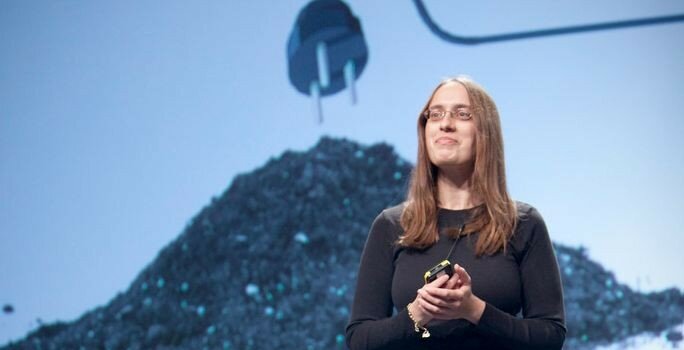
Wind turbines and solar panels don’t only generate large amounts of power, they do so without the pollution and danger that come along with fossil fuels. But for the millions around the world that live without access to reliable power, waiting for a wind farm to pop up is a long and frustrating task.
What many in developing nations need isn’t the ability to keep the lights on 24/7. For most, just having enough power to recharge a cell phone would be life-changing. That’s why Harvard Ph.D student Aviva Presser Aiden decided to look for a much smaller solution. One that’s as simple as a pile of dirt, actually.
A few years ago, the former engineer was working in Africa, looking to get more electric light into remote parts of the continent. While others focused on harnessing solar power, Aiden and her colleagues were more interested in the dirt beneath their feet. Previous research has revealed that soil microbes can be a natural source of energy. Certain naturally occurring soil microbes produce free electrons during the course of their ordinary metabolic processes. A Microbial Fuel Cell (MFC) uses a conductive surface to harvest these electrons and use them as a power source.
In 2011, Aiden’s idea for an MFC-based cell phone charger caught the attention of the Bill & Melinda Gates Foundation. The Foundation gave Aiden and her Harvard team $100,000 to turn the concept into a reality.
If you’re wondering how in the heck you convince soil-dwelling microbes to charge your phone, this explanation from PS Mag will help: “First you need some kind of jar, with a piece of graphite or some other non-corrosive metal, at the bottom. Then put in dirt with very little oxygen, and another piece of graphite. Soil microbes are constantly making electrons, but if there’s oxygen about they’ll put the electrons into the oxygen. If there isn’t any oxygen, they’ll dump the electrons on pieces of metal—i.e. the graphite.”
Unlike solar panels, MFCs do not require any sophisticated materials: they can be easily assembled in only a few minutes. If Aiden’s concept is successful, Africans may soon be able to assemble their own chargers almost entirely from scratch, and at minimal cost that will be recouped with the very first recharge.
Aiden plans to return to Uganda this month with a collection of dirt-power kits for real world testing.
(via Revmodo)

Thursday, July 12, 2012

Find Farms In New York City By Looking Up


Back in the 1960s, Lisa Douglas, the Manhattan socialite played by Eva Gabor in the television sitcom “Green Acres,” had to give up her “penthouse view” to indulge her husband’s desire for “farm livin’.”

Mr. Flanner, the president and head farmer of the Brooklyn Grange farming operation, picked greens last week for a restaurant in Brooklyn.

Today, she could have had both. New York City is suddenly a farming kind of town. Almost a decade after the last family farm within the city’s boundaries closed, basil and bok choy are growing in Brooklyn, and tomatoes, leeks and cucumbers in Queens. Commercial agriculture is bound for the South Bronx, where the city recently solicited proposals for what would be the largest rooftop farm in the United States, and possibly the world.

Fed by the interest in locally grown produce, the new farm operations in New York are selling greens and other vegetables by the boxful to organically inclined residents, and by the bushel to supermarket chains like Whole Foods. The main difference between this century and previous ones is location: whether soil-based or hydroponic, in which vegetables are grown in water rather than soil, the new farms are spreading on rooftops, perhaps the last slice of untapped real estate in the city.

“In terms of rooftop commercial agriculture, New York is definitely a leader at this moment,” said Joe Nasr, co-author of “Carrot City: Creating Places for Urban Agriculture” and a researcher at the Centre for Studies in Food Security at Ryerson University in Toronto. “I expect it will continue to expand, and much more rapidly, in the near future.”

For city officials, the rise of commercial agriculture has ancillary benefits, as well. Rooftop farms have the potential to capture millions of gallons of storm water and divert it from the sewer system, which can overflow when it rains. And harvesting produce in the boroughs means fewer trucks on local roadways and lower greenhouse gas emissions, a goal of Mayor Michael R. Bloomberg’s administration.

Community gardeners and educators have tended plots and grown food for years. But they have only recently been joined by for-profit companies intent on getting back to the urban land.

Gotham Greens began harvesting from its hydroponic greenhouse on a rooftop in the Greenpoint section of Brooklyn last year; it plans to open three more next year in Brooklyn, Queens and the Bronx. The existing operation, with 20 employees, grows bok choy, basil and oak leaf lettuce, and sells to retailers like Whole Foods and FreshDirect.

Brooklyn Grange, another farming operation, incorporated with the intention of finding a site in Brooklyn. But two years ago, a one-acre rooftop became available instead in Long Island City, Queens. The partners, led by Ben Flanner, the president and head farmer, spread out 1.2 million pounds of soil and started planting. This spring, Brooklyn Grange finally made good on its name, starting a second farm on a 65,000-square-foot roof at the Brooklyn Navy Yard, where more than 100 rows feature pattypan squash, scallions and beefsteak tomatoes.
Mr. Flanner pointed out two benefits to an agricultural aerie — plentiful sun and an absence of pests. “There are a number of parallels with regular agriculture,” he said. “What we don’t have are deer or foxes or rodents.”
One challenge: wind, which can whip between buildings and topple delicate seedlings. “We have to be clever to come up with solutions to reduce the amount of wind on the plants,” he said. “We do a lot of staking and trellising.”

Plans are in the works for even larger operations. In March, BrightFarms, which develops greenhouses near supermarkets to shorten the food-supply chain, announced it would create a sprawling hydroponic greenhouse on a roof in Sunset Park, Brooklyn, that is expected to yield a million pounds of produce a year. The chief executive, Paul Lightfoot, said the greenhouse would occupy up to 100,000 square feet, making it the nation’s largest such operation when it opens next year. (Recently, the company reached an agreement with the A&P supermarket chain to sell the Brooklyn produce.)

And last month, the city’s Economic Development Corporation issued a request for proposals for a 200,000-square-foot rooftop farm on a city-owned building on Food Center Drive in Hunts Point, the food-distribution hub in the Bronx. “We’re testing the marketplace,” said Seth W. Pinsky, the corporation’s president. “It was a logical place for a rooftop farm. If we’re successful at Food Center Drive, our hope would be to replicate this elsewhere.”
While there may be a veritable prairie of empty rooftops in the city, not all are suitable for growing crops, Mr. Nasr, of Ryerson University, said. Roofs must be strong enough to accommodate the weight of either soil or a greenhouse, and if they are not, strengthening them can be costly. Access is also a challenge, with some buildings lacking stairs or an elevator to the roof. Not all roofs enjoy full sun, with shadows cast by adjacent buildings. And neighbors wary of increased traffic and noise can be prickly.

“But in New York City,” Mr. Nasr said, “even if you eliminate roofs for all those reasons, you are still left with a large number that could be considered.”

The City Planning Department recently revamped the zoning regulations to encourage green development, including rooftop farms, and the City Council approved the changes. The new rules, called Zone Green, exempt greenhouses on nonresidential buildings from certain height and floor-area limits. Such structures cannot, however, exceed 25 feet in height and must be set back six feet from the edge of the roof.

Amanda M. Burden, the planning commissioner, credited the changes with “creating more places for urban agriculture to take root in a dense, built-up environment.”

Whether the relaxation of the zoning rules will unleash a flood of new proposals remains to be seen. None, so far, are planned for Park Avenue.
(via New York Times)