Showing posts with label crops. Show all posts

Thursday, February 19, 2015

Top 5 Popular GMO Foods to Avoid

As you’ve already known, GMO foods are extremely unsafe because of the countless health risks and life-threatening diseases that they can cause in the long run. Even if consumers are now more aware about the negative effects of GMOs, greedy manufacturers still continue to produce and sell them to this day. They certainly won’t be stopping anytime soon, therefore it’s up to us to be more meticulous when it comes to buying safer foods.

Several studies have found that sugar beets, soy, canola, cotton, and corn are the top 5 crops that are often genetically-modified. These popular crops are severely altered and contain traces of pesticide that can cause major health problems like blood cancer, liver toxicity, kidney failure, gut inflammation, or even death.

What’s really scary is that these GMO crops are listed as innocent ingredients on many commercial products. They’re disguised in the form of brown sugar, fructose, glucose, modified starch, vegetable oil, and the like. So you really need to read the labels carefully to evade these creepy GMO products.

Get more facts about GMOs and how you can successfully avoid them in this special infographic below. Remember to share this online so you can help spread the word about GMO foods!


Thursday, June 5, 2014

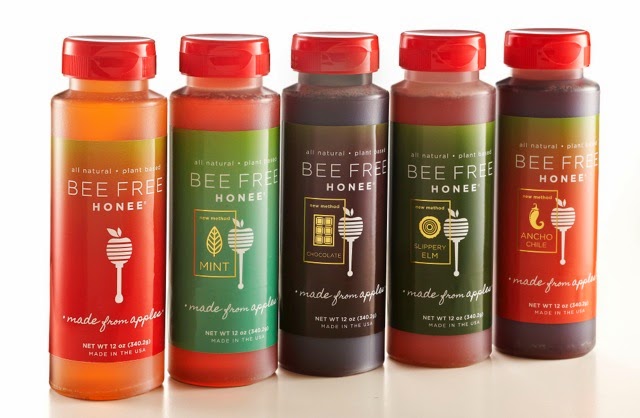
Buzzing About Bee Free Honee


Bee populations have been dying at a rate which the US government says is economically unsustainable. Honey bees pollinate plants that produce about a quarter of US consumer foods. In fact, some recent articles have said the rate of honey bee losses in the US are ‘economically unsustainable'; according to a report by the US Department of Agriculture, losses of managed honey bee colonies in the US totaled 23.2% last winter. 

The report, produced with industry group the Bee Informed Partnership, showed that the death rate for October 2013 to April of this year was better than the 30.5% losses for 2012 to 2013, but worse than the 21.9% in 2011 to 2012. Prior surveys found colony losses averaged 29.6% over the last eight-year span.

So what do we as consumers do? There really hasn't been a very good eco-friendly option for honey-like products out there in the market....until now. Enter Bee Free Honee - a local family-owned, green company based in Minnesota leading the movement to create a "honey" free of bees. Bee Free Honee is made in Minnesota and using strictly US grown, organic apples.

According to the company's website:
Bee Free Honee is the brain-child of Katie Sanchez.  Katie’s love of cooking started when she was young.  Growing up in Mound, MN, her family had an apple orchard in their front yard and her father (ironically) was a bee keeper.  For her tenth birthday gift, she asked to be able to cook dinner for her family, on the stove and by herself.  Cooking has been her passion for as long as she can remember.

Pastries were her preference, but at the time pastry schools were far less common and much more expensive.  So she decided to go to cooking school in Louisiana.  She worked on a line while looking to get her foot in the door of a pastry department.  That opportunity came at D’Amico Cucina, in Minneapolis.  There she had the privilege of working as the assistant to Pastry Chef Leah Henderson and under Chef Jay Sparks.  After three years, she left to go to work at an all natural bakehouse in St. Paul.  There she worked with vegan products and learned about the all natural foods world.  On more than one occasion she wished she could use honey in some of the vegan items.  The vegan sweeteners were so strong they would often mask subtle flavors such as vanilla or hints of lemon.

One day in 1999, while trying to make a less sweet version of apple jelly and being a novice with jelly, Katie accidentally created something that was definitely not jelly.  Not wanting to be wasteful, she ‘canned’ it only to discover in the morning, that what she had was honee!

Years later when she heard about the decline of the bee population, she asked herself two questions, could she reproduce her honee and was there a market for it?  She went back to the kitchen and after much trial and error she was able to say that she had a solid recipe.  Four years later, when she entered the market she did so with a website, a distributor, and three stores that carried her product.  We are excited to see what is to come and we are thrilled that you are along for the ride.
Bee Free Honee is taking the right steps to become a cost effective solution to the continued pollinator crisis that ties into an agriculture crisis. However, they (and we) don't want to just stop there...read more about What We Know About The Bees...And Other Pollinators on their website and tell your family and friends about the ongoing crisis, get sweet on BFH by following them on Facebook, Twitter and Instagram and of course find a retailer near you to try out some Bee Free Honee for yourself!

Monday, April 14, 2014

Organic Gardening: 10 Tips to Success

Organic gardening is the method of gardening that utilizes only materials derived from living things, ie. all natural plant foods and pesticides. Once you know the basic tenets of this practice, organic vegetable gardening is simple. And the payoff is enormous: no toxic chemicals, no waste, better for the environment as a whole, and not to mention a crop full of natural, delicious vegetables. Remember these 10 steps and you'll have a successful crop in no time!


Soil. It all begins here. Amending your soil with organic material such as composted manure or yard and kitchen scrap compost will get your dirt off to a good start. The inclusion of organic material provides a solid basis of nutrients for your plants which helps to cut down on the need for commercially made fertilizers and improves soil structure making it easier for your plant to absorb the important minerals they need. Sandy soil will not hold its moisture well. Heavy clay soil may prove too dense for healthy root development.

Fertilizer. In addition to compost, your plants will enjoy a healthy dose of other organic foodstuffs like worm poop and pee (we call this worm tea), eggshells, Epsom salts, bone meal, blood meal...the list goes on, but the key word is all-natural. Mother Nature knows what she's doing and these sources provide essential vitamins and minerals for your plants.

Beneficial insects. When planning your garden, educate yourself on which plants repel insects, which plants invite them, and what each bug eats. For instance, ladybugs eat aphids, which is a good thing because aphids will suck the life from just about any plant! By inviting ladybugs into your garden you are employing a natural form of pest control and not toxic chemicals.

Layout. When designing your garden, it's important to adhere to spacing guidelines for your plants. By keeping them close, their leaves will shade the ground beneath them. This not only cuts down on weed growth, but also helps the soil retain water, cutting down on water usage. Organic gardeners are excellent custodians of the environment. Too close, and you'll invite the growth of fungus and disease.

Companion planting.
Including a wide variety of plants in your garden and planting them according to their relationship with others helps in many ways. For instance, bean plants fix nitrogen into the soil, which corn plants use to produce healthy cobs. Corn provides support for the climbing vines of the bean family. Add squash to the base and you have instant weed control!

Crop rotation. This is the practice of rotating a plant's location from season to season. Relocating your plants cuts down on soil depletion and disease infestation. In addition, plants like beans will actually put nutrients into the soil that can be used by the next crop, ie. corn. Disease will be reduced because the organisms that infect one plant pose no harm to the next, so rotating eliminates the likelihood a disease will spread.

Water.
Conserving water is a key component of organic gardening. Good watering practices include the capturing and storing of rain, the use of drips hoses, and plenty of mulch. With a sprinkler system, a large amount of water can be lost to evaporation. If sprinklers must be used, it's best to water in the early morning or early evening hours. Using mulch around your plants is another way to conserve water because it keeps the soil moist longer, requiring less water to be used.

Weeds. Weed removal is best done by hand, without the use of chemicals. While tedious, this duty can be cut down tremendously by the use of smart planting. Remember, keeping plants close helps prevent weed growth. Natural mulch is another great method. Not only does it help prevent weeds, it has the added benefit of providing nutrients into the soil as it breaks down.

Cover crops. These are the plants you grow in between seasons. They help to replenish the soil with vital nutrients and prevent soil erosion. They can also be used to feed the beneficial insects in the absence of your vegetable crop and keep weeds at bay.

Seeds. Organic gardening is all about using sustainable methods and what better way to be self-sustaining than to use your own seeds! The practice of saving seeds has been around for centuries and ensures you "know what you grow." But to ensure purity and avoid cross-pollination, you must keep some distance between the same plants of different varieties. You don't want to be disappointed when you plant those tomato seeds next year and discover the result is a hybrid--and not the decadent beefsteak tomato you were looking forward to. Only heirlooms can produce the original fruit, not hybrids.

Organic vegetable gardening is all about sustainable practices. It's conservation at its best, because you are using what you have and what you can find in nature. From fall leaves to leftover food, you waste nothing in an organic garden. Plants help each other, insects play a role...why even Mother Nature helps by delivering an extra shot of nitrogen in every rain drop!

But more than being a good steward of the environment, organic gardening makes for a healthier you.


Tuesday, April 1, 2014

How Eating Organic Saves Animals


There has been a lot of debate in recent years about the effect that GMOs and pesticide-laden foods have on human health, but what is rarely discussed is the environmental impact of the use of these chemicals and the harm they cause to animals.

It’s clear that food manufacturers are going through great lengths to prevent these chemicals from being labelled on foods. What’s most concerning, from an environmental point of view, is that the vast majority of chemical pesticides sprayed on crops actually gets washed off before foods end up in the supermarkets. When the pesticides run off into top soil and waterways, it is entering a vast network of ecosystems, and these delicate systems are not equipped to deal with hazardous toxic chemicals.

To avoid these types of destruction and to help ensure ecosystems are healthy, it is best to opt for organically-grown foods. The following are just four ways going organic can save the lives of animals and subsequently save our environment.

Organic Crops Offer Bees Perfect Pollinating Grounds

There is a growing honey bee crisis across the globe as huge numbers of bee colonies are dying off each year, a problem which could ultimately cause catastrophe for all our food supplies. Scientists have linked “colony collapse disorder” with the chemicals used in non-organic food production and have warned that, if we continue the widespread use of chemicals on our crops, there will be almost no bees left to pollinate them in a decade. Although the chemicals are used in levels which are not considered deadly to the individual bees, hoards of pollen are collected and taken back to the hives, where the overall toxicity is enough to cause damage to the entire colony. Organic food crops are beneficial for the bees and support their existence by providing safe plants to collect pollen from.

Organic Crops Provide Bird-Friendly Seeds

While the plight of the honey bee is widely known, there are plenty more animals who suffer the effects of consuming and transporting chemical containing plants. Birds love to eat seeds, and they are unknowingly eating GMO and pesticide covered seeds that are causing illness and death. The American Bird Conservancy conducted a thorough investigation on the issue in 2013 and discovered that a single non-organic seed kernel can be very dangerous to birds, killing small ones, and making larger ones ill. Many seeds that are sown do not get covered properly and seed spillage is also commonplace, meaning birds are accessing these toxic seeds all the time.

Organic Crops Nearly Eliminate Chemical Run Off

One of the largest problems caused by chemical use in the agriculture industry is the toxic run off which occurs after rainfall. Chemical pesticides are sprayed indiscriminately over huge areas of cropland, much of which lands directly onto the ground. When rain falls, this is washed off into the topsoil and soaks down into the subsoil, making it very dangerous for any animals who inhabit the soils. Insects and small mammals are particularly at risk from the soil contamination as their habitat is turned into a highly potent toxic layer. In many cases, this is the desired effect of the pesticide, as it is these insects which are the intended targets of the chemical poisoning.

Organic Crops Help Prevent Water Contamination

Once the chemical run off has made it through the top and subsoil layers, it finds its way into the water system. Arguably, this is where the chemicals do the most widespread damage to the environment and the delicate ecosystems which the planet relies on. Streams, rivers, ponds, and lakes in the areas surrounding non-organic monocultures are becoming increasingly toxic, to the detriment of the aquatic species that live there. The problem is becoming so bad that the chemical run off is creating ‘dead zones’ in which barely any animals are able to survive as the water has become too polluted. The chemical fertilizers used on farms also create huge algae blooms in the water, and this kills off other species trying to survive in the same water.

These four issues are enough reason alone to support eating organic. The world’s ecosystems have taken millions of years to form and they work on a very precise and delicate balance. Although large corporations may want to make us believe that their chemicals are perfectly safe for us to use, the signs are clear for us to see, and they’re certainly not safe for the animals coming into contact with them.

Thursday, October 10, 2013

Top Five Reasons to Label GMO Food

October has been designated Non-GMO Month, the month to focus on why we need to regulate genetically modified organisms (GMOs) closely. To further understand what GMOs are, go to www.nongmoproject.org.  Here are my five top reasons for why we must label GMO food!

1) The research proving the safety of GMOs is flawed. First, the only research being considered is done by the companies that created the products and profit by them and the pesticides that are necessary to grow them. Take the famous golden rice. As Rachel Parent pointed out, a person needs to eat 23 cups of rice a day to get the Vitamin A recommended dietary allowance. There are so many conflicting facts about GMOs and GMO research that 64 countries in the world refuse to allow GMO agriculture. Another way to look at it is these countries are refusing to be lab rats for flawed GMO research.

2) GMO agriculture increases the use of pesticides and water in farming. While we keep hearing that GMOs will reduce the use of water and pesticides, the opposite is the truth. A study by Washington State University concluded that the use of pesticides has increased by more than 7% because of GMO-intensive agriculture. Pesticides are water intensive. While conventional agriculture was using a billion pounds of pesticides a year, our GMO agriculture is responsible for increasing that
usage to 1.2 billion pounds annually without increasing the food supply. The patent for Roundup Ready® (RR) corn and soy beans has coincidentally expired as roundup has also lost its efficacy. RR leaves a legacy as it is responsible for increasing superweeds across the globe. The new replacement for RR will be a cocktail, much more potent and will include dicamba or 2,4- D, used as an ingredient in Agent Orange in the Vietnam war, well studied and identified with birth defects and cancer. Dicamba corn patent is currently going through USDA approval process.

3) GMO food has no benefits and will not feed the world. The most profitable corporations use World Hunger to maintain their domination in the market place. Currently, evidence is strong – we produce enough food in the world today for 10 billion people. Why are 2 billion people on our planet hungry and/or starving? It is not lack of food worldwide or even distribution, though better distribution can help. Social justice is the first place to find the real reason for hunger and starvation. Poor people cannot afford to buy food and their ability to feed themselves has been compromised. Global domination of our food by the very corporations that say they will feed the world is not the answer, it is the problem. Go to Google and search “suicides of cotton farmers in India” for a shocking peek into a tragic GMO failure. If we look at the big GMO foods in farm production today, it is mostly livestock feed – corn and soy beans – or inedible cotton. Livestock, by the way, are much happier and make higher omega milk on pasture and forage, not corn and soy. GMO ag does not lower the price of food nor produce more food. There is no known advantage to humans while there is evidence of emerging health issues and some devastating cultural issues.


4) The biotech industries – Monsanto, Cargill and DuPont – are examples of American corporations undermining democracy and abusing their power for short term domination and profits. William James, the father of American Psychology said in the late 1800s, “The most significant characteristic of modern civilization is the sacrifice of the future for the present.” Add “present profits” and we have the situation. Many citizens today wonder about the new face of democracy as we watch special interests put their agenda before what is good for all. Those following the issues sprung by a Supreme Court ruling called Citizens United, which gives corporations the status of personhood are asking “How do we get our government back?” Powerful corporations as cited above get special treatment in the government. The best way to say it is “corporate corruption.”

5) Seed ownership has consolidated and biotech owns almost all of our seed stock. Number 5 but perhaps the most important point – who owns our seeds? Weak anti-trust laws and blatant favoritism toward biotech on the Supreme Court level has allowed the consolidation of our seeds into the hands of bottom line corporations. Just two years ago, biotech owned over 65% of our seed stock2. I had the pleasure of connecting with a few Organic Seed Alliance staff members at a conference a few days ago and had to ask them how many of our seeds are controlled by biotech now and they answer was frightening:  90% of all commercial seeds are owned by 5 corporations. The questions of who should own our genetics is one that deserves a well vetted public debate. Does it bother anyone that biotech is using the human genome in its experiments? We should all be concerned about the ethics of genetic ownership and manipulation. Seed ownership needs to be in the public trust and not owned by profit-benefiting corporations.

We have to take action and advocate for our right to know. Now that I’ve given you my top five, here are five things YOU can do to help:
[via Root Stock]

Wednesday, May 8, 2013

Companion Planting


May 15th is the traditional cut off date for a final frost. Meaning, starting next week, everything goes – in your garden. I will be seeding watermelons and transplanting chile peppers. As you prepare to fill your summer plot, consider not only what you’re planting, but where you’re planting. The logic and tradition of companion planting is based on setting up mutually beneficial relationships between plants. This method of organization can encourage pest control and stimulate vigorous growth. It is even said to produce tastier tomatoes.

Every plant demands and provides differently – absorbing certain soil nutrients, attracting specific pests while repelling others. It makes sense, then, to arrange your garden in a way that takes advantage of these individual properties. Companion planting originated with the Native American custom of the “Three Sisters” guild. Historically, Native Americans would plant corn, squash and beans side by side on a small plot of land. The tall stalks of corn provided a trellis for the beans, while the sprawling squash offered ground cover, stamping out potential weeds. Beans, a legume, are nitrogen fixing, and will not disturb nutrient intake of corn or squash.

Trap crops are another example of companion planting. If you are concerned about squash bugs attacking your cucumber bed, plant zucchini nearby. Summer squash leaves are sweeter and more preferable to the pests, thus deterring them from your main crop cukes.

Overtime, growers have collectively developed a comprehensive guide to companion planting. Inevitably, these guides are part truth, part lore, but in any case, a home garden offers the perfect scale in which to trial some of this knowledge. We can’t tend to our garden at all times, so why not let the plants themselves do some of the work?

Here are a few suggestions:

Basil with tomatoes – repels tomato hornworms

Nasturtiums with squash – deters squash bugs

Radishes and cucumbers – trap crop for cucumber beetles

Lettuce and carrots – for best flavor of both

Bee balm and tomatoes – for enhanced tomato flavor

Tomatoes and lettuce – tall trellis can provide welcome shade for tender greens

Thursday, March 14, 2013

Smaller But Better! Organic Tomatoes Pack More Nutritional Punch


Research results yield further proof that organic produce is endowed with enhanced nutritional properties.

Organic tomatoes are 40 percent smaller in size and mass than their conventional cousins, but they pack in more nutritional compounds such as Vitamin C, lycopene and other phenolics, a new study has found.

Researchers published their findings Wednesday in the journal PLOS ONE advising conventional fruit and vegetable farmers that if they want better quality tomatoes with higher concentrations of nutritious chemical compounds, they should follow the organic way and stop "systematically" trying to maximize yields by using pesticides and other chemicals to treat diseases, fight pesticides, and battle other environmental stresses.

The report said environmental factors represent a "powerful lever to increase the concentrations in phytochemicals."

The study referenced previous research that shows supplementing a diet with processed tomato products, containing the phytochemical lycopene, has shown to lower biomarkers of oxidative stress and carcinogenesis in healthy and type II diabetic patients, and prostate cancer patients, respectively.

The federal ban on powerful pesticides common in conventional farming systems means organic tomato plants have to work harder to withstand the insects and mites, as well as other eco-factors like drought, nutrient deficiency and damage from the cold and wind.

These "stressing" conditions shorten the developmental period for organic tomatoes, producing lower size and mass, but accelerate ripening, producing more nutritional compounds.

The researchers studies organic and conventional crops grown in Brazil. The organic farm used a compost of animal manure, legume cocktail and sugar cane bagasse incorporated into soil just before sowing.

In the conventional system, the pesticide FASTAC100 was applied when needed and inorganic fertilizer was used as recommended to control stress and maximize yield.

The study pointed out existing research demonstrating that fruits and vegetables from organic farming generally are endowed with enhanced nutritional properties.

A recent comparative study from UC Davis showed that organic tomato juice has a higher phenolic content and hydrophilic antioxidant activity when compared to conventional tomato juice.

Another previous study showed organic strawberries had higher antioxidant concentrations and the ability to inhibit the proliferation of human colon and breast cancer cells more effectively than conventional ones.

Friday, December 7, 2012

Labeling GMO Crops [video]

The current issue isn't about banning GMO crops in the United States, it's about labeling them - a consumer's right to know. We will work on getting them banned as our next step.

Friday, September 7, 2012

Urban Foraging


Today's post comes from Bistro OneSix, an entertaining blog full of stories about all things delicious. Enjoy this post about urban foraging and then head over to Bistro OneSix for more fabulous tales from the kitchen. 
I hear the term “urban foraging” tossed around more and more lately and knew what my definition of it was but decided to look it up in the Urban Dictionary to confirm.
1.urban foraging
Urban foraging is a process of sorting through the dumpsters, gargbage bins, and other containers of waste to reclaim “wasted” food.

In looking a little further I found : Urban foraging can be defined as foraging for free fruits, vegetables, and other “wild food” around the city.
I walk and bike a lot around my neighborhood, and often come across trees that are so laden with fruit that they droop across the street, littering the pavement and sidewalk with overly ripe little bombs. I have contemplated doing a little harvesting but always considered that to be stealing. It’s someone else’s tree after all.
But then this whole “urban foraging” idea came to light. In fact, there’s a Google map for it in Boise, Idaho, charting out delicacies that can be found all over town. But the sound of my mom’s voice is in my head…”Just because everyone else is doing it doesn’t make it right.”
So, I wonder – when is urban foraging stealing?
I love blackberries. Like REALLY love blackberries and there is this huge blackberry bush on a road I cycle on all the time. Year after year I have admired them. This year intoxicated by the idea of urban foraging, I stopped one morning… just to sample a few. Before I knew it my hands were stained dark reddish purple. I quickly rode off like a kid that had just gotten away with something, feeling more than a little guilty. But shortly thereafter, their sweetness overtook my guilt and I returned with a box and picked as many as I could reach. It’s a busy road and with each passing car, I felt like at any moment I was going to get busted by the blackberry police. Or worse…the owner of the property.
But that begs the question, who does own these? They are on the side of a highway, seemingly in the easement. Does that mean they are ripe for the taking?
I like to explore the alleys of my neighborhood (there are lots of interesting things to look at in the alleys afterall) and there is an apricot tree that hangs heavy over the fence, rotten fruit strewn around the ground. Apricots are definitely on my list of summer fruit favorites (although let’s be honest…which summer fruit isn’t?) and so I stand there and ponder. Fair game to take them since obviously the owners aren’t harvesting or because I just used the word “owner” does that denote that indeed they intrinsically belonged to someone else? Are they “wild food” if they are in someone else’s yard?
My parents have gleaned potatoes and onions out of neighbor’s fields for as long as I can remember, albeit certainly with the farmer’s permission because that’s how they roll. Potatoes and onions that otherwise would have rotted. Potatoes and onions that easily fed our family with extras, to give to others, all winter long.
I refer back to the definition that kicked this all off. That of “reclaiming wasted food”. It sounds valiant. Honorable. Or maybe it’s just the way I justify the bowl of apricots on the kitchen counter.

Monday, August 27, 2012

HOW TO: Enjoy Your Labor Day Weekend

You probably don't need anyone to tell you how to spend your Labor Day weekend, but the fine folks at Organic Gardening came up with a list of a few nifty ways to enjoy the long weekend. We think they're pretty great, so we figured we'd share them with you. Enjoy!

1. Go to a farmers’ market. Harvest time is heading into high gear, so there’s no better time to head to a nearby farmers’ market and stock up on fresh, tasty edibles. You’ll not only get great field-fresh food; you’ll also support your local economy—and help fight global warming, since locally produced food comes without the carbon emissions required to truck it across the continent. Look for food grown with organic methods, and you avoid ingesting harmful chemicals and also support agriculture that adds carbon to the soil instead of releasing it into the atmosphere as a greenhouse gas. Now’s also a good time to sign up for a Community-Supported Agriculture (CSA) program, so you can get farm-fresh food every week.


2. Dig a root cellar. Not sure where or how to store all the fresh produce you got at the farmers’ market? A root cellar could be the answer. Don’t worry—you don’t have to literally dig one out of the ground (though you could, if you’re looking for a weekend project). Odds are there’s a cool, dark space somewhere in your home that will do: a shelf in the basement, an unused closet, even space under your porch.

3. Avoid overeating. Most holidays have a strong food component, and with its various buffets, cookouts, and picnics, Labor Day weekend is no exception. So follow the healthy-eating advice we offered back on July 4. Simple tactics like choosing smaller plates and keeping a count of your drinks can have a big impact on your calorie intake. And when it comes to overeating, keep the big picture in mind: Most of the food we’re exposed to has been pumped up with extra fat, sugar, and salt to play on our biologically hard-wired food cravings.


4. Get ready for fall allergies. If you’e prone to autumn allergies, ragweed and other triggers may already have you sneezing. Arm yourself with some easy nondrug allergy remedies that will cut down on the need for pills. Make sure your diet includes foods rich in folate, a B vitamin that seems to protect against allergies. And learn about some things you can do around the house to prepare for fall allergy season.


5. Do some late-season gardening. It’s not too late in the year to get your hands dirty, even if you don’t live in a southern part of the country. Good late-summer garden projects include planting garlic, installing a birdbath, or digging next year’s beds. You can also start a compost pile to build up some natural fertilizer for next year’s garden. If your garden’s lush right now, take an inventory of how high everything’s grown, and build some homemade supports and trellises that will give next year’s crop a lift. Or start your fall garden cleanup so your soil will he healthy and ready come spring.


6. Clean with vinegar. If you’re using some of the extended weekend to get some housecleaning done, try out the cheap, easy, ecosafe alternative to harsh chemical cleansers. Fast becoming the second-favorite liquid of the Rodale.com staff (water is number 1, of course), vinegar has all kinds of awesome uses. For basic cleaning, 1 part vinegar to 9 parts water will wipe out germs and grime. Mix vinegar with other natural ingredients to make specialized cleaners that cost a fraction of the toxic stuff you get at the stores.


7. Try canning or pickling. With some basic supplies and traditional canning techniques, you can preserve your favorite summer fruits and vegetables to enjoy in fall and winter. Check out Rodale.com's Nickel Pincher for a canning primer that you can use to make fruit preserves and jellies. You can apply the same skills to other fruit canning recipes, and try canning some tomatoes and pasta sauces. Or try your hand at pickling.


8. Relax. Maybe you’re one of those people who have trouble unwinding after a busy week. A great way to signal to your body that it’s time to relax is to spend some time in nature, so hang out outside as much as you can. Try a calming beverage and review our list of holiday stress-busters, which, though December-oriented, could also apply to anyone who’s running around buying charcoal or struggling with the logistics of one last desperate beach weekend. Anyway, those end-of-the year holidays will be here before you know it.

Wednesday, July 11, 2012

Eat your fruits and vegetables!


The health benefits of a diet rich in fruits and vegetables outweigh the risks of pesticide exposure. Use EWG's Shopper's Guide to Pesticides™ to reduce your exposures as much as possible, but eating conventionally-grown produce is far better than not eating fruits and vegetables at all. 

The Shopper's Guide to Pesticides in Produce™ will help you determine which fruits and vegetables have the most pesticide residues and are the most important to buy organic. You can lower your pesticide intake substantially by avoiding the 12 most contaminated fruits and vegetables and eating the least contaminated produce.

This year the EWG guide has expanded the Dirty Dozen™ with a Plus category to highlight two crops -- green beans and leafy greens, meaning, kale and collard greens - that did not meet traditional Dirty Dozen ™criteria but were commonly contaminated with highly toxic organophosphate insecticides. These insecticides are toxic to the nervous system and have been largely removed from agriculture over the past decade. But they are not banned and still show up on some food crops.

Commodity crop corn used for animal feed and biofuels is almost all produced with genetically modified (GMO) seeds, as is some sweet corn sold for human consumption. Since GMO sweet corn is not labeled as such in US stores, EWG advises those who have concerns about GMOs to buy organic sweet corn.