[via newhope 360]
Showing posts with label infograph. Show all posts
Wednesday, May 14, 2014
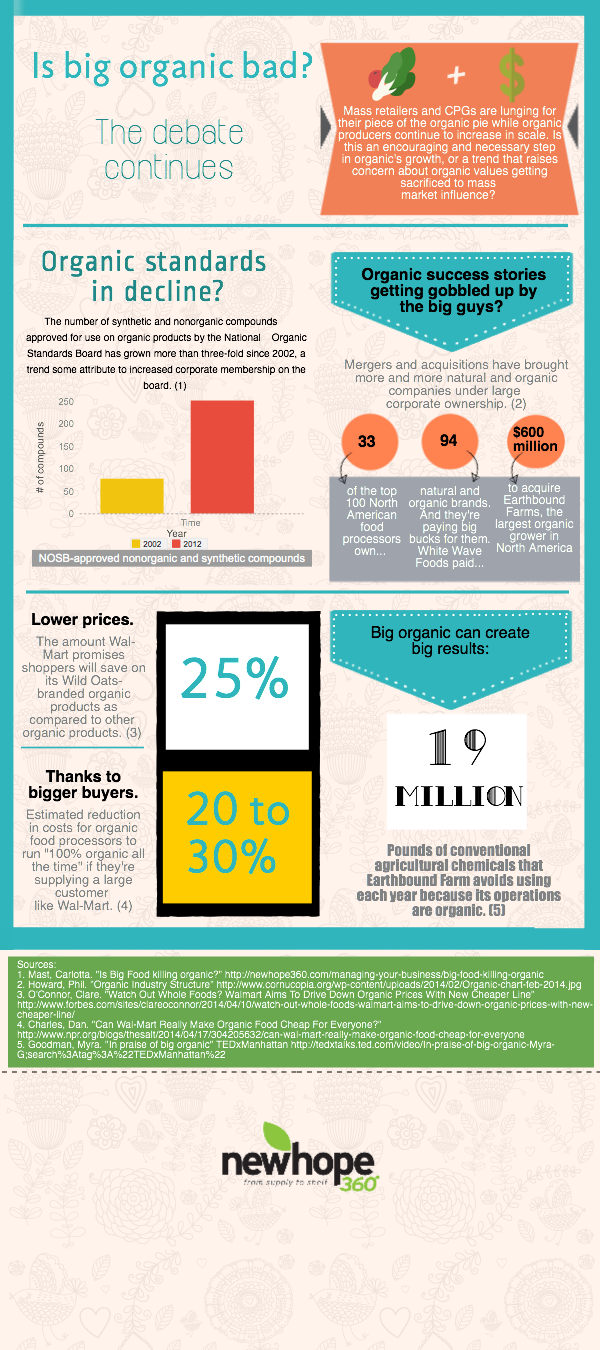
The Complex Nature of Big Organic
A spate of recent acquisitions in the organic sphere brings the resurgence of discussions about the costs and benefits of organic "going big."
Labels:
Benefits,
big box,
big organic,
infograph,
infographic,
Organic
Wednesday, February 13, 2013
Friday, December 21, 2012
Fantastic Plastic [Infographic]
In today's consumer world, plastic is everywhere—from plentiful stores of bottled water to disposable plasticware to the containers that hold our store-bought food. It seems like you can't go out shopping without running into a good deal of plastic. And while this material is strong, reliable, and undoubtedly useful, we also may have way too much that isn't being reused.
Recycling plastic uses much less energy than creating new plastic and it conserves our valuable resources. Despite this, only about a third of our plastic products are actually recycled. Among younger generations, the problem of our over-consumption of plastic has been prevalent for as long as some can remember, and yet little has changed or progressed in alleviating the problem.
Statistically, people in the Millennial generation (today's high school and college students, as well as young adults) are much less likely to properly recycle plastic and other materials than those in older generations. If you're of student or Millennial age, take a look at the following infographic—the reality is that younger generations need to start getting serious about recycling, or the future will be robbed of some very valuable resources.
Recycling plastic uses much less energy than creating new plastic and it conserves our valuable resources. Despite this, only about a third of our plastic products are actually recycled. Among younger generations, the problem of our over-consumption of plastic has been prevalent for as long as some can remember, and yet little has changed or progressed in alleviating the problem.
Statistically, people in the Millennial generation (today's high school and college students, as well as young adults) are much less likely to properly recycle plastic and other materials than those in older generations. If you're of student or Millennial age, take a look at the following infographic—the reality is that younger generations need to start getting serious about recycling, or the future will be robbed of some very valuable resources.
[source: OnlineEducation.net]
Labels:
bottled water,
disposable,
infograph,
onlineeducation.net,
plastic,
recycling
Tuesday, December 4, 2012
What do you know about GMOs? [Infographic]
A genetically modified organism (GMO) is an organism altered to incorporate genes of a desirable trait. Information on GMO labeling has been recently covered in the news, specifically regarding California's Prop 37 and has been a trending topic amongst the blogging community, but what do you really know about them? Luckily the folks over at Visualism have put together an infograph for you to test your knowledge on GMOs. And while barely scratching the surface on the entire GMO debate, we think it's a good starting point and worth the share.
Labels:
California,
food,
genetically engineered,
GMO,
GMO labeling,
infograph,
plants,
Prop 37
Friday, October 26, 2012
Infograph: What Does "Organic" Really Mean?
Labels:
antibiotics,
farm animals,
fertilizer,
food,
food labels,
fruit,
growth horomones,
infograph,
Loku,
Organic,
packaging,
Pesticides,
USDA,
vegetables
Tuesday, September 11, 2012
How Consumers Choose Healthful Foods
Labels:
Agriculture,
Chicago,
Dairy,
Farm,
food,
Gluten,
Green,
health,
healthy,
infograph,
Mintel,
nutrition,
Organic,
sustainable,
Vegan,
vegetables,
Vegetarian
Tuesday, August 28, 2012
Breakfast: The Most Important Meal of Every Day
Arch Design House shows us that Breakfast really is the most important meal of the day...every single day.
"Breakfast is the most important meal."
93% of Americans totally agree with this statement
But surprisingly, 56% SKIP breakfast every day
People who skip breakfast tend to have:
-Higher cholesterol
-Elevated insulin levels
-Larger waist circumferences
Benefits of eating breakfast:
-Improved concentration & performance
-More strength & endurance to engage in physical activity
-Lower cholesterol levels
Breakfast eaters by age:
18-24 : 53%
34-44 : 55%
45-54 : 54%
55-64 : 71%
65+ : 83%
The Most odd breakfast:
39% of Americans have at some point, eaten cold pizza for breakfast
This is a phenomenon documented by singer Christine Lavin back in 1986:
"I want cold pizza for breakfast and a pinch 'o cold spaghetti will do but there's nothing in the world that I like better than eatin' cold pizza with you"
and here's what normal Americans eat for breakfast:
31%: Cold Cereal
13%: Meat & Eggs
12%: Toast, French Toast, Bagels
9%: Eggs
9%: Hot Cereal
6%: Fruit
4%: Muffins & Pastries
3%: Bacon
3%: Yogurt & Smoothies
2%: Pancakes & Waffles
8%: Other
So what should I eat for breakfast?
-Oatmeal with flaxseed, blueberries, almonds
-Cereal with milk
-Yogurt with fresh berries, granola
-Fruit: Cut up apples, melons, berries, oranges, pears, bananas, grapes (and cottage cheese if you're brave)
-Eggs: Hard boiled, omelet, scrambled, sunny side up
-Muffins: Blueberry, banana, oat bran
-Toast & Bread: French toast, pizza toast, cream cheese, PB & J
-Waffles & Pancakes with maple syrup
"All happiness depends on a leisurely breakfast"
- John Gunther
Labels:
age,
america,
breakfast,
cholesterol,
cold pizza,
diet,
endurance,
fitness,
food,
good health,
health,
infograph,
john gunther,
meal,
nutrition,
strength
Subscribe to:
Posts (Atom)


