Showing posts with label infographic. Show all posts

Wednesday, July 27, 2016

Food Freezing Tips: How Long Can You Store Meals in Your Freezer? [Infographic]

Food preservation in cold temperatures has been practiced since the early days of mankind, although not as effortlessly as today when we have powerful freezers, polythene bags and plastic containers, freezer labels and other utensils that help us better preserve food. We also have the knowledge of how to do it properly.

To make sure defrosted food is as fresh, nutritious and tasty as before freezing it, there are certain rules to follow. For example:
  • Food should always be frozen at the peak of its ripeness/freshness;
  • Some types of food do not freeze well, such as eggs in shell or potatoes;
  • Liquids expand in cold temps, so it’s important to leave enough room in the container when freezing beverages, etc.
Most importantly, we must know how long we can keep each type of food in the freezer before it loses its taste or even becomes unsafe to eat (if air gets in).

The following infographic is created as a guide to help you figure out how long you can keep meat, seafood, ice cream and other food products in the freezer. Keep it on your fridge or freezer for quick reference when planning meals.


Wednesday, February 3, 2016

14 Edible Plants You Can Grow Indoors

Many of us dream of having our own vegetable patch, but it can be challenging to find the ideal space – and that’s assuming you have a garden at all. If you don’t then you’re in luck, you don’t need a large out door plot to grow all your ideal crops, for many edible plants all you need is a sunny spot inside.

The idea of growing an indoor farm, full of healthy food you can spoil yourself with over summer may sound too good to be true. But with a little love and care, whether you live in a house or a flat, you can grow a variety of fresh veg, fruit and even edible flowers ready for your next dinner party – guaranteed to impress.

But the benefits don’t stop there, growing your own greenery will give the satisfaction of harvesting your own foodstuff, save you money and added health benefits making your five a day a walk in the park. You might even start replacing that takeaway pizza with home-grown veg packed with vitamins and minerals.

You can grow almost any plants indoors with a loving hand, best growth occurs in areas that receive plenty of sunlight, such as windowsills. But for those of you who just don’t have a sunny spot to make the most of, grow lights can allow you to cultivate your edible plants in even the darkest of corners.

Although growing conditions vary from plant to plant, a few general rules should be followed. If you’re starting completely from scratch, sowing seeds on moistened soil, covered with plastic wrap and kept in a warm area will get your plants off to the best possible start. Also ensuring all pots and containers have drainage holes or a layer of grit to prevent root rot and overwatering will make sure your plants stay strong and healthy.

For more on edible plants you can grow indoors – including sowing and harvesting times – check out our helpful infographic below.

Wednesday, November 5, 2014

Detecting Nutritional Deficiencies

A healthy diet can provide all nutrients that a body needs, but the reality of our busy lifestyles and sometimes finicky eating patterns can lead to vitamin deficiency. Knowing what to look for is part of the battle. We want to help you in detecting these nutritional deficiencies!

HANDS
  • Cold hands: Magnesium deficiency, hypothyroidism, chronic fatigue with low cardiac output.
SKIN
  • Stretch marks: zinc deficiency
  • Spontaneous bleeds: vitamins C or K or platelet deficiency
  • Dry scaly skin: Vitamin C deficiency
  • Yellow palms: excessive beta carotene intake
LEGS
  • Tender calf muscles: magnesium deficiency
  • Brisk knee reflexes: magnesium deficiency
HEART
  • Irregular beat, high blood pressure, cardiomegaly: magnesium and Co Q10 deficiencies or sensitivity to caffeine
THROAT
  • Thyroid swelling: iodine deficiency, hypothyroidis
NAILS
  • White spots: Mineral deficiency, but often low zinc
  • Ridges: Zinc deficiency
  • Soft or brittle nails: Magnesium deficiency
EYES
  • Bags or dark circles: allergies or food intolerances
  • Cataracts: chromium deficiency or excess free radicals
MOUTH
  • Pale fissured tongue: iron deficiency
  • Cracked lips: vitamin B2 deficiency
[via Positive Med]

Wednesday, May 14, 2014

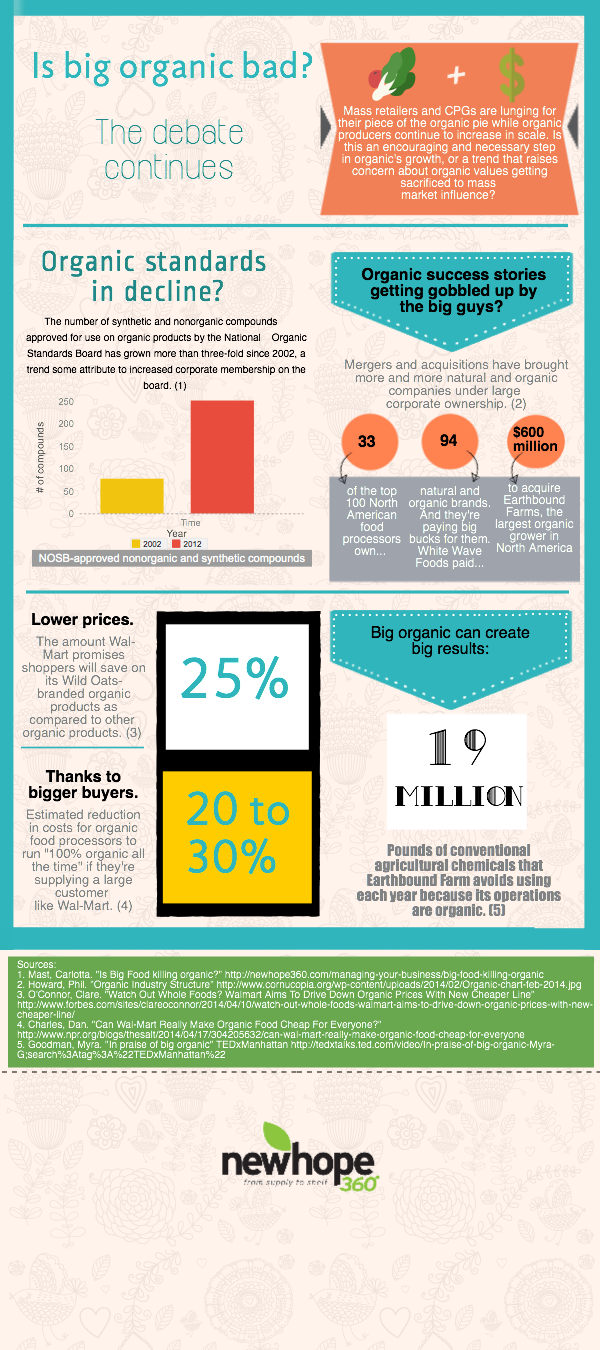
The Complex Nature of Big Organic

A spate of recent acquisitions in the organic sphere brings the resurgence of discussions about the costs and benefits of organic "going big."

Thursday, January 23, 2014

What if Natural Products Came with a List of Ingredients?


Processed foods are notorious for their jaw-droppingly long lists of chemical-laden ingredients, each one sounding worse than the last. But as these detailed infographics show, even the simplest of foods are anything but.

These images were put together by James Kennedy, an Australian chemistry teacher.

"I want to erode the fear that many people have of 'chemicals',' and demonstrate that nature evolves compounds, mechanisms and structures far more complicated and unpredictable than anything we can produce in the lab," he told io9.

"This poster series breaks down all the major ingredients in popular natural foods—using E-numbers and IUPAC names instead of common names where they exist. Anthocynanins, for example, which are said to give blueberries their "superfood" status, are also known as E163."

"With these graphics, I wanted to show that Chemistry is everywhere."


[via i09]

Monday, November 25, 2013

The Best Times to Take Vitamins and Supplements [infographic]

http://www.bengreenfieldfitness.com/wp-content/uploads/2013/11/MaximisingYourVitaminsSupplementIntake.jpgA lot of people understand the crucial role of vitamins and minerals play in helping the body work properly, but did you know timing can boost or diminish their effectiveness?  

Research from Healthspan, a UK vitamins and supplements supplier, makes a compelling case for paying attention to the clock when crafting your supplement routine. The company brought together a number of studies to produce this go-to guide on the best times to take certain vitamins and supplements throughout the day.  


When You Should Take Your Vitamins and Supplements?

Highlights of the research includes that there are some vitamins for which bedtime is a perfect time. For instance, calcium is a perfect example. Calcium is utilized by the body at night, and is a natural muscle relaxant thought to promote sleep. Research shows low calcium levels are associated with disturbed sleep patterns, including the lack of a deep REM sleep phase. Calcium works hand-in-hand with magnesium, which also has a calming effect on both the muscles and nervous system, and may therefore be beneficial in getting a good night’s sleep. I personally don’t use calcium and don’t really recommend you take it if you’re already eating a well-rounded diet. But magnesium is important, and you should take it before bed.

Probiotics are another supplement that can be taken as part of a bedtime regime. These ideally  need to be taken away from food to avoid interference with digestive enzymes and stomach acid. I personally don’t use probiotics unless I’m traveling, since I tend to eat lots of fermented foods when I’m at home.

For many supplements, a meal is necessary for adequate uptake by the body, and this is why you will see “take with food” on many labels. There are a group of vitamins called fat-soluble vitamins, which include vitamins A, D, E & K – these are the type of fats I personally get through using a fat-vitamin packed fish liver oil called “SuperEssentials“. These need fat in order to be absorbed, and therefore should be taken with meals that contain dietary fat.

B vitamins and vitamin C are recommended to be taken with food; in some individuals they can cause stomach acidity and mild nausea if taken on an empty stomach. B vitamins are important for the conversion of food into energy and are therefore best taken early in the day. Typically, if I need a bit of an extra kick or immune system boost during the day, I use a combination of B & C called “Lifeshotz“, and take it about an hour after breakfast.

Iron should ideally be taken on an empty stomach for maximum absorption, and away from other supplements that may affect its absorption such as calcium and vitamin E. First thing in the morning is therefore the best time. Iron supplements can cause stomach upsets in some individuals, in which case it should be taken with a light meal.

Summary

In conclusion, you can see that the timing of when you take your supplements can significantly affect the way in which your body can absorb and utilize your nutrients. While bedtime may be the most convenient option, it may be worth setting some reminders on your phone (e.g. using a Vitamin Reminder phone app) or refrigerator to ensure that you get the full benefits from your supplements throughout the day.

What are your thoughts? What supplements do you take? Do you have questions about my daily supplement protocol? Do you think supplements are a waste of time? Leave your questions, comments and feedback below the infographic!

[via New Hope 360 and Ben Greenfield Fitness]

Friday, November 1, 2013

What GMO Labeling Means To You (Infographic)

If the old adage is true and you are what you eat, would you want to be a genetically mutated ear of corn?

Although that paints a pretty terrifying picture, the ethics behind Genetically Modified Organisms (better known as GMOs) are more complicated than one might think. Some studies show that these products are safe to eat and can actually cut down on the use of environmentally-harmful pesticides, while another group of scientists and activists believe that we don’t know enough about GMOs to call them safe for people OR the environment.

Regardless of what stance you take on GMOs, many people can agree on one thing: Consumers should be given a choice whether or not they want to eat genetically modified foods. Unfortunately, thanks to a lack of labeling laws, very few Americans currently have that right.

On November 5, Washington state residents will vote on a new GMO labeling law. Named I-522, this initiative could be a historic development in the progress of GMO transparency. However, some roadblocks have the potential to derail the law.

To find out how GMOs and GMO labeling could affect you, check out the infographic below.


Thursday, June 20, 2013

Organic Continues Double-Digit Gains

As organic increases after year, recent surveys have some of us wondering: How much can organic grow amid continued consumer confusion?


Last year was another banner one for the organic industry. SPINS tracked a 12 percent increase in sales of organic products across all channels, and the Organic Trade Association reported that a whopping eight in 10 parents now buy organic at least some of the time. “I would characterize the industry as exploding,” says OTA Executive Director Christine Bushway. “It was an incredible year of double-digit growth across many categories.”

Although there are many positives, the news is not all good for organic. Some industry observers—and several recent surveys—point out that mainstream consumers still don’t grasp what the USDA Organic seal means or how it benefits them, and many view it with suspicion. If this problem isn’t solved, the organic bubble could burst, fears Maryellen Molyneaux, founder and president of Harleysville, Pa.-based Natural Marketing Institute. “Consumers are very confused, and it is not getting better,” she says.

New categories and newcomers

Looking first at the good news, industry observers say organic’s steady post-recession return to double-digit growth has been driven significantly by longtime organic consumers broadening their purchases across more categories, such as textiles, body care and supplements. “People interested in organic are considering not just what they put in their bodies, but also what they put on their bodies,” Bushway explains.

Click here to get the complete 2013 Market Overview with all of the charts and data included.

For instance, organic mattresses and cotton textiles are “going gangbusters,” she says. With organic cotton retail sales rising 20 percent, from $4.3 billion in 2009 to $5.16 billion in 2010, according to the 2010 Global Market Report on Sustainable Textiles. “Now you can buy reasonably priced organic bed linens at Target and Walmart.” Also, according to SPINS, sales of organic body care products climbed a jaw-dropping 34.9 percent across natural and conventional channels in 2012, while organic vitamins and supplements increased 20.2 percent.

Besides committed consumers buying more, organic continues to slowly attract newcomers, many of them parents drawn to the U.S. Department of Agriculture’s Organic seal out of concern for their families’ health. According to the OTA’s U.S. Families’ Beliefs and Attitudes study, 81 percent of surveyed families say they buy organic (up from 73 percent) in 2009. Forty-one percent are “new entrants” to the market, and nearly half say they buy organic food because it is “healthier for me and my children.” As for what items these shoppers are buying, 97 percent said they purchased organic fruits or vegetables in the past six months, while 85 percent bought breads and dairy.

Organic baby food spiked in 2012, driven in part by the massive mainstream expansion of Plum Organics and its squeeze-pack baby food. (Plum brought in $80 million in 2011 and made the Inc. 500 list of the nation’s fastest growing companies.) “With organic baby food, parents are really getting on board,” says Kurt Jetta, CEO of the TABS Group, a Shelton, Conn.-based consumer analytics company.