Showing posts with label food labels. Show all posts

Tuesday, March 31, 2015

7 Egg Label Claims You Need to Know


For the first time in more than 50 years, eggs could be sold in a new healthy light and not with a cholesterol warning. This all depends if the Dietary Guidelines Advisory Committee files its springtime report with USDA and HHS (after the public comment period), and sticks to its decision to no longer caution against eating foods that contain cholesterol.

Either way, eggs are great any time of the day; for breakfast, lunch or dinner or even a quick snack, they provide a ton of nutrition for low cost, and they don’t take long to prepare. So what kinds of eggs should you choose? Here are some of the different ways eggs are marketed in the US:
  • Cage-free or free-roaming: Over 90 percent of hens are raised in cages that are between 48 and 68 square inches. Birds that are cage-free or free-roaming are not caged; however, they likely were still raised within the confines of a small building and generally do not have access to the outdoors. So this is a distinction without much of a difference.
  • Certified humane: For a farm to make this claim, it must meet specific criteria: The hens may not be caged; their feed must be vegetarian and contain no antibiotics; and the birds need to live in a natural environment that allows for behaviors like preening and scratching.
  • Fertile: These are eggs that, when incubated, will develop into chicks. They are no more nutritious than other eggs and are usually priced higher than others. Usually fertile eggs are cage free and come from hen houses where roosters roam as well; some consumers believe this is a more natural habitat.
  • Grass-fed/Pastured: There is no USDA-approved definition of this term when it comes to hens. Farms touting grass-fed egg laying hens claim their hens are as close to being “wild” as possible. Grass-fed hens are usually allowed to roam freely and so they eat a variety of things found in their natural habitat: grass, bugs, and whatever animals they might catch and kill. All of these (individually and together) contain adequate protein. (Including vegetation) Because this term is not USDA regulated, if you are interested in purchasing grass-fed eggs it may be best to get to know your farmer and their farming practices.
  • Hormone free: The use of hormones in poultry has been banned since the 1960s. So by law, all eggs are hormone-free. If a carton offers this claim alone, it’s a waste of money if it costs more.
  • Natural: This is another meaningless term. According to regulations from the U.S. Department of Agriculture and the Food and Drug Administration, no additives or colors can ever be added to eggs.
  • USDA-certified organic: This means that the hens have eaten only organic feed and grain grown without fungicides, herbicides, commercial fertilizers, and pesticides and that their diet hasn’t contained any animal or poultry by-products. The hens also have not been given any antibiotics or growth hormones, and they’ve been allowed access to the outdoor.
So what are the best eggs for your nutrition buck? Look for pastured eggs or those that have access to the outdoors (although this is no guarantee); also get to know your local farmers and find out how their chickens are raised – this is your best bet for the best nutrition and for supporting your local economy and community.

According to Mother Earth News, one (of many) study demonstrated that free-range or pasture-raised chicken eggs have four to six times more vitamin D (one of the only natural sources), three times more vitamin E, two-thirds more vitamin A, one third less cholesterol, and seven times more beta carotene. They also have two times more omega-3 essential fatty acids, and some would say a better taste. Buying eggs from a local farmer also ensures their freshness, you know they were produced only days before.

In any case, eggs are a great all day long and all year round!

Tuesday, April 1, 2014

How Eating Organic Saves Animals


There has been a lot of debate in recent years about the effect that GMOs and pesticide-laden foods have on human health, but what is rarely discussed is the environmental impact of the use of these chemicals and the harm they cause to animals.

It’s clear that food manufacturers are going through great lengths to prevent these chemicals from being labelled on foods. What’s most concerning, from an environmental point of view, is that the vast majority of chemical pesticides sprayed on crops actually gets washed off before foods end up in the supermarkets. When the pesticides run off into top soil and waterways, it is entering a vast network of ecosystems, and these delicate systems are not equipped to deal with hazardous toxic chemicals.

To avoid these types of destruction and to help ensure ecosystems are healthy, it is best to opt for organically-grown foods. The following are just four ways going organic can save the lives of animals and subsequently save our environment.

Organic Crops Offer Bees Perfect Pollinating Grounds

There is a growing honey bee crisis across the globe as huge numbers of bee colonies are dying off each year, a problem which could ultimately cause catastrophe for all our food supplies. Scientists have linked “colony collapse disorder” with the chemicals used in non-organic food production and have warned that, if we continue the widespread use of chemicals on our crops, there will be almost no bees left to pollinate them in a decade. Although the chemicals are used in levels which are not considered deadly to the individual bees, hoards of pollen are collected and taken back to the hives, where the overall toxicity is enough to cause damage to the entire colony. Organic food crops are beneficial for the bees and support their existence by providing safe plants to collect pollen from.

Organic Crops Provide Bird-Friendly Seeds

While the plight of the honey bee is widely known, there are plenty more animals who suffer the effects of consuming and transporting chemical containing plants. Birds love to eat seeds, and they are unknowingly eating GMO and pesticide covered seeds that are causing illness and death. The American Bird Conservancy conducted a thorough investigation on the issue in 2013 and discovered that a single non-organic seed kernel can be very dangerous to birds, killing small ones, and making larger ones ill. Many seeds that are sown do not get covered properly and seed spillage is also commonplace, meaning birds are accessing these toxic seeds all the time.

Organic Crops Nearly Eliminate Chemical Run Off

One of the largest problems caused by chemical use in the agriculture industry is the toxic run off which occurs after rainfall. Chemical pesticides are sprayed indiscriminately over huge areas of cropland, much of which lands directly onto the ground. When rain falls, this is washed off into the topsoil and soaks down into the subsoil, making it very dangerous for any animals who inhabit the soils. Insects and small mammals are particularly at risk from the soil contamination as their habitat is turned into a highly potent toxic layer. In many cases, this is the desired effect of the pesticide, as it is these insects which are the intended targets of the chemical poisoning.

Organic Crops Help Prevent Water Contamination

Once the chemical run off has made it through the top and subsoil layers, it finds its way into the water system. Arguably, this is where the chemicals do the most widespread damage to the environment and the delicate ecosystems which the planet relies on. Streams, rivers, ponds, and lakes in the areas surrounding non-organic monocultures are becoming increasingly toxic, to the detriment of the aquatic species that live there. The problem is becoming so bad that the chemical run off is creating ‘dead zones’ in which barely any animals are able to survive as the water has become too polluted. The chemical fertilizers used on farms also create huge algae blooms in the water, and this kills off other species trying to survive in the same water.

These four issues are enough reason alone to support eating organic. The world’s ecosystems have taken millions of years to form and they work on a very precise and delicate balance. Although large corporations may want to make us believe that their chemicals are perfectly safe for us to use, the signs are clear for us to see, and they’re certainly not safe for the animals coming into contact with them.

Wednesday, February 5, 2014

The Natural Effect

Check out the new Only Organic Campaign! The organic seal indicates that food has been grown in ways that has passed nature’s own test for being good for you and good for nature.

In this hilarious video "The False Advertising Industry" reveals the shocking truth about what is allowed in "Natural" food. As a reminder to not be convinced otherwise, only the USDA Organic Seal guarantees your food contains no Genetically Modified Organisms, no toxic pesticides, and no growth hormones or antibiotics


Food labels that claim a food is "natural" may not guarantee that food is good for you or for nature. In fact, many so-called "natural" foods contain the toxic chemical pesticides, antibiotics, hormones and genetically engineered ingredients that are harming people and the planet. Only the organic seal guarantees that food is being made in ways that Mother Nature intended.

FDA considers "natural" food to mean "nothing artificial or synthetic (including colors regardless of source) is included in, or has been added to, the product that would not normally be expected to be there." But, federal regulators do not enforce the policy. And, many heavily processed foods containing "unnatural" ingredients designed to make food look better or last longer carry the "natural" label.

Some familiar foods using the "all-natural" promise include:

  • Some Greek Yogurt labeled as "natural" is made using milk from cows fed genetically engineered ingredients. Sound natural to you?
  • Despite being labeled "100% Natural", Corn Oil is often made with genetically engineered corn.  
  • "All Natural" chips may sound healthy, but they actually contain genetically engineered ingredients.
  • Granola products can contain highly processed ingredients, such as high fructose corn syrup, despite their "all natural" claims.
  • Orange Soda can be "naturally flavored"...despite having high fructose corn syrup listed as an ingredient.
  • Some companies advertise their frozen food products as made with "100% Natural white-meat chicken", even though its chickens are raised with the use of antibiotics. 
  • Some frozen meals say "100% Natural", but really contain genetically modified ingredients. 
  • “All Natural” Ice Cream...is it really natural? Hardly. It can come form cows treated with hormones and fed a diet containing pesticides. 
  • Turkey Breasts labeled as "All Natural" can use turkeys that have never been outdoors. Sound natural to you? 
  • Cheese labeled as "natural" could have been made using milk from cows injected with hormones, kept in poor conditions or fed genetically engineered food. 

Wednesday, January 15, 2014

Packaged Food Products That Still Contain Trans Fats

In November, the Food and Drug Administration made a preliminary determination that partially hydrogenated oils — one of the primary sources of trans fats — are no longer “generally recognized as safe.” If this is finalized, partially hydrogenated oils will be categorized as food additives requiring approval to be used in food.

Trans fats have been used since the mid-1900s to improve the flavor, texture and shelf life of many processed foods. Though they naturally occur in meat and dairy, their use in processed foods has been more of a concern because of their significantly larger role in the American diet.

This type of fat is even more harmful to cardiovascular health than saturated fat. It increases levels of “bad” LDL cholesterol and lowers levels of “good” HDL cholesterol. Research from the Harvard School of Public Health Department of Nutrition estimates that eliminating trans fats from the U.S. food supply could prevent up to 1-in-5 heart attacks and related deaths.
Today, trans fats can be found in fast food and a wide range of processed food products, such as cookies, cake mixes, piecrusts, frozen pizza, microwave popcorn and chips. And while the FDA declared in 2006 that trans fats must be included in the Nutrition Facts label of packaged food, manufacturers can claim a product contains 0 grams of trans fat if there’s 0.5 grams or less per serving. This can be deceptive for obvious reasons: How many times have you eaten more than the "serving size?" (In Canada, manufacturers can only claim 0 grams of trans fats for products containing less than 0.2 grams.)

Many manufacturers adjusted their formulas in 2006 out of fear of consumer backlash since they had to list trans fats on packaging, but some brands have stubbornly refused to eliminate the harmful ingredient. Here are some of the many products that still contain trans fat:


Bisquick

1.5 grams per serving


Pop Secret Butter

5 grams per serving (about a third of the bag)


Pop Secret Kettle Corn

5 grams per serving


Jolly Time Blast O Butter Popcorn

4 grams per serving


Pillsbury Shape Sugar Cookies

2.5 g trans fat per serving (2 cookies)

Turkey Hill Party Cake Ice Cream

1 gram per ½ cup serving


Sara Lee Classic New York Style Cheesecake

3 grams per serving


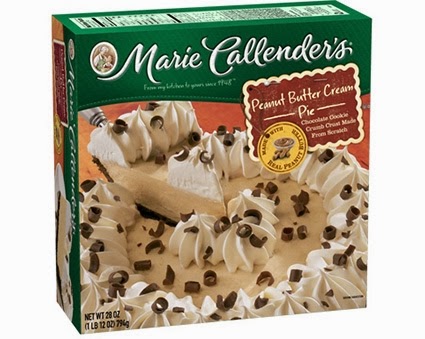
Marie Callender’s Peanut Butter Crème Pie

4 grams per serving


Marie Callender’s Chocolate Satin Pie

4 grams per serving


Marie Callender’s Lattice Apple Pie

3 grams per serving


Marie Callender’s Peach Cobbler

3.5 grams per serving


Popeye’s Breakfast Hashbrowns

It's not a "packaged food," but we had to include it because how in the world did they manage to get 10 GRAMS of trans fat per serving in these things? Sheesh.


Betty Crocker Helper Complete Meals Chicken & Buttermilk Biscuits

3 grams per serving


Betty Crocker Pie Crust Mix

2.5 grams per serving


Pillsbury Creamy Supreme Fudge Icing

1.5 grams per serving


Gardetto’s Special Request Roasted Garlic Rye Chips

3 grams per serving


Walmart’s Great Value Stick Margarine

3 grams per serving


Pillsbury Grands Cinnamon Rolls with Icing

2 grams per serving (1 roll with icing)

Land O Lakes Margarine Sticks

3 grams per serving (1 tablespoon)

Thursday, November 7, 2013

Washington State Voters Reject Labeling of GMO Foods

The initiative would have required labels on foods containing genetically engineered ingredients.

(Photo: Robyn Beck, AFP/Getty Images)
Washington state voters on Tuesday rejected an initiative that would have required foods containing genetically engineered ingredients to be labeled.

The vote was 54.8% opposed to labeling and 45.2% in favor of it.

Had it passed, Initiative 522 would have made the state the first in the nation to require such labeling.

The initiative was the most expensive in state history, though it was largely fought by out-of-state interests.

The No on 522 campaign set a record for fundraising, bringing in $22 million in donations according to The Seattle Times. Just $550 came from Washington residents, according to the newspaper. The top five contributors were the Grocery Manufacturers Association, Monsanto, DuPont Pioneer, Dow AgroSciences and Bayer CropScience.

The largest donor to the pro-labeling campaign were California-based Dr. Bronner's Magic Soaps and the Center for Food Safety in Washington, D.C. However the initiative garnered almost 30% of its funding from individuals in Washington state, the Times reported.

Food industry ads claimed that the initiative would raise food prices. Labels would mislead consumers into thinking that products that contain genetically engineered ingredients are "somehow different, unsafe or unhealthy," said Brian Kennedy of the Grocery Manufacturers Association, a food industry group based in Washington, D.C.

The Yes on 522 campaigns emphasized consumers right to know what's in their food.

The Washington initiative was part of an ongoing national fight by those opposed to genetically engineered crops to push for labeling. A similar bruising $37 million battle in California in 2012 went against labeling advocates. The final vote was 51.4% opposed and 48.6% in favor.

"Sooner or later, one of these is going to pass. It's only a matter of time. At some point the industry is going to get tired of pouring this kind of money into these campaigns," said Marion Nestle, a professor of nutrition at New York University.

She said she doesn't believe there's anything dangerous about genetically engineered foods but is concerned about corporate control of the food supply.

Genetically engineered crops have a gene from another plant inserted into them to give them some ability they didn't have before.

There are two common genetic modifications. One is for herbicide tolerance: Plants are given a gene that protects them from harm when a farmer sprays them with herbicides to kill weeds. The other is a gene from a soil bacteria called Bacillus thuringiensis that allows plants to produce their own insecticide.

A huge proportion of commodity crops grown by U.S. farmers are genetically engineered: 97% of the nation's sugar beets, 93% of the soybeans, 90% of the cotton and 90% of the feed corn for animals, according to the 2013 figures from the Department of Agriculture.

About 60% of the papaya grown in the United States, all in Hawaii, has been genetically engineered to allow it to withstand the ringspot virus, which virtually wiped out papaya production in the islands in the 1980s, according to the International Service for the Acquisition of Agri-biotech Applications.

Very small amounts of genetically engineered zucchini, yellow squash and sweet corn are also sold in the United States.

The Food and Drug Administration does not require foods containing genetically engineered ingredients to be labeled because it considers them "functionally equivalent" to conventionally grown crops.
[via USA Today]

Thursday, October 10, 2013

Top Five Reasons to Label GMO Food

October has been designated Non-GMO Month, the month to focus on why we need to regulate genetically modified organisms (GMOs) closely. To further understand what GMOs are, go to www.nongmoproject.org.  Here are my five top reasons for why we must label GMO food!

1) The research proving the safety of GMOs is flawed. First, the only research being considered is done by the companies that created the products and profit by them and the pesticides that are necessary to grow them. Take the famous golden rice. As Rachel Parent pointed out, a person needs to eat 23 cups of rice a day to get the Vitamin A recommended dietary allowance. There are so many conflicting facts about GMOs and GMO research that 64 countries in the world refuse to allow GMO agriculture. Another way to look at it is these countries are refusing to be lab rats for flawed GMO research.

2) GMO agriculture increases the use of pesticides and water in farming. While we keep hearing that GMOs will reduce the use of water and pesticides, the opposite is the truth. A study by Washington State University concluded that the use of pesticides has increased by more than 7% because of GMO-intensive agriculture. Pesticides are water intensive. While conventional agriculture was using a billion pounds of pesticides a year, our GMO agriculture is responsible for increasing that
usage to 1.2 billion pounds annually without increasing the food supply. The patent for Roundup Ready® (RR) corn and soy beans has coincidentally expired as roundup has also lost its efficacy. RR leaves a legacy as it is responsible for increasing superweeds across the globe. The new replacement for RR will be a cocktail, much more potent and will include dicamba or 2,4- D, used as an ingredient in Agent Orange in the Vietnam war, well studied and identified with birth defects and cancer. Dicamba corn patent is currently going through USDA approval process.

3) GMO food has no benefits and will not feed the world. The most profitable corporations use World Hunger to maintain their domination in the market place. Currently, evidence is strong – we produce enough food in the world today for 10 billion people. Why are 2 billion people on our planet hungry and/or starving? It is not lack of food worldwide or even distribution, though better distribution can help. Social justice is the first place to find the real reason for hunger and starvation. Poor people cannot afford to buy food and their ability to feed themselves has been compromised. Global domination of our food by the very corporations that say they will feed the world is not the answer, it is the problem. Go to Google and search “suicides of cotton farmers in India” for a shocking peek into a tragic GMO failure. If we look at the big GMO foods in farm production today, it is mostly livestock feed – corn and soy beans – or inedible cotton. Livestock, by the way, are much happier and make higher omega milk on pasture and forage, not corn and soy. GMO ag does not lower the price of food nor produce more food. There is no known advantage to humans while there is evidence of emerging health issues and some devastating cultural issues.


4) The biotech industries – Monsanto, Cargill and DuPont – are examples of American corporations undermining democracy and abusing their power for short term domination and profits. William James, the father of American Psychology said in the late 1800s, “The most significant characteristic of modern civilization is the sacrifice of the future for the present.” Add “present profits” and we have the situation. Many citizens today wonder about the new face of democracy as we watch special interests put their agenda before what is good for all. Those following the issues sprung by a Supreme Court ruling called Citizens United, which gives corporations the status of personhood are asking “How do we get our government back?” Powerful corporations as cited above get special treatment in the government. The best way to say it is “corporate corruption.”

5) Seed ownership has consolidated and biotech owns almost all of our seed stock. Number 5 but perhaps the most important point – who owns our seeds? Weak anti-trust laws and blatant favoritism toward biotech on the Supreme Court level has allowed the consolidation of our seeds into the hands of bottom line corporations. Just two years ago, biotech owned over 65% of our seed stock2. I had the pleasure of connecting with a few Organic Seed Alliance staff members at a conference a few days ago and had to ask them how many of our seeds are controlled by biotech now and they answer was frightening:  90% of all commercial seeds are owned by 5 corporations. The questions of who should own our genetics is one that deserves a well vetted public debate. Does it bother anyone that biotech is using the human genome in its experiments? We should all be concerned about the ethics of genetic ownership and manipulation. Seed ownership needs to be in the public trust and not owned by profit-benefiting corporations.

We have to take action and advocate for our right to know. Now that I’ve given you my top five, here are five things YOU can do to help:
[via Root Stock]

Thursday, August 29, 2013

Who’s paying for GMO-labeling initiative campaigns?


Groups opposed to labeling genetically modified food outspent those in favor 5 to 1 last year when Californians voted on a labeling ballot measure. But the tables are turned in the run-up to an initiative vote in Washington state. So far, pro-labeling groups have spent more than $4 for every $1 spent by those opposed, according to an analysis by MapLight.

Contributions in support of Washington Ballot Initiative 522 (“The People’s Right to Know Genetically Engineered Food Act”) add up to nearly $4 million $3.5 million, while the opposition has raised about $950,000. The big money comes from the same interests that ponied during the California campaign, as you can see in this chart.


That chart only shows the biggest contributors. Pro-labeling contributions come from a broader base; the money supporting the initiative comes from 5,698 supporters, compared to just 12 contributors in opposition.

The relative weight of contributions, however, is likely to shift rapidly as the Washington initiative approaches its Nov. 5 moment of truth at the ballot box. Last year, the campaign against the California proposition spent $42 million in the six weeks before the vote. That proposition failed, with 6.4 million “no” votes, and 6.1 million votes in favor.

After that vote, both sides promised to fight just as vigorously in future campaigns. There are dozens of bills currently making their way through statehouses that would require the labeling of GM foods.

Editor’s Note and Correction: This story includes a chart from MapLight showing supporters of 1-522 had given $3,869,078. The correct number is $3,489,078.13, according to a MapLight correction.

MapLight has issued this update: “A previous version of MapLight’s analysis cited the total amount raised in support of I-522 as $3,869,078, including two contributions that were disclosed by the Washington Public Disclosure Commission as having been made by ‘ORGANIC CONSUMER FUND’ when in fact they were made by ‘ORGANIC CONSUMER FUND COMMITTEE TO LABEL GMOS IN WA STATE.’ As a committee that is supporting I-522, contributions from ORGANIC CONSUMER FUND COMMITTEE TO LABEL GMOS IN WA STATE to other committees supporting I-522 should be excluded from the total amount raised in support of this measure, making the correct total $3,489,078.13.”
[via grist]

Wednesday, January 16, 2013

A Hand-Holding Consumer Guide to GMOs

Original article by Analiese Paik on Fairfield Green Food Guide


Due to a healthy and growing anti-GMO movement, consumers are more aware than ever of just how prevalent GMOs are in our food supply. It remains a challenge, however, to identify and avoid GMOs at retail because labeling initiatives continue to falter. I feel compelled to do a little hand-holding by giving consumers a holistic framework, along with some tools, for determining which products are GMO and which aren’t. Whole foods, processed single ingredients, and processed foods will each be treated separately for the sake of clarity and user friendliness. I’m not going to list every single processed ingredient or food (there are good apps for that and they’re listed below), so feel free to add your own wisdom (responsibly) in the comments section at the end.

Note: Technically (for those who will take me to task on this), we’re talking about GE, or genetically-engineered foods here, not genetically modified, although GMO is the terminology that’s most commonly being used (GE is a subset of GMO). These are foods that are made from crops produced from patented GE seeds whose DNA has been altered through the introduction of foreign DNA (transgenic) by biotech giants Monsanto, Syngenta, Bayer, DuPont and Dow, not modified through cross-pollination. GE seeds are sold to farmers under license and have been developed to resist the application or herbicides or produce their own pesticides (or both). As current GE crops grow resistant to herbicides and plant pests, next generation GE crops are being developed, including a corn that will also withstand the application of 2, 4-D, the main ingredient in Agent Orange.

Look for processed foods with this seal to avoid eating GMOs.
Fact: GMOs have not been tested for safety in humans, animals or the environment. 

Whole Foods

Most soybeans (sold fresh as edamame or dried as soybeans), some fresh sweet corn, half of all Hawaiian papayas, and a small amount of zucchini and yellow crookneck squash are GMO. Salmon and apples are on the way. Most cotton and canola is GMO, but we only eat ingredients made from their seeds, principally oils (see next two sections). GM sugar beets are processed into sugar (see next two sections). Most GM corn is used as animal feed and some is processed into meal and flour that’s used to make chips and other foods (see below and next two sections).

Wheat and rice are not genetically engineered, although a lot of people think they are (there are test fields mind you). Rather, they have been cross-bred (genetically modified) to barely resemble the ancient grains they descended from (and so has non-GMO sweet corn for that matter), and many people claim to react badly to them. Buy ancient grains like kamut, farro, spelt, emmer, and einkorn instead if you want to avoid modern durum wheat.

There is no way of knowing whether a whole food item is GMO since labeling isn’t mandatory, so we’ll have to engage in some reverse logic to figure it out. If the item is labeled USDA Organic and/or Non-GMO Project Verified, then it’s non-GMO. Advice: Buy your sweet corn, zucchini, and crookneck squash in season from an organic farmer and buy only organic soybeans and organic or non-Hawaiian papaya to avoid GMOs.

This is a short list and relatively easy to master, but we’re not done. Unfortunately most animal products come from livestock raised on GMO feed or from dairy cows administered synthetic (GE) growth hormones (rBGH, rBST) to boost milk production. While the animal itself is not genetically engineered, the food they eat is, and that raises health and safety concerns since no long-term GMO animal feeding trials have been conducted. Additionally, studies have shown that cows administered synthetic growth hormones have higher levels of insulin-like growth factor 1 (IGF-1) than non-treated cows. Some studies have shown increased blood levels of IGF-1 to be a risk factor for prostate, breast, colorectal, lung and other cancers. Canada and all EU member countries have banned the use of rBGH/rBST over its health risks for both humans and animals.

Dairy Products

Milk, cheese, yogurt, butter, cream, cream cheese, sour cream, and all other dairy products are commonly made from milk from cows administered rBST/rBGH and/or fed GM corn and soy. To avoid GMOs, choose USDA Organic or ask your farmer how they raise and what they feed their dairy cows. Even if a product label says the cows were not administered synthetic growth hormones, they could still be fed GM corn and soy, hence the emphasis on organic.

Animal Products

Most chicken, beef, lamb, pork, and farm-raised fish are products of animals fed GM soy and corn. Look for wild fish and grass-fed, organic or “pastured” meat and poultry. Consult our Guide to Grass-Fed Beef when shopping in Fairfield County.

Processed Single Ingredient Products

" All of our products originate from identity-preserved, non-GMO seeds.
This means that the seed planted in the ground is non-GMO." photo c/o Bob's Red Mill

While the number of actual GE crops that is processed into single ingredients is small – corn, soybeans, cottonseed, and canola – many single ingredient products are made from them. Advice: Assume single ingredient products listed below are GMO unless labeled USDA Organic and/or Non-GMO Project Verified or the company expressly states that they only use non-GMO, identity preserved grain (yes, this really exists and sells for a premium) like Bob’s Red Mill. This is where mobile apps that list ingredients by brand get really useful (see below for apps).
When it comes to oils, choose authentic extra virgin olive oil for most cooking and sunflower, safflower and grapeseed oil for a neutral taste or high heat cooking. Even organic canola oil is in question due to possible cross-contamination from GM canola fields.
Corn and Its Derivative Products:
Blue and white corn are non-GMO and popcorn is non-GMO.
  1. Corn oil – even those labeled natural or all natural can be GMO, look for organic
  2. Corn syrup
  3. Corn sugar
  4. Corn starch
  5. Cornmeal – polenta and grits
  6. Masa, masa harina (hominy) – look for organic or Bob’s Red Mill, which is identity preserved
Sugar Beets:
  1. Sugar – half our sugar supply is made from GM sugar beets; look for “cane sugar” on the label or USDA Organic
Canola Seed and its Derivative Products:
  1. Canola oil – most  is GMO, use grape seed instead
Cotton Seed and its Derivative Products:
  1. Cottonseed oil – most is GMO, use grape seed instead
Soybean and its Derivative Products:
  1. Soybean oil
  2. Soybean flour
  3. Soy milk
  4. Textured soy protein (TVP)

Processed Food Products

This is the most complicated group of products to analyze thanks to the large number of ingredients each product contains and because industrial derivatives of corn, soy, canola and cottonseed often bear names that obscure their origins. It is estimated that between 70-80 percent of all processed foods contain at least one GM ingredient, like soy lecithin, which is even found in chocolate bars. Therefore, it’s a good bet to assume that the cookies, chips, bread, ice cream, beer, and granola bars on the shelf contains GMOs. Advice: Go straight to those labeled USDA Organic and/or Non-GMO Project Verified to ensure a non-GE product. Use the apps recommended below to look up products by brand. Additionally, Trader Joe’s insists that their private label products are all non-GMO and some Whole Foods Market private label (365 brand) products are non-GMO, but not all.

Trader Joe's doesn't label their private label products as Non-GMO, but they are.

A few surprising processed products that can be GMO:
  1. Mirin – the cornstarch and koji enzymes can be GMO (choose Eden Foods brand)
  2. White vinegar – can be distilled from GM corn
  3. Miso – from GM soy
  4. Tofu – from GM soy
  5. Soy/veggie hot dogs, bacon, and burgers – from GM soy
  6. Soy sauce- from GM soy
  7. Tamari – from GM soy
  8. Tempeh – from GM soy
  9. Baby formula – from GM soy
  10. Beer – from GM corn
  11. Spirits – from GM corn


A number of large, multinational food companies (Nestle, Kraft, Coca-Cola, General Mills) own organic brands but nonetheless supported California’s “No on Proposition 37″ campaign with large monetary contributions. California voters became convinced by this campaign that food prices would go up and frivolous law suits would ensue, so they voted down the measure which would have mandated the labeling of GE foods in the state (and of course tip the rest of the country).

My advice is to express your displeasure by boycotting their products, organic or not. Skip the Horizon Organic, Cascadian Farm, Green & Black, Bear Naked, Godiva, Honest Tea, and Muir Glen products (see a complete list here or refer to the infographic).

Buy solid, independent organic brands that backed Proposition 37 including Nature’s Path, Lundberg Family Farms, Organic Valley, Frontier and Amy’s (see more here or refer to the infographic).

Recommended Mobile Apps

The Non-GMO Shopping Guide has a free iphone app called ShopNoGMO that’s available for free download on iTunes. This handy shopping guide organizes foods the same way they’re grouped in your grocery store.


The Center for Food Safety/True Food Network has a popular  iPhone, iPod, iPad and Android shopper’s guide app called True Food that’s also available for free download on iTunes.


Friday, December 7, 2012

Labeling GMO Crops [video]

The current issue isn't about banning GMO crops in the United States, it's about labeling them - a consumer's right to know. We will work on getting them banned as our next step.

Wednesday, November 7, 2012

What To Takeaway From Prop 37's Defeat

If you haven't heard yet, California's Proposition 37 did not pass, therefore there will be no mandatory labeling of genetically modified food, well....yet.  The ballot initiative dramatically gained attention leading up to the vote as massive amounts of opposition commercials hit the airwaves. Corporations not supporting the initiative spent more than $46 million, compared to the mere $9 million raised by organic advocates, activists and the general public. And while the narrow margin of the vote - 47% for labeling, 53% opposed - still doesn't push the initiative into action, it's a lot closer than expected, but a loss is still a loss.

Here are 5 takeaways from yesterday's vote from Marc Brush of New Hope 360:

1. Consumers do prefer natural food, but they don't particularly care right now about what that means. Whether this apathy manifests in the rampant abuse of natural product claims or our dogged lack of transparency concerning GM ingredients, mainstream consumers will vote for natural in polls but not on ballots, and only at the shelf if the price is right.

2. You really can buy the vote in America, at least on the rough and tumble terrain of state politics. Whether you view the opposition's messaging as consumer education or a nefarious disinformation campaign, the fact remains that $46 million in organized advertising tabled this initiative. In this light, food reformists need concern themselves much more with campaign finance reform and the mechanisms of politics than they ever have in the past. You could even argue that there is no true food reform without political reform first.

3. Most of the leadership in natural & organic food did not step up to the plate for this initiative. For whatever reason—imprecise language, litigation exposure, economic pressure—only a small handful of companies contributed meaningful levels to this particular cause. Spotlight on Nature's Path, Dr. Bronner's and Lundberg Family Farms for giving until it hurt.

4. This is not a death blow for the non-GMO movement, but let's be honest. It's serious. California was the state to make this happen, and now it serves as a very public proxy for the country's lack of conviction around this topic. If I was in the business of agitating for GM labeling, I would now focus the lion's share of my efforts and resources on Just Label It at the national level.

5. What exactly did that $46 million buy the companies who spent it? Time, and time alone. Given the escalating awareness surrounding this issue, the global call for labeling in most developed countries, and the relentless drive for transparency across industries but especially in food, the prospect of unlabeled GM food in America is increasingly remote. Another few years of it, however, makes that $46 million money well spent.


Monday, November 5, 2012

Hidden GMOs in Packaged Food

 
Grab any packaged food in your pantry and read the label. The following are ingredients that may contain GMOs, unless certified organic or non-GMO.

Aspartame (also called AminoSweet®,    NutraSweet®, Equal Spoonful®, Canderel®,  BeneVia®, E951)
baking powder
canola oil (rapeseed oil)
caramel color
cellulose
citric acid
cobalamin (Vitamin B12)
colorose
condensed milk
confectioners sugar
corn flour
corn masa
corn meal
corn oil
corn sugar
corn syrup
cornstarch
cottonseed oil
cyclodextrin
cystein
dextrin
dextrose
diacetyl
diglyceride
erythritol
Equal
food starch
fructose (any form)
glucose
glutamate
glutamic acid
glycerides
glycerin
glycerol
glycerol monooleate
glycine
hemicellulose
high fructose corn syrup (HFCS)
hydrogenated starch
hydrolyzed vegetable protein
inositol
inverse syrup
inversol
invert sugar
isoflavones
lactic acid
lecithin
leucine
lysine
malitol
malt
malt syrup
malt extract
maltodextrin
maltose
mannitol
methylcellulose
milk powder
milo starch
modified food starch
modified starch
mono and diglycerides
monosodium glutamate (MSG)
Nutrasweet
oleic acid
Phenylalanine
phytic acid
protein isolate
shoyu
sorbitol
soy flour
soy isolates
soy lecithin
soy milk
soy oil
soy protein
soy protein isolate
soy sauce
starch
stearic acid
sugar (unless specified as cane sugar)
tamari
tempeh
teriyaki marinades
textured vegetable protein
threonine
tocopherols (vitamin E)
tofu
trehalose
triglyceride
vegetable fat
vegetable oil
vitamin B12
vitamin E
whey
whey powder
xanthan gum
Vitamin C (ascorbic acid) although usually derived from corn, is probably not GM because it is not likely made in North America.

Friday, October 26, 2012

Infograph: What Does "Organic" Really Mean?

[via Loku] 


Dr. Oz Officially Endorses GMO Labeling

Arguably the most influential health expert in the US, Dr. Mehmet Oz, has officially endorsed Proposition 37 in California, which makes GMO labeling on many (not all) food products. If this imitative passes in the state of California, it will set wheels in motion for all food companies nationwide. With only two weeks until the election, the Dr. Oz endorsement is a key development for those in favor of food freedom.
---
According to the press release, Dr. Oz concluded his show on Wednesday, Oct. 17 about the topic of GMOs with the following quote: “”Right now we have no way of knowing which foods have been genetically modified. I believe you should have that right,” said Dr. Oz, at the conclusion of the segment, titled GMO Foods: Are They Dangerous to Your Health? “I prefer to be cautious.”

Now that Dr. Oz is on board, the pendulum should swing back in the direction of common sense, and in favor of GMO labeling. Companies change labels all the time, so adding a small “May contain genetically modified ingredients” tag to their products shouldn’t be too taxing. Thankfully, the truth is coming out about GMOs, and the revolution is underway. [via The Natural Independent]