Wednesday, January 15, 2014

Breakfast Boosters: 14 Foods to Fight Off a Cold

Kiwi

Kiwis contain between 90 and 110 milligrams of vitamin C — more than an average orange. They are a good source of potassium, an important mineral for strong muscles and nerves, plus immune-boosting vitamin E. They are also packed with flavonoids and carotenoids — antioxidants that promote respiratory health, heart health and optimum well-being, says Suki Hertz, M.S., R.D., nutrition professor at the Culinary Institute of America. Cut kiwis in half and scoop out the flesh for a fruit salad or mash up and stir into plain yogurt.

Papaya

Papayas are praised for their anti-inflammatory properties. They're also an excellent source of vitamin C—one medium papaya supplies 313 percent of your daily requirement, explains Hertz. Additionally, they are a great source of beta-carotene, a phytonutrient that gets converted to vitamin A in your body and keeps eyes, skin and mucous membranes moist. Have a few slices for breakfast in the morning or blend some with orange juice for a tropical smoothie.


Ginger

If you feel a cold coming on ward it off with ginger, which can alleviate cold symptoms and clear nasal passages. It also promotes digestive health, reduces gas pains and relaxes the intestinal tract, explains Hertz. If you find yourself battling a stomach bug or winter cold, try steeping slices of fresh ginger in hot water for a soothing and healthy morning drink.

Pumpkin Seeds

Pumpkin seeds are packed with vitamins, amino acids and minerals, including zinc. Zinc helps the immune system by acting as an antioxidant and minimizing damage to cell membranes from free radicals, explains Hertz. Pumpkin seeds are delicious alone or sprinkled in yogurt, oatmeal or cereal. For a sweet and spicy breakfast on the go, try this energy mix.

Wheat Germ

Full of essential vitamins and fats, wheat germ, the nutrient source of the wheat grain, can help give your immune system a boost. It's also high in vitamin E, an antioxidant that helps fight inflammation, says Hertz. Sprinkle wheat germ in yogurt, oatmeal or cold cereal.

Beets

Give your morning glass of orange juice a boost by blending it with cooked beets — just remember to strain it before serving. Packed with antioxidants and magnesium, a mineral that assists with nerve and muscle function, beets are also especially rich in folate. This B vitamin helps prevent serious birth defects and is important for women of childbearing age and for heart health, explains Hertz.

Flax Seeds

Flax seeds are chock-full of important nutrients and minerals, including vitamin E, an antioxidant that keeps cells healthy, and alpha-linolenic acid, a vegetarian source of omega-3 fatty acids. To obtain these healthy fats, flax seeds must be ground first, explains Hertz. A coffee grinder works perfectly for this.
Famous for their nutty flavor, flax seeds can be sprinkled on yogurt, oatmeal or cold cereal. Flax oil is another option and a good way to add important nutrients to smoothies. Both flax seeds and flax oil are highly perishable and should be kept in the refrigerator for up to three months.

Lemons

Besides being packed with vitamin C, lemons promote healthy bacteria, rather than the type that can cause viruses and colds. Hertz suggests using lemon in place of sugar and salt, both of which can weaken the immune system. In the morning, try squeezing some on fresh fruit instead of sprinkling with sugar. 


Blueberries

It's no wonder blueberries are called a superfood — they have more antioxidants than any other fruit or vegetable. They are also one of the highest-ranking foods in anthocyanidins (cancer-fighting antioxidants) and are excellent sources of vitamin C, manganese and fiber, says Hertz. Start your morning with this Greek yogurt parfait, a beautiful dish that delivers a healthy mix of berries.

Eggs

Egg yolks are a good source of selenium, a powerful mineral that supports a healthy immune system. Research on eggs is proving they are not the heart-disease villains they were once thought to be, explains Hertz. The protein in the whites is of the highest value, and the yolks, although high in dietary cholesterol, are relatively low in saturated fat.

Tofu

People who don't eat enough protein tend to load up on carbs, which can increase blood sugar levels and weaken the immune system. Tofu is a complete protein and a good source of calcium and omega-3 fatty acids, all of which can strengthen the immune system, says Hertz. For a high-protein drink that's good on the go, try this quick smoothie.

Quinoa

Quinoa (pronounced keen-wa) is commonly referred to as a grain, but it's actually a seed that can be cooked. A super food, quinoa is one of the few "complete proteins" of the plant world, meaning it supplies all of the essential amino acids that are found in meat, poultry or fish, such as lysine, which helps with tissue repair, says Hertz. In the morning, swap white or whole-wheat bread with a multigrain loaf that's loaded with quinoa, bulgur and millet.


Grapefruit and Oranges

Everyone knows that citrus is chock-full of vitamin C, and it's also packed with powerful antioxidants and is low in calories, says Hertz. For a healthy breakfast that's sure to strengthen your immune system, try a fruit salad that combines three types.

Cottage Cheese

Cottage cheese contains selenium, a powerful antioxidant that can strengthen the immune system, says Hertz. To give your immune system a boost, try this breakfast parfait which combines cottage cheese with vitamin C-rich papaya and wheat germ.


Monday, January 13, 2014

Organic Trade Association's New CEO on the Future of Organics


In the midst of the frenzy kicked up by Cheerios’ GMO-free announcement, the organic world has been buzzing with its own important news after the Organic Trade Association named longtime industry veteran Laura Batcha to become the association’s CEO and executive director.

Batcha will take the helm of the North American organization at a time when the organic sector is beginning to regain stronger annual growth numbers while continuing to face challenges in promoting, clarifying and differentiating the attributes of the organic seal in relation to the non-GMO, local and natural categories.

Batcha has had her hands in the organic industry for more than 20 years, beginning in 1989 when she worked on an organic farm in Santa Cruz, Calif. Later on, she started her own herbal business and held several leadership positions at Tom’s of Maine before joining the Organic Trade Association six years ago. She began as the association's marketing and public relations director and climbed the ranks to become executive vice president before her most recent promotion.

Batcha said one of the association's top priorities will be continuing to support the National Organic Program and its oversight of the organic seal. That work has recently included pushing for a provision in the upcoming Farm Bill to provide one-time financial assistance to the National Organic Program to update its technology systems.

Marketing the Organic Message

On a broader market-level view, the OTA's industry analysis describes a continued challenge in overcoming consumer confusion over the different benefits of organic food versus natural, non-GMO and local alternatives. Many consumers don't understand that the organic certification prohibits the use of GMOs, for example, the report said.

It's a challenge the OTA is taking on through education and promotional efforts that include advocating for policies that protect the rights of organic producers and handlers to make claims around, for example, the non-GMO guarantee that organics offer. There’s also movement to form an organic checkoff program, a quasi-government structure that allows the industry to self-pool money to fund education, promotion and research to support the industry รก la the Got Milk? campaign.

“It’s a way for the industry to really have a big enough megaphone to communicate that message to the public consistently,” Batcha said. “At any given time, 30 percent of shoppers choosing organic have only been buying organic for less than two years, so our burden for education won’t go away.”

On mounting energy behind national or state-driven GMO labeling efforts, Batcha acknowledged they have the potential to increase competition with the green organic seal. But they also have spurred consumer desire to make more informed choices about their food which is a positive. It’s the job of organics to educate consumers about the additional benefits the organic label brings to the table, she said.

“What we have to do as an organic industry is make sure the consumer understands that it’s not apples to apples. The organic field offers more,” she said.

Taking Organic to the Masses

The increase in shelf space devoted to organic products at mass-market retailers and the growth in private label organic products are both trends Batcha said will likely continue. Eight of twelve private label categories tracked in 2012 experienced double-digit growth that year, according to the OTA's 2013 industry survey. A combination of trust, convenience and price has driven consumers to choose those brands, the report said.

On the international stage, mass-market retailers like Costco are becoming key players in bringing U.S. produce to other countries, Batcha said.

“As long as the trend for the consumer is more organic products, which it will continue to be, more outlets are going to be interested in attracting those shoppers to their stores,” she said. 

Immune-Boosting Pho Recipe


Whether you tend to approach cold and flu season by crossing your fingers and hoping for the best, or by stocking your cupboards with an arsenal of natural immunity-boosters, I’ve got a recipe for you that I think could revolutionize your approach to staying healthy this winter. It’s a delicious version of pho, the traditional Vietnamese soup that’s chock full of health-promoting aromatic spices.

As an enthusiastic vegan cook and an herbalist, I just had to play with the classic recipe a little bit to see if I could make an animal-friendly version that's even more effective and delicious than the original. I’ve added burdock root (Arctium lappa) to support liver function and to increase the mineral content. The astragalus in the recipe is prized as an immunomodulator. It will help to make your immune response more effective without causing your immune system to become overactive. Finally, eleuthero (Eleutherococcus senticosus) is an adaptogenic herb, meaning that it helps your body to respond more healthfully to physical and mental stress.

In many traditions, tonic herbs like these are considered to be most effective when cooked into food, but it's the taste of this soup that will keep you coming back for more. I can’t think of anything more comforting than cozying up with a bowl of this healing pho on a wintry day. Enjoy it as a meal or make a big batch of the broth and drink a bit each day as a delicious tonic for your immune system this winter.

Ingredients:

**Tip: you may be able to purchase the medicinal herbs for this recipe in the bulk section of your natural food store. If you can't find them there, you can order bulk herbs online.

For the broth:
  • 2 unpeeled organic onions, cut into quarters
  • 8-12 garlic cloves, smashed
  • a 2-inch piece of fresh ginger root, cut into thick slices
  • 2 cinnamon sticks (about 3 inches long)
  • 2 star anise pods
  • 4 cloves
  • 1 cup dried burdock (Arctium lappa) root
  • 1 Tbsp. dried (Astragalus membranaceus) root
  • 1 Tbsp. dried Eleuthero (Eleutherococcus senticosus) root
  • 3 Tbsp. tamari, or Coconut Aminos
To make it a meal:
  • 1 pound rice noodles
  • 8 ounces fried or baked tofu (or seitan), sliced
  • 6 scallions, sliced thinly
  • 1 cup mung bean sprouts
  • Handful of fresh basil or cilantro leaves
  • 1 lime
  • Optional sauces for serving: hoisin or sriracha
To make the broth:

Start by dry-roasting the broth ingredients to bring out their flavor. Heat a very large soup pot over medium-high heat. Do not add any oil or water to the pot. When the pot is heated, add the quartered onion, garlic, ginger, cinnamon sticks, star anist, and cloves. Stir occasionally, allowing the veggies to char slightly and the spices to start to give off their aromas. This should take about 5-10 minutes.

Next, add 4-6 quarts of filtered water until your pot is a little bit more than ¾ of the way full. Add the medicinal roots (burdock, astragalus, and eleuthero) and give the pot a good stir. Bring the broth up to the boil, uncovered. Then, turn the heat down to low, partially cover the pot, and allow to simmer for 30-45 minutes. Add more water as needed to keep the pot about ¾ of the way full. If you have more time, let the broth simmer longer.

Once you’re finished simmering the broth, allow it to cool enough to handle. Strain the veggies, spices, and herbs from the broth using a strainer lined with cheesecloth and make sure to wring out your herbs and veggies by wrapping the cheesecloth around them and squeezing it with your hands. This helps to make sure you get to enjoy every last drop of the broth. (You can snack on the cooked onions, garlic, and ginger for an extra immune-boost.) Finish the broth by adding 3 Tbsp. of tamari or coconut aminos.

You can enjoy a cup of the broth each day as an immune tonic. It will keep in the fridge for about a week, or you can freeze it in small batches to use throughout the winter. Or, if you’d like to enjoy the Pho as a meal, cook your rice noodles according to package directions and place them in serving bowls with your tofu/seitan and mung bean sprouts. Cover each portion of noodles with a generous serving of broth and garnish with hand-torn basil leaves. Bring a small bowl of lime wedges to the table along with hot sauce and/or hoisin sauce so that everyone can serve themselves

Friday, January 10, 2014

Is Sugar Addiction Why So Many January Diets Fail?


 We've survived the stretch between Thanksgiving and New Year's Day, when rich, sweet treats come at us non-stop. Now is the season of reform, when gym memberships, cleanse books and weight-loss plans sell like gangbusters.

The cycle has become so predictable, and disheartening, as our collective motivation to change our ways dissolves by February like a sugar cube in a glass of champagne. I've certainly done my fair share of January food-restriction experiments that fizzled at the first sign of a Valentine's Day candy heart.

For me, it's refined sugar, pure and simple, that, over time, I've identified as the food I would most love to be able to resist.

This year, I vowed to seek out new ways to stay out of the drawer my colleague keeps stocked with chocolate bars of all brands and sizes — an alluring stash stored right next to my desk.

I'm not alone in singling out sugar and the undue power it wields over me, according to researchers.

Over the last few years, scientists who study the way food influences our brains and bodies have been moving toward a consensus that sugar is addictive. Not everyone agrees or is willing to come out and say it yet. But as anti-sugar crusader Robert Lustig of the University of California-San Francisco noted in a recent piece for TheAtlantic.com, the research is suggesting that we want sugar even more than we want fat.

Nicole Avena, a neuroscientist at Columbia University, has shown in lab experiments with rats how overeating of palatable foods (like sugar) can produce changes in the brain and behavior that resemble addiction.

About 11 percent of the population meets the criteria for food addiction, Avena says — and most say they're hooked on carbohydrates. To make the case to the general public, Avena has just published a book, Why Diets Fail, which she wrote with John Talbott, an author who recently went from borderline obese to fit by cutting sugar and most starches from his diet.

They offer a simple explanation for why many of us fail in our efforts to reform: We're addicted to refined sugars and carbs, and we don't have a good enough plan to fight them. They then lay out an eight-step plan for freeing ourselves from the vise and surviving the perilous withdrawal period.

Ashley Gearhardt, a psychologist at the University of Michigan who runs the Food and Addiction Science and Treatment lab, is a bit more cautious about comparing sugar to drugs like nicotine and alcohol. She says the addiction jury is still out on sugar. We still need to better understand whether people addicted to sugar experience tolerance and withdrawal in the same way they would with drugs, she says.

But, she says, the conventional advice of moderation will definitely not work for everyone.

"The majority of people will be able to moderate sugar," says Gearhardt. "But many people repeatedly fail when they try moderation."

Those people, according to Avena and Talbott, are good candidates for their plan, which boasts the prospect of a permanent break-up with sugar.

Eliminating sugar from the diet forever may sound draconian to some, given just how prevalent desserts and sweet treats are in our environment and our culture. But Gearhardt agrees with Avena that for some, it's better to make a consistent lifestyle change than to flip-flop.

"What we see from the animal models is that the most potent way to train the brain for addiction is when things become intermittent," says Gearhardt. For those with strong sugar cravings, she says, the allure can be like gambling — the fact that you don't do it every day makes you more likely to double-down when you do get the opportunity. "You're flipping between extremes."

Some self-identified sugar addicts have managed to eliminate it from their diets, and those who are successful swear by it.

"I have not had refined sugar or flour in about 15 years, and I do not feel deprived," Michael Prager, a journalist who writes and speaks on food addiction, tells me. "I just found that life was better without it."

Health authorities agree that Americans' current habit of consuming an average of 22 teaspoons, or 110 grams, of sugar per day is too much. The American Heart Association suggests that women consume no more than 6 teaspoons (30 grams) a day, and men limit themselves to 9 teaspoons (45 grams) a day.

I doubt I'm consuming 22 teaspoons a day — I'm not a soda drinker, nor do I binge on cookies or ice cream. But regardless of whether the quantity you consume is excessive by these standards, if you're like me, the frequency and strength of the sugar cravings alone may be enough to drive you to seek help.When I eat sugar, I can feel something devilish turn on in my brain: a voice saying, "More, more, more."

So I asked Gearhardt and Prager for their tips on how to conquer sugar cravings. I also referred to Avena and Talbott's book, Why Diets Fail. Many of their tips overlapped, so I've compiled them here.
  • If you think you are highly sensitive to sugar, then trying to have just a little may be worse than having none at all, because it could keep the sensitivity alive, says Prager. Instead, try to eliminate it entirely for at least three weeks to see if the cravings fade.
  • When embarking on a sugar-free mission, try to keep the long-term goals at the forefront of your mind. Keep reminding yourself of how much you'll enjoy feeling stronger and healthier, or how you'll enjoy better-fitting clothes.
  • Take a week or two to monitor exactly when the cravings hit. Then figure out what the cues are — like stress, boredom, emotional downers or the need for a distraction.
  • In these moments when the cravings hit, pause and think about what you need or do not need to eat at the moment. Are you actually hungry? Can you fulfill the need another way, like taking a quick walk?
  • Find new foods that are rewarding, like new kinds of nuts and fruits, and keep them around. "Our environment always shoves in our face hyper-rewarding foods, and we can't control that," says Gearhardt. "We can keep foods we do like around, so that if we find ourselves in a bad mood, with cravings, we're not setting ourselves up to fail."
  • Exercise. A recent brain imaging study found that cardiovascular activity may repair the part of the brain affected by food addiction. It also found that people who exercise regularly had a lower "reward response" to images of palatable food.

Still, these strategies may not work for everyone. If you feel like you're white-knuckling it and it's just too hard, Geardhardt recommends seeking professional help from food addiction specialists.
[via the salt]

Thursday, January 9, 2014

This Little Weed is one of the Most Useful Medicines on the Planet


You’ve stepped on it, ignored it, and tried to eradicate it from your lawn. However, this innocuous little weed is one of the most useful medicines on the planet, just begging to be harvested.

There are two major types of plantain in BC, Canada: Lance and Broadleaf. Generally, all 200-plus varieties of plantain yield the same results. It grows especially well in poor, rocky soil (such as driveways) and is often seen alongside dandelion. More often than not, you will see plantain growing in gravel pits and construction sites as nature seeks to regenerate the soil. Introduced to North America in the 1600s, it was once called “White Man’s Foot” by the Native Americans who witnessed that where the Europeans tread and disrupted the soil, plantain sprung up.

Plantain has often been the go-to remedy for hikers plagued by mosquitos. Because it draws toxins from the body with its astringent nature, plantain may be crushed (or chewed) and placed as a poultice directly over the site of bee stings, bug bites, acne, slivers, glass splinters, or rashes. Bandage the area and allow the plantain to work its magic for 4-12 hours. Plantain may also be used to create a balm for emergency kits, or an infusion used as a skin or general wash. It is also a notable, soothing remedy for hemorrhoids.

Plantain is renowned for its healing effect on the digestive system. This is especially useful for anyone who has been damaged by antibiotics, anti-inflammatory or pain medications, food allergies, or Celiac disease. Both leaves and seeds specifically target the digestive system for healing. The leaves may be steeped as tea, added to soups, or dried with a sauce similar to kale chips. The seeds – a type of psyllium – can be ground or soaked for bulk mucilage or absorbable fibre, which, consumed before meals, may help with weight loss.

Because plantain is a gentle expectorant and high in silica, an infusion can be helpful for lung problems, coughs, and colds.

Plantain is almost a panacea for the human body, treating everything from all menstrual difficulties, all digestive issues, to nearly all skin complaints, and even arthritis. Add to salads, chew to ease thirst, or enjoy in stir fries. This versatile wild vegetable will keep you in good health for years to come!

Resources:
- Prescription for Herbal Healing: 2nd Edition – Phyllis A. Balch, CNC
- Hygieia: A Woman’s Herbal – Jeannine Parvati
- Healing Secrets of the Native Americans – Porter Shimer
- The New Age Herbalist – Richard Mabey

Tuesday, January 7, 2014

White Asparagus & Blue Potatoes: Veggie Color Variations Explained

What's going on with that freaky white asparagus and neon-purple cauliflower? Believe it or not, this is creative agriculture at work — and thankfully doesn’t have anything to do with genetic modifications or additives. We investigated the science behind these natural phenomena, examining just how much the various color varieties differ in the way they’re farmed, their nutrition and their taste.

Purple and Blue Potatoes


You know those awesome bright blue potato chips Jet Blue serves on its flights? The Terra Chip company uses potatoes that really start out that blue. The vibrant color you see in purple and blue potatoes is due to healthy pigments known as carotenoids and flavonoids, which are associated with a reduced risk of cancer and a lower mortality rate from numerous diseases.

While all potatoes are nutritious — they’re a good source of complex carbohydrates, potassium, vitamin C, folic acid and iron — the more colorful ones contain the highest amount of carotenoids and flavonoids. Those blue Terra chips get their cool color from the flavonoids in particular.  According to Whole Foods, the darker the starchy yellow flesh of the yellow potato, the greater quantity of carotenoids, including beta-carotene — and in some cases, lutein.

White Asparagus


You may have noticed ghost-white stalks of asparagus at the market before. It looks exactly the same as its green counterpart but for the color — and nutritionally, they’re very similar. Though studies have shown white asparagus may contain fewer antioxidants than green, both kinds are a very good source of protein, vitamins A and C, folate and potassium.

White asparagus gets its color — or lack thereof — from the strange way it’s grown: It’s covered with mulch and plastic to block out all sunlight, so photosynthesis never occurs and the crop’s chlorophyll pigment never absorbs enough sunlight to turn it green.

While the taste of these two asparagus varieties is comparable, white asparagus has a slightly more delicate flavor, with thicker, bitter skin. 

Orange and Purple Cauliflower


Cauliflower breeders fairly recently discovered a way to drastically alter the color of the vegetable without genetically modifying it. It took decades, but they used traditional selective breeding to produce the unusually bright orange and purple varieties you’ve probably seen in stores.

Orange and purple cauliflower generally taste the same as white, but the different varieties vary in nutrients. Part of the reason orange cauliflower is orange is because it contains a high concentration of beta-carotene, a form of vitamin A contained in carrots, pumpkins and sweet potatoes that promotes healthy skin. In fact, the orange variety contains 25 times the amount of beta-carotene found in the normal white variety. 

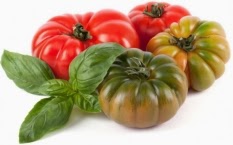
Colorful Heirloom Tomatoes


If you’ve ever been to a farmers market, you’ve noticed that heirloom tomatoes barely resemble the ones you see in the grocery — they’re odd shapes and sizes, and they come in a range of colors. As you may have guessed, this is because the mass food industry realized that consumers prefer “pretty,” so they’ve altered their tomatoes to look as perfectly round and as intensely red as possible.

In order to produce tomatoes with that bright red color, tomato breeders bred them with a specific gene — unfortunately, this gene also diminishes flavor and results in tomatoes’ lower concentrations of carotenoids.

This is yet another reason — in addition to low cost, organic produce and helping local farmers — to go to the farmers market. Heirloom tomatoes might not look as perfect, but they offer more flavor and health benefits. 

Green, Red, Orange & Yellow Bell Peppers


We always want to grab the beautiful red, orange and yellow bell peppers when shopping for dinner ingredients, but we so often end up with green bell peppers because of the price. It turns out there’s a very logical reason green bell peppers are cheaper than their colorful counterparts: They don’t take as long to grow.

The reason bell peppers come in different colors is because they’re harvested at different times, according to Whole Foods. Green peppers are plucked from the plant before they’re fully ripe. If left on the plant, they usually change to yellow-orange and then red.

This also explains the slight difference in taste. Because the pepper’s sugar content increases at the fruit ripens on the plant, the green varieties are the least sweet and have a sharper, almost bitter, taste.

All four colors have their own nutritional benefits: Green peppers are packed with chlorophyll; yellow peppers contain plenty of lutein and zeaxanthin carotenoids; orange peppers offer alpha-, beta- and gamm-carotene; and red peppers provide lycopene and astaxanthin (two other carotenoids).

[via Hella Wella]

Friday, January 3, 2014

The Best & Worst Kinds of Smoothies For Your Health

For those with a sweet tooth, giving up things like soda and milkshakes can be hard. Thankfully, a smoothie is nature's answer to that. Loaded with nutrients from fresh fruit and calcium sources, smoothies are a favorite for health nuts and everyone alike. Unfortunately, not all smoothies are created equally.

THE WORST KINDS OF SMOOTHIES

The worst smoothies are loaded with sugar, which — when consumed in excess — can affect nearly every part of the body. Excessive sugar consumption can cause cavities or exacerbate existing oral health problems, says dental-care network Kool Smiles Facts. And poor oral health is linked with serious health conditions, such as heart disease, stroke and diabetes.

Smoothie Mixes


If you’re trying to better your health, it’s best to focus your diet around whole and natural foods. Packaged smoothie mixes are often packed with sugar, sodium and artificial ingredients. Make sure to carefully check the ingredient list and Nutrition Facts label, and skip the overly processed mixes.


Fruit Juices


Most of the fruit juices sold at the stores are not what they seem. While you may be reading apple juice on the label, what's inside is likely just concentrate, sugar and water. If your smoothie has been made with the fruit juices (even ones marketed as a "healthier" option) you are likely drinking too much sugar. Try to avoid smoothies created with "100% juice,” and instead go for real juice made from 100% natural ingredients.

Made with Yogurt


Smoothies made with yogurt sound like a healthy choice. After all, yogurt is supposed to be a good source of calcium and protein. Consuming yogurt is also beloved for its weight control benefits. However, some of the popular yogurt brands are full of useless ingredients and sugar.

THE BEST KINDS OF SMOOTHIES

The best smoothies are the ones that have natural ingredients. They are better for your overall health and loaded with nutrients your body may not be getting anywhere else. Think of your next smoothie as a supplement to your meal and not just a sweet treat for a warm summer day.

Coconut Milk


Coconut milk is great for your health. When it has no added ingredients, it tends to be high in nutrients that are hard to find in just one place. Loaded with protein, fiber and potassium, it’s an understated nutritional powerhouse.

Freshly Squeezed Juice


Naturally, the best option for a smoothie is freshly squeezed juice. After all, this is what people think they're buying when they order a smoothie. No concentrate for you — just go straight to the source.

Green Tea


Green tea is a natural antioxidant. It is ideal for weight control, boosting the immune system and cleansing the body. As with anything, make sure the green tea being used is all-natural and free of needless additives.

Smoothies are supposed to be a healthier drink option. However, in many cases, a smoothie is just another way to consume too much sugar. Skip the added sugar next time and know the facts before trusting your drink.