Showing posts with label non-dairy. Show all posts

Friday, January 16, 2015

11 Vegan Cheese Recipes That Will Change Your Life


1. Baked Almond Feta

http://www.maplespice.com/2011/04/baked-almond-feta-with-dill-oil.html

This recipe is unbelievably good, full of flavor and remarkably like feta. It crumbles like feta but is also creamy enough in the centre to spread onto crusty bread, crackers, toasted bagels - whatever you like. Also, the original recipe drizzled a thyme and rosemary infused oil over top, you can also try dill.

2. Vegan Unprocessed Cheese Slices


http://www.maplespice.com/2012/11/vegan-unprocessed-cheese-slices.html

Yes, there are vegan "processed cheese" style slices out there but lets face it. They're gross. Try preparing this childhood favorite that’s perfect for sandwiches. Get the recipe here.

3. Muenster Cheese


http://books.google.com/books?id=6rTPl_JTVrUC&lpg=PT200&ots=8LjPeLibC0&dq=uncheese%20cookbook%20publishing&pg=PT170#v=onepage&q&f=false

This mild uncheese complements almost every food. Serve it in slices with crisp fruit such as pears or apples, add diced cubes of your favorite steamed vegetables, or create cold sandwiches or toasty grilled cheese.

4. Extra Sharp Cheddar Cheese Ball


http://vedgedout.com/2013/11/15/kick-ace-extra-sharp-raw-vegan-holiday-cheddar-cheese-ball-virtual-vegan-potluck-edition/

You can serve this cheese ball with any of your favorite raw vegetables, or even put sliced honey crisp apples on the tray, the combination of the sweet crisp apples and the piquant cheese will be amazing. Perfect for a potluck or any party, find this yummy recipe here.

5. Cashew-less Vegan Queso


http://minimalistbaker.com/cashew-less-vegan-queso/#_a5y_p=1583858

This recipe uses eggplant to make a delicious queso, add in a few Tbsp of slightly drained Rotel (just like real queso dip!) or your favorite chunky salsa. This really sends the texture and flavor over the top to mock the real thing.

6. Green Goddess Gouda

http://www.veganricha.com/2014/03/green-goddess-gouda-cheese-and-vegan-st.html

This cheese is a green goddess dressing made into cheese with some of elements of the gouda. Add more agar for a more set cheese that you can grate it. It makes an amazing grilled cheese! Omit the agar and use it to top a salad. 

7. Vegan Swiss Cheese


http://nouveauraw.com/raw-recipies/spreads-cheeses/vegan-swiss-cheese/

Agar is used and it requires boiling water to dissolve and to activate its magic. Magic meaning, agar is the key ingredient that gives that cheese texture to this recipe.  The fun part is that you can use any mold to shape it in.  This recipe is guaranteed to please and makes a great gift!

8. Sage and Gouda Vegan Cheese Ball


http://namelymarly.com/sage-and-gouda-vegan-cheese-ball/

This vegan cheese ball is so flavorful with its crispy sage, salty pistachios, and the sweet chopped craisins encrusting the outside. It really makes for a delicious appetizer. Get the recipe.

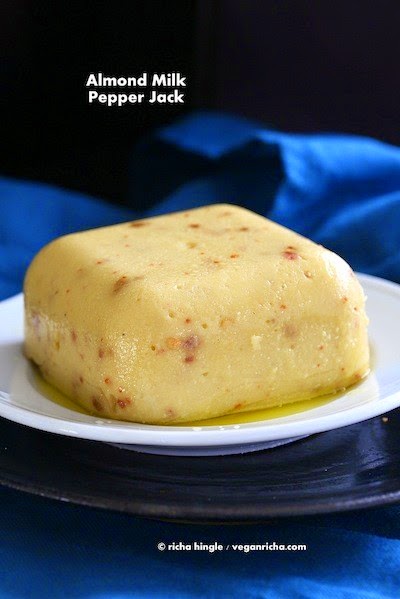
9. Almond Milk Pepper Jack


http://www.veganricha.com/2014/08/almond-milk-pepper-jack-cheese-vegan-glutenfree-recipe.html

This vegan cheese has almond milk, starches and agar to thicken and stretch, chickpea flour for taste and texture and voila! You can also make this with coconut milk or cashew milk. The cheese with cashew milk will be whiter on melting. The cheese shreds with a large grater! Use it on a pizza or grilled sammie.

10. Raw Vegan “Goat” Cheese


http://www.forkandbeans.com/2013/01/22/raw-vegan-goat-cheese-dip/


A non-dairy version of the original, but without the soy. This is the beauty of raw foods–anything can happen with a scoop of cashews. Even cheese. Get the recipe here.

11. Nacho Cheese Slices


http://www.veganricha.com/2014/09/nut-free-vegan-nacho-cheese-slices.html

These Nut Free Vegan Nacho Cheese Slices, have no nuts, no oil, no agar, no thickener, no seed, no gluten, no grain.  Grilled cheese, anyone?

Tuesday, February 4, 2014

Trying Meatless Mondays? 7 Ways to Go Meatless Every Day of the Week


If you are on to Meatless Mondays, kudos to you for taking a step in the right direction. Undoubtedly, you’ve discovered it’s not so terrible, and now that you’ve got some momentum, why not up the ante a little and ditch the meat more often?

While it might be a bit much to expect everyone to give up turkey, cold turkey, it doesn’t mean a meatless meal or two on the other days of the week is out of the question. There are great vegan options for every time of day, all occasions, and any craving imaginable—even meat.

So, here are seven simple ways to go seven days as a part-time vegan.

 1. Fake it. Then, Everyone Is Happy.

Contrary to popular belief, giving up meat and dairy doesn’t mean you have to give up all your favorites. There are great alternatives to nearly every beef-y buffet you’ve grown accustomed to: meatless burgers, cheese-less pizzas, mock meatloaf, and—for the brunch-lovers out there—egg-free omeletes. Not sure about them. Well, devote one meal a week to exploring what we are eating on the greener side of life. You may just dig it.

Recipe Suggestions:

Vegan Omelette: Looking for protein? This has more than the egg equivalent.

Veggie Burgers: 15 Recipes, Countless Benefits—Try a new one every week.

Lentil Loaf—A side of mashed potatoes, a little gravy, and you’ve got a classic.

 2. Forgot Milk? Go Nuts.

How many times have vegans of the world heard the initial gasp of I just couldn’t live without cheese? Usually, this is the deal-stopper for lactose lovers. It still doesn’t change the fact that milk and all those milky products just aren’t quite living up to the hype they once carried. They taste great, but that’s not to say that a nice cashew pepper jack can’t get the job done just as well, maybe even better. A vegan variation means cheese isn’t necessarily off the table.

Recipe Suggestions:

10 Vegan Cheeses That Will Knock Your Socks Off—A taste-testing party.

Vegan Baked Nut Cheese—Got crackers?

 3. Eat Your Vegetables. You’re an Adult Now.

Maybe as children, our palettes were so unrefined as to need casseroles and cream sauces to cover up the fact that we were eating vegetables, but most people eventually reach a point where at least a few vegetables are enjoyable. Then, it’s actually possible, palatable, and potentially pleasing to have a veggie-based—not just vegetarian, but vegetable—meal every day. They are faster to make and increase the likelihood of reaching the daily-recommended dosage. Mom will be so proud.

Recipe Suggestions:

20 Ways to Enjoy Kale, the King of Greens—Nutritious incarnate.

Roasted Winter Vegetable Soup—A big, warm bowl of goodness.

Vegan Eggplant Noodles—Quick, simple, and balanced.

4. One Word, So Many Possibilities: Sandwiches

Sandwiches are the ubiquitous lunchtime choice. They stack up clean and fit nicely into the little brown bags and briefcases. Up until the recent cluster of peanut allergies, there was even a recognized, viable vegan option in the PB&J. But, somewhere between the bottom piece and the top piece of bread, many of us seemed to have forgotten that anything can go between. It doesn’t always have to be meat and/or cheese. There are a whole lot of fast and filling options out there.

Recipe Suggestions:


Chickpea “Tuna” Salad Sandwich—If you’ve just got have something familiar.

The Cracked Sandwich—For a simple, straight-up vegetable stacker.

The Vegan Gutbuster Sandwich—Need something substantial for lunch?

5. Travel Vicariously through Your Food

It’s a big world out there, and a sizable chunk of it goes without meat for every meal, or every day, or ever at all. Why not see what they’re up to? If Meatless Mondays are working out for you (which they must be if you are reading this), then World-y Wednesdays might just be a hit, too. Imagine trying a dish from a different country every week. Would it make any difference if that meal were meatless? Of course not, it’s still providing you with that certain cultural élan you were after.

Recipe Suggestions:

African Groundnut Stew—Ever even heard of this? Sounds funky.

Flashworthy Alu Palak (Curried Comforting Potatoes with Spinach)—Ah, India.

5 Delicious and Surprisingly Meatless Recipes for Taco Tuesdays—Or, Wednesday.

6. Sweet, Fatty Redemption

Yep, meatless dessert is possible. Heck, even dairy-free if need be. Contrary to popular perception, it is downright easy and worthwhile to whip up a vegan dessert. Often, you don’t even have to bother cooking them (and that doesn’t mean a fruit cocktail). Plus, there is the added bonus of getting to pretend it’s healthy. Sometimes, it even is. Regardless, there are vegan options far and wide that will put just the right ending to a beautiful meal.

Recipe Suggestions:

Raw Vegan Chocolate and Almond Fudge—Who needs an oven?

10 Scrumptious Cheesecakes That You Won’t Believe Are Vegan—Try them all!

Simple Vegan Sugar Cookies—Easy. Familiar. Delicious.


7. Get Real. Go Full-on Crunchy.

Meatless Mondays? Articles citing vegan recipes for mid-week dining. You’ve probably even watched some documentaries about the modern-day food industry and the sorry state of factory farming. That might even be why you’re here. Face it: If you’ve made this far in the article, you’re becoming one of us. Strap on some sandals, get some patchouli, and embrace the veggie power. There is plenty of room at the table, so jump right on in to the crunchy, granola wave we’ve been riding.

Recipe Suggestions:

Peanut-Butter-Maple-Pecan and Coconut “Bacon” Granola—Crunch.

Cooking with Tofu + 10 Delicious Recipes—Not just for hippies anymore.

Vegan Cherry Garcia Ice Cream—Ben & Jerry’s…Grateful Dead…the munchies?

Sunday, October 6, 2013

Plant-Based Protein Powerhouses

Like most people who have a higher health conscious, most vegans and vegetarians have a story about how they came to the decision to live their particular lifestyle. No matter your reasons, one of the challenges for non-meat eaters is making sure they get enough protein every day. But it’s not as big a deal as many think. Like most of the nutrients from quality food, a little goes a long way. Back in the hunter/gatherer days, primitive man ate a lot less meat - usually around 20% of his total diet - a far cry from how much the average American consumes daily in the 21st century.

Protein is an essential nutrient that plays a key role in how our bodies function. But too much protein is associated with several diseases. It is more important to eat a varied diet than to isolate and focus on any one nutrient. Including more plant sources of protein will also offer more health benefits including more fibre and nutrients. There are lots of nutrient dense foods with a high protein content, here are some of the top plant based proteins:

Below is a list of the top-7 plant-based foods high in protein and view our plant-based protein chart for simple conversions.

1. Quinoa: 11g Protein / Cup

A grain like seed, quinoa is a high protein alternative to rice or pasta, served alone or over vegetables and greens. It provides a good base for a veggie burger and is also a fantastic breakfast cereal when served cold with almond or coconut milk and berries.

2. Lentils: 17.9g  Protein / Cup

Delicious, nutritious and super easy to prepare. Trader Joe’s sells them pre-cooked and I’m not afraid to just eat them cold right out of the package for lunch or a snack on the run.

3. Tempeh: 24g Protein / 4 Ounces

A fermented soybean-based food, tempeh is a healthy protein-packed alternative to it’s non-fermented cousin tofu. It makes for a great veggie burger and doubles as a tasty meat alternative to meatballs in pasta, or over brown rice and vegetables.

4. Seitan: 24g Protein / 4 Ounces

An excellent substitute for beef, fish and soy products, one serving provides about 25% of your RDA of protein. But not for those with gluten sensitivities, as it is made from wheat gluten.

5. Beans (Black, Kidney, Mung, Pinto): 12-15g Protein / Cup

I love beans. Great on a veggie burrito, in chili and soups, on salads or over rice with vegetables, beans of all varieties are a daily staple of my diet.

6. Spirulina: 6g Protein / 10 grams

A blue-green algae, spirulina is a highly bioavailable complete protein containing all essential amino acids. At 60% protein (the highest of any natural food), it’s a plant-based protein powerhouse that finds it way into my Vitamix blends daily.

7. Hemp Seeds: 16g Protein / 3 Tbsp

With a perfect ration of omega-6 and omega-3 EFA’s, hemp seeds are another bioavailable complete protein rivaled only by spirulina. A simple and great addition to a multitude of dishes, from breakfast cereal to salads to smoothies to vegetables and rice.

Friday, October 4, 2013

Plant- Based Protein Chart


The following is a chart is adapted from the USDA Nutrient Database that displays the protein content of vegetarian foods, it does not include any dairy or soy.  Please note that in order to determine the amount of protein that is optimal for your body, use the following formula that is based on a vegetarian recommendation:

Convert weight to kg (pounds/2.2)
Multiply kg by .9 = Protein recommendation in grams

Nut/Seed (1/4 Cup; 4 tbs)

Protein (g)

Chia Seed 12
Hemp Seed 10
Flax Seed 8
Sunflower Seed 8
Salba 7.4
Almond 7
Pumpkin Seed 7
Sesame Seed 7
Pistachio 6
Walnut 5
Brazil Nut 5
Hazelnut 5
Pine Nut 4
Cashew 4


Beans (1 Cup cooked)

Protein (g)

Lentil 18
Adzuki 17
Cannellini (white beans) 17
Cranberry bean 17
Navy Bean 16
Split Peas 16
Anasazi 15
Black Bean 15
Garbanzos (chick peas) 15
Kidney Bean 15
Great Northern Beans 15
Lima Beans 15
Pink Beans 15
Black-eyed Peas 14
Mung Beans 14
Pinto Beans 14
Green Peas 9


Grains (1 Cup cooked)

Protein (g)

Triticale 25
Millet 8.4
Amaranth 7
Oat, bran 7
Wild Rice 7
Rye Berries 7
Whole Wheat Couscous 6
Bulgar Wheat 6
Buckwheat 6
Teff 6
Oat Groats 6
Barley 5
Quinoa 5
Brown Rice 5
Spelt 5


Vegetables (cooked)

Protein (g)

Corn (1 large cob) 5
Potato (with skin) 5
Mushroom, Oyster (1 cup) 5
Collard Greens (1 cup) 4
Peas (1/2 cup) 4
Artichoke (medium) 4
Broccoli (1 cup) 4
Brussel Sprouts (1 cup) 4
Mushroom,Shitake (1 cup) 3.5
Fennel (1 medium bulb) 3
Swiss Chard (1 cup) 3
Kale (1 cup) 2.5
Asparagus (5 spears) 2
String Beans (1 cup) 2
Beets (1 cup) 2
Sweet Potato (1 cup) 3
Cabbage (1 cup) 2
Carrot (1 cup) 2
Cauliflower (1 cup) 2
Rutabaga 2
Squash 2
Celery (1 cup) 1
Spinach (1 cup) 1
Bell Peppers (1 cup) 1
Cucumber (1 cup) 1
Eggplant (1 cup) 1
Leeks (1 cup) 1
Lettuce (1 cup) 1
Okra (1/2 cup) 1
Onion (1/2 cup) 1


Other Sources

Protein (g)

Egg 6
Sunwarrior Rice Protein (scoop) 17
Avocado (1 medium) 4
Cherimoya 7
Durian (1 cup) 4
Sapote (1 medium) 5

Thursday, October 3, 2013

The Sour Facts About Milk: What Every Parent Needs To Know


Over the past 40 years, the dairy industry has poured billions of dollars into advertising campaigns designed to mesmerize, lure, and frighten individuals into consuming their products. Their frosted fingers have steadily tightened their steely grip of influence over educational institutions, retirement homes, hospitals, and doctor’s offices; permeating magazines, books, journals, and commercials with biased information that promotes their agenda. After years of mind-numbing “mustaches” of manipulation, we now assume that dairy products are a natural and normal part of the human diet. However, this is far from the truth.

Like all female mammals (including humans) who produce milk for their young, a female cow secretes milk that is intended to nurse her baby calf for about one year. This fatty hormonal secretion (containing over 60 hormones and growth factors) is designed to take her 65 pound newborn calf and turn him into a 700-pound cow in less than one year — quite a feat!

During pregnancy, a cow's estrogen level skyrockets over 30 times higher than when she’s not carrying a calf. Since today's factory dairies pump milk from female cows continually to increase profits, higher hormone levels (both naturally occurring and those created by agribusiness) are found in dairy milk, which also happens to be disastrously high in fat; a critical factor further exacerbating increased estrogen levels in humans.

When children are handed this hormonal cocktail masquerading as a magical health elixir, their undeveloped bodies are flooded with milk's massive amount of estrogen, leading to an epidemic of precocious puberty. Additionally, children end up consuming sub-therapeutic doses of antibiotics in every glass of milk.

A cow's udders can become unnaturally distended from being forced to produce thousands of extra gallons of milk per year, making them drag on the ground. Most concrete dairy lots are paved with piles of bacteria-laden manure. The fecal matter contaminates her udders, causing infections (mastitis), and is one of the reasons antibiotics are routinely administered to dairy cows.

Another dangerous constituent in cow milk is insulin-like growth factor 1 (IGF-1). When humans consume this hormone, their IGF-1 levels also increase, accounting for the “growth” effects of cow’s milk. Unfortunately, if breast cancer cells or prostate cancer cells are exposed to IGF-1, they proliferate like weeds, leading to disease at an alarming rate. Curiously, this critical information is never included in dairy promotional literature.

Since the beginning of time, countless cultures have thrived without a drop of “ivory syrup.” How did the native populations of Hawaii survive without cow milk before the introduction of cattle in 1793? The same way that native people of Mexico did before cattle was introduced in 1521. Many people around the world have never seen a cow, let alone drank her hormonal secretions. Large populations worldwide have been flourishing without bovine milk for eons. Consuming cow milk is highly unnatural; there is no animal in nature (other than humans) that drinks the milk of another species naturally. Giraffes don’t hound lactating goats for a sip of milk, and horses don’t run to nurse on pigs' teats; the mere thought seems ludicrous.

Leading pediatricians such as Dr. Benjamin Spock (also an influential and best-selling author of parenting books) and Dr. Jay Gordon have been strong proponents of a dairy-free diet for children. The Physicians Committee for Responsible Medicine (PCRM), a non-profit organization whose members include 150,000 health professionals, has always been adamantly opposed to cow milk consumption.

When the Journal of Clinical Nutrition surveyed all accredited medical schools in the US in 2006 about their nutritional curriculums, they found that of the responding 106 schools, on average, medical students received close to 24 hours of nutrition education. Some received none. Their conclusion was that the amount of nutrition education in medical schools was “inadequate.” That’s quite an understatement. A hair dresser receives more training before cutting clients' hair professionally, yet parents are taking advice from individuals with hardly any unbiased nutritional education?

Medical schools are highly influenced by the agribusiness industry. Agribusiness continues to target pediatricians offices with marketing campaigns designed to push their highly manipulative ideology, so it’s hardly surprising that many well-meaning pediatricians are ill informed about the dangers of dairy products. Expecting to receive meaningful, objective, and impartial nutritional advice in an environment influenced by dairy and agribusiness interests leads to predictable recommendations to consume dairy at all health costs.

Thankfully, many parents are waking up to the truth about dairy products and seeking healthier alternatives. Rice, almond, hemp, and coconut milks are good choices for many kids and adults. These can be easily enjoyed with whole grain cereals, oatmeal, and creamy soups. One of my favorite methods of boosting kids' (and adults') nutrient consumption is to use nut or rice milks in smoothies; adding sweet, fresh, juicy whole fruits and greens such as kale, spinach, or leafy lettuce, and blending them for a tasty drink. Leafy greens are better sources of minerals than dairy products. The dietary fiber found in fruits, vegetables, whole grains, and beans also assists with escorting estrogen out of the body. Many greens contain not just generous amounts of calcium, but additional nutrients critical for building bone health, such as magnesium, boron and vitamin C. Being physically active is also important for building bones, and is one more reason to get the kids off the couch and on the playground.

Just as no loving parent would allow her small child to play on busy highways, dairy products should be approached with extreme caution given the amount of information readily available about their dangers. As parents, we have the responsibility to research and educate ourselves about the food choices we offer our children. They count on us wholeheartedly for looking out for their best interests. Helping children avoid dairy products is one of the most loving, caring, and responsible actions a parent can take for their child, themselves, and for building a healthier world.