Showing posts with label sustainability. Show all posts

Tuesday, December 29, 2015

Do You Know About Bioregional Eating?

Eating bioregionally is gaining in popularity. Here's what you need to know, including how it differs from the locavore moment.
Growing local has its merits, but a growing movement suggests perhaps we need to let the region dictate what we grow locally. (Photo: Arina P Habich/Shutterstock)
There's a growing trend in sustainable food that sort of fine tunes locavorism. Sourcing from within bioregions is the one of the big food trends for 2016, according to Forbes, and although eating bioregionally has a lot in common with locavorism, it's not the same. What are bioregions and how can paying attention to them help us eat and live more sustainably? Here's a primer.

What are Bioregions?

A bioregion is a "geographical area with a unique combination of plants, animals, geology, climate and water features." When it comes to growing and raising food, each bioregion will have foods that it can naturally sustain and foods that it cannot.

Bioregional Eating vs. Locavorism

I have neighbors here in New Jersey who have a lemon tree in their house. They are avid vegetable gardeners and grow seasonally in both their backyard and a plot in a community garden. They certainly do their part to support the locavore movement. That lemon tree is something completely different, though. The climate where we live doesn't support citrus, so the tree is purely for fun. The number of lemons the tree produces may never equal or surpass the amount of money it costs to buy and sustain the tree, and the resources used to make sure it thrives are considerable.

I mention this not to put down my neighbors. In fact, I would love a lemon tree in my home. It would be fun to pick a fresh lemon each time I needed one, but I've established that my enthusiasm for growing my own food doesn't match my enthusiasm for eating it. So I mention this as an example of how growing locally isn't always sustainable.

Food that comes straight from your backyard has been hailed by many as the holy grail of sustainable eating for about a decade now. It's the ideal that resonated with me when I began my personal blog about eating local in the South Jersey/Philadelphia region. What I've come to learn along the way, though, is that eating sustainably is much more complicated than buying everything I possibly can from within a 100-mile radius.


Tomatoes grown in a hot house during every season may be local, but the practice isn't necessarily in keeping with bioregionalism. (Photo: Tree of Life/Shutterstock)

As with the lemon tree example, just because it can be grown locally doesn't mean it should be grown locally, especially when you take sustainability into consideration. My friends' lemon tree barely makes a dent, but large-scale production of foods that a bioregion doesn't naturally support can make a big dent in un-sustainability. Take for instance, energy-intensive hot houses that grow tomatoes out of season that are sold within the region. Are the tomatoes local? Yes. Are they sustainable? It gets more complicated then, doesn't it? They may (or may not) be more sustainable than a tomato grown in a warm region and shipped across country. Both methods of obtaining a tomato in the winter months in a place where they won't grow naturally use a lot of energy.

The concept of eating bioregionally seems to fine tune locavorism. Eating a locally grown hot house tomato in February is not eating bioregionally; eating a farm- or garden-grown tomato in July is. To truly eat bioregionally, we should forgo all fresh tomatoes once they're out of season.

Bioregionalism Beyond Food

This concept is easy to grasp when it comes to food, but it goes beyond that.

Your food bioregion may contain several towns, more than one state, and even more than one country. Part of bioregionalism is the idea of basing our political borders on nature. When you do that, you can see how it could get complicated fast. Instead of several different local, state or even national governments existing within one bioregion, there would be one political government within its natural borders. If we arranged "political structures around ecological regions and the cultures within them," argues Rachael Stoeve in Yes magazine, there would be sustainability in many areas of life.

There's a whole other blog post to write about that aspect, but it's interesting to look at the food concept with that broader scope. The decisions made about the resources within a bioregion would be more likely to benefit the environment and the people than corporations and those with a financial interest. That's something to chew on.

Tuesday, February 18, 2014

Farmacology: What Business Can Learn From Sustainable Farming

Medical and business communities can take surprising lessons from farming and improve employee well-being and productivity.

Frustrated that conventional medicine had little to offer many of her patients, Daphne Miller, a practicing physician and professor of family medicine at the University of California at San Francisco, decided to take a look at how human health is affected by other natural systems. This led her on a journey of family farms, where she wandered through henhouses, carted produce, and dug in the dirt.

Miller's findings, gathered in her book, transformed her thinking about stress, resilience to disease, and how a systems thinking approach in the medical community could save money and enhance people's health. The lessons she found hold insights for the health of business too. Can companies use the vital signs of farms to measure their own well-being? And how do externalities help drive greater sustainability?

Why should a doctor think like a farmer?

Agriculture has everything to do with medicine. In fact, I've come to see the divisions between the two disciplines as mostly artificial and arbitrary, and am now convinced that a farm internship should be a required part of medical training, and vice versa.

First, there's the direct connection between the farms where our food is grown and our bodies. Many of us are familiar with the headline-catching links between industrial farming and our physical health: superbugs spawned on large-scale dairies and cattle operations that threaten to infect us, or the chemical runoff that contaminates our drinking water. But beyond these issues, we pay little attention to how decisions made on a farm, [for instance] the choice of seed [or] soil management, positively or negatively affect our bodies.

My time spent learning from farmers and researchers has made me think beyond food as medicine to farm as medicine. I've learned how healthy soil can produce a healthy immune system, how microbes on the farm can communicate with our resident microbes – our microbiome – how certain grazing practices can produce food that stress-proofs our nervous system, how the terroir in which an herb is grown can influence its medicinal value, or how inner-city farming delivers unexpected health benefits to the surrounding community.

I also discovered that farming at its best offers a radically new way to think about health and healing. For example, the integrated pest management approach used by a winery in Sonoma gave a group of oncology researchers a more ecological way to understand and treat cancer.

Of two organic egg farms, you say that the one with higher production is the less sustainable. What does this tell us about hidden costs?

The farms taught me how we value short-term productivity at the expense of overall health. The conventional egg farm has higher laying rates and the hens produce larger eggs than the neighboring pasture-based egg farm. But when you take a whole host of factors into account, such as egg taste and quality, market price, fossil fuel inputs, worker health, hen health and environmental health, you realize that pasture-raised is the healthier, more sustainable option.

I often see this thinking applied to human productivity. Many of my patients work for companies where the work ethic is one of intense competition, with 60-80-hour work weeks, all in the name of greater annual profits. They tell me they rarely take vacations and wouldn't dream of exercising during their lunch break, as that would be interpreted as a lack of dedication to their job.

These patients mortgage their health in order to maximize their work performance and their revenue; they pull all-nighters, skip meals, eat food that offers fuel but few nutrients, use caffeine to stay awake and then alcohol to go to sleep, and rarely move their bodies except to hop on a plane or walk from desk to car. This approach is not sustainable and eventually leads to chronic health problems, including high blood pressure and blood sugar, weight gain, depression, anxiety and sleep apnea.

Not surprisingly, newer research is showing that this is as unhealthy for businesses as it is for individuals. Maximally taxing employees translates into lower work performance and, in the long term, less financial success.

You make an analogy between factory farming and factory medicine. What are the implications for managing healthcare costs?

Eighty percent of health expenditures in the US are spent within the four walls of a medical institution, and they are spent treating disease. This is consistent with the factory model: consolidate and streamline your efforts for maximal impact. But farm health and human health are not just a matter or treating disease, just as business health is not just a matter of tackling problems. I would argue that in all these sectors our money is much better spent on nurturing our environment – our air, our soil, our social institutions, our educational resources – than on fixing end-stage problems.

You say your farm odyssey gave you a new understanding of "vital signs". Can you explain?

I was fascinated to learn what farmers consider the "vital signs" of a healthy farm ecology: diversity, synergy, and redundancy.

Diversity means not just variability in crops, but also in the populations of microbes and other life forms on the land. Synergy – the whole being greater than the sum of the parts – is why a given farm's success cannot be predicted simply by looking at its discrete components. Redundancy, or self-sameness, describes the emergence of specific designs within each organism and throughout an entire ecosystem. Recurring patterns are a sign of a system's resilience: in the event of a failure, one part can provide backup.

These vital signs – diversity, synergy, and redundancy – are rarely discussed within medicine, but I now see them as helpful ways to describe a healthy human. My friends in business who've read Farmacology tell me that these same vital signs have given them a useful way to assess the health of their company.

Judith D Schwartz is the author of Cows Save the Planet and Other Improbable Ways of Restoring Soil to Heal the Earth. More information on Daphne Miller's book, Farmacology: What Innovative Family Farming Can Teach Us about Health & Healing, can be found here.

Friday, January 11, 2013

QAI makes predictions for organic industry in 2023

Coming on the heels of the 10th anniversary for USDA Organic as federal law, QAI (Quality Assurance International), a leading certifier of organic and gluten-free products with 23 years of experience, has unveiled its 10-year prophecy for the organic industry based on its more than two decades of experience. This year, QAI has certified more than 55,000 products in more than 48 U.S. states and 10 countries.

“QAI was founded the year before the Organic Foods Production Act of 1990 was passed by Congress. We’ve been active with organic since its formative years,” said QAI General Manager Jaclyn Bowen. “We realized we have a huge database of organic statistics and knowledge that we could share to help the industry plan for a more organic future.”

“Our 23 years of experience in organic certification, helping a diverse range of customers and stakeholders to deal with such a wide range of industry and products related issues, helps us to support the industry whatever the organic future holds. We believe the organic industry’s future is bold and broad, rigorous and accessible, more mainstream and less fringe,” said Bowen.

QAI examines both past and present organic milestones to answer the question: Where will organic be by the 20th anniversary of USDA Organic? QAI’s Organic Forecast for 2023 is as follows:

Prediction #1: Stricter Organic: The USDA’s National Organic Program and National Organic Standards Board will bring even more rigor to the federal regulations in terms of specificity for practices and allowed substances and practices. Government oversight will make it more difficult for “organic” to be used loosely as a marketing term, i.e. “Organic CafĂ©” or “Organic Resort.”

Prediction #2: Food Safety Fusion: The organic food supply will fuse with food safety and other “product integrity” programs, adding more disciplined food safety practices that are audited and certified at even the smallest of farms and plants. Organic and food safety audits will be increasingly synchronized. QAI anticipates continued growth in the offering of multiple audits so companies may bundle organic, gluten-free, kosher, and/or numerous food safety audits into one thorough audit and inspection.

Prediction #3: Harmonic Convergence: International standards for organic will be harmonized with USDA organic, removing former obstacles to international trade. The U.S. also will move closer to its European neighbors in Non-GMO verification and labeling requirements.

Prediction #4: Sustainably Organic: Increased focus on companies’ impact on biodiversity, water and soil conservation will translate to additional sustainability metrics in organic practices. As the spirit of organic is to grow in harmony with nature, each farm and company’s environmental impact will be under more scrutiny.

Prediction #5: Transparency Made Tangible: Consumers need to know and trust the sourcing of the products they buy will drive total transparency in the organic production chain, and make QR (quick response) codes – already introduced by QAI in July 2012 - commonplace for all organic certificates and on packaging. The USDA Seal for organic will remain credible, and online tools will be used by consumers to see the credibility of each product’s organic claims.

Prediction #6: No More Shopping Gaps: Practical steps will be taken to be more inclusive and steps will be taken to include new or emerging industry sectors. This will make organic certification available in sectors currently excluded in the regulations – like aquaculture/seafood. It also will address underserved categories like dietary supplements, pet food, personal care, cleaning supplies, fiber and flowers. If it starts with a plant, mammal or fish, it can be certified organic. Consumers will be able to find certified organic products in all sections of the supermarket and pharmacy.

Prediction #7: Organic Literacy is Evident: After years of some confusion in the marketplace, efforts by the NOP, Organic Trade Association, and retailers pay off in increased consumer literacy for organic. Land grant universities also help increase knowledge in organic through their own research initiatives and increase in organic and sustainable agriculture tracks.

Prediction #8: Accessible Organic: Larger organic production, from farm acreage expansion to processing facilities, will translate into organic landing where it is most needed: schools, hospitals, food banks, convenience stores and in mainstream America’s home.

These predictions are a drastic shift from the industry environment that was in place in 1989, the year QAI was founded. During this time there was no federal program for organic in existence and the industry was 100 percent self-regulated. At the time, there were an estimated one dozen organic certification agencies operating in North America, and the USDA reported 5,328 U.S. organic growers with only 2,264 certified.

By 2002, the year USDA organic became federal law, there were an estimated 25 organic certification agencies accredited by USDA, thus giving them legal authority to certify farming, livestock and handling practices in compliance with the newly codified federal regulations for USDA organic. USDA statistics showed 7,323 organic farms with 1,925,534 total acres in organic production. QAI conducted 639 distinct organic certifications in 2002 for customers in 42 states and 11 countries.
As the organic industry enters 2013, the USDA lists 87 accredited certifying agencies, 49 of which are based in the U.S., and a total of 17,281 organic farms and processing facilities in the U.S. certified to USDA organic standards, a 136 percent increase since 2002. USDA’s most recent survey shows organic acreage has grown to 3,648,896 acres, a growth of 89 percent since 2002. The OTA reports current industry sales at $31.5 billion, a 9.5 percent growth rate over the prior year. QAI’s growth mirrors the organic industry’s growth with 1,681 distinct certifications, a 163 percent increase over 2002.
[via New Hope 360]

Tuesday, December 4, 2012

saving food from the refrigerator

4o-0

Although we think and talk about food on a constant basis, do we really know how best to preserve it or do we become lazy and leave the responsibility to technology? Design Academy Eindhoven graduate Jihyun Ryou thinks we no longer understand how to treat food. Her Save Food from the Fridge project involves placing certain foods on a group of "knowledge shelves" outside the fridge. With the goal of a better relationship with our food we may be able to waste less and conserve more energy, without sacrificing design aesthetics.
"Observing the food and therefore changing the notion of food preservation, we could find the answer to current situations such as the overuse of energy and food wastage. My design is a tool to implement that knowledge in a tangible way and slowly it changes the bigger picture of society. I believe that once people are given a tool that triggers their minds and requires a mental effort to use it, new traditions and new rituals can be introduced into our culture." - Jihyun Ryou
Her beautifully designed storage shelves aim to "re-introduce and re-evaluate traditional oral knowledge of food, which is closer to nature. Furthermore, it aims to bring back the connection between different levels of living beings, we as human beings and food ingredients as other living beings." For instance, the egg holder shelf includes a drop down cup of water to test the eggs. A ripe egg will always sink in water, so before breaking it open you can check to see its freshness. There is also a set of spice jars equipped with lids that hang down small bags of rice inside the jar. The rice is said to absorb humidity and keep the spices dry. There is even a hybrid apple/potato holder which keeps potatoes in a dark cabinet. Particularly focusing on the food preservation, it looks at a feasible way of bringing that knowledge into everyday life.

4o-5
4o-1
4o-2
4o-3
4o-4

Thursday, November 15, 2012

let's not forget to be thankful for the earth

Thanksgiving is just a week away and many of us will be surrounded by friends and family enjoying an amazing home cooked meal of turkey, mashed potatoes and gravy. With delicious food on our minds, we often forget how the Thanksgiving holiday affects the environment. Of the 248 million turkeys raised each year, over two-thirds (that's 82.67 million turkeys) are consumed each Thanksgiving.. For many Americans, turkey is a must-have during the holiday feast, even with it, there are ways to have a healthier, more sustainable "Turkey Day".

buy local

As a measure to reduce carbon emission, it's best to purchase your turkey from a local, organic source which helps keep agriculture thriving in your area. Check AllOrganicLinks.com for a comprehensive database for all things organic. Organic turkeys ensure that no pollution will enter the air or water as a result of harmful pesticides and hormones, thus making them taste better ultimately better for you. Additionally, when buying produce make sure to buy local and organic and in-season vegetables. This will reduce the carbon emissions of your Thanksgiving. If you're unsure of which vegetables are in season, click here.

limit travel

Many Americans hit the road to visit family and friends; this is one of the hidden greenhouse gas creators during the Thanksgiving holiday. When possible, make sure to carpool to your dining destination, or invite your neighbors into your home, keeping everyone close and strengthening the community while reducing the ecological impacts of the holiday. According to GreenLivingEco.com, if every family reduced their Thanksgiving gas usage by one gallon, we would reduce greenhouse gas emissions by one million tons each year.

reduce waste

Like many people, the meal is the favorite part about the holiday. However, Americans waste about 25% of food each year on Thanksgiving. To reduce this, plan your meals appropriately. A rule of thumb is to have a main course, four sides, and a dessert - assume each person will have about one pound of turkey and approximately one-fourth of a pound of each side. If you still end up making too much, remind your guests to bring food storage containers and send them home with a 'doggie bag' or donate them to local homeless shelters. Composting the remaining scraps is another sustainable alternative.

decorations

While a big feast can generate holiday bliss, festive decorations can also contribute. When decorating, keep in mind sustainable, homemade ways to give your home the Thanksgiving vibe. Use items from your yard - gather pine cones, twigs, and leaves to create a centerpiece. Pair candles with walnuts to create a modern tablescape.

be thankful

With cheer in the air around the holiday seasons, it's always important to thank your family and friends for an amazing year, but we should also appreciate the earth for supplying us with an amazing place to live, beauty to view, and food to eat. Do your part to have a sustainable, healthy Thanksgiving to make sure there are more beautiful holidays for generations to come.
[source: US Census]

Wednesday, October 3, 2012

FTC Issues Revised "Green Guides"

Expect to see fewer products pitched as "environmentally friendly" if the government has its way.
Hoping to limit the number of deceptive claims, the Federal Trade Commission on Monday released an updated version of its green marketing guidelines that hold companies to truthful standards in marketing their products.
The revision to the Green Guides is the first since 1998, when phrases like "carbon offset" and "renewable energy" were not widely used.
The revisions include some changes to the proposed guidelines that the FTC circulated in October 2010 and reflect input from consumers and industry groups. New sections address the use of carbon offsets, "green" certifications and seals, and renewable energy and renewable materials claims.
Among the updates, the guides warn marketers not to make broad, unqualified claims that their products are environmentally friendly or eco-friendly.
The FTC said "very few products, if any" deliver the far-reaching environmental benefits that consumers associate with such claims, which it says are nearly impossible to substantiate anyway.
The guides also:
  • Advise marketers not to make an unqualified degradable claim for a solid waste product unless they can prove that the entire product or package will completely break down and return to nature within a year after customary disposal.
  • Caution that items destined for landfills, incinerators, or recycling facilities will not degrade within a year, so marketers should not make unqualified degradable claims for these items.
  • Clarify guidance on compostable, ozone, recyclable, recycled content, and source reduction claims.
The revised guidelines also outline how marketers can qualify their claims to avoid deceiving consumers.
  • They do not address use of the terms "sustainable," "natural" and "organic." The FTC said that's because it may lack a basis to provide meaningful guidance, or it wants to avoid proposing guidance that duplicates or contradicts that of other agencies.
According to study by TerraChoice
The Green Guides are not rules or regulations but general principles that describe the types of environmental claims the agency may find deceptive. The FTC has imposed fines and taken other actions in recent years involving deceptive recyclability, biodegradable and environmental certification claims.
FTC Chairman Jon Leibowitz said the changes will level the field for honest business people.
"The introduction of environmentally friendly products into the marketplace is a win for consumers who want to purchase greener products and for producers who want to sell them," he said. "But this win-win can only occur if marketers' claims are truthful and substantiated."
Consumer advocates hope the revisions will help reduce "greenwashing," in which a company promotes a single green aspect of the product but doesn't give the full picture of other ingredients.
Green Seal Inc., a nonprofit environmental certification organization based in Washington, applauded the changes.
"With this new guidance, we hope that there will be enforcement to help rid the marketplace of the many less-than-credible seals and greenwashing that exists," said Arthur Weissman, the group's president and CEO.


Monday, August 27, 2012

HOW TO: Enjoy Your Labor Day Weekend

You probably don't need anyone to tell you how to spend your Labor Day weekend, but the fine folks at Organic Gardening came up with a list of a few nifty ways to enjoy the long weekend. We think they're pretty great, so we figured we'd share them with you. Enjoy!

1. Go to a farmers’ market. Harvest time is heading into high gear, so there’s no better time to head to a nearby farmers’ market and stock up on fresh, tasty edibles. You’ll not only get great field-fresh food; you’ll also support your local economy—and help fight global warming, since locally produced food comes without the carbon emissions required to truck it across the continent. Look for food grown with organic methods, and you avoid ingesting harmful chemicals and also support agriculture that adds carbon to the soil instead of releasing it into the atmosphere as a greenhouse gas. Now’s also a good time to sign up for a Community-Supported Agriculture (CSA) program, so you can get farm-fresh food every week.


2. Dig a root cellar. Not sure where or how to store all the fresh produce you got at the farmers’ market? A root cellar could be the answer. Don’t worry—you don’t have to literally dig one out of the ground (though you could, if you’re looking for a weekend project). Odds are there’s a cool, dark space somewhere in your home that will do: a shelf in the basement, an unused closet, even space under your porch.

3. Avoid overeating. Most holidays have a strong food component, and with its various buffets, cookouts, and picnics, Labor Day weekend is no exception. So follow the healthy-eating advice we offered back on July 4. Simple tactics like choosing smaller plates and keeping a count of your drinks can have a big impact on your calorie intake. And when it comes to overeating, keep the big picture in mind: Most of the food we’re exposed to has been pumped up with extra fat, sugar, and salt to play on our biologically hard-wired food cravings.


4. Get ready for fall allergies. If you’e prone to autumn allergies, ragweed and other triggers may already have you sneezing. Arm yourself with some easy nondrug allergy remedies that will cut down on the need for pills. Make sure your diet includes foods rich in folate, a B vitamin that seems to protect against allergies. And learn about some things you can do around the house to prepare for fall allergy season.


5. Do some late-season gardening. It’s not too late in the year to get your hands dirty, even if you don’t live in a southern part of the country. Good late-summer garden projects include planting garlic, installing a birdbath, or digging next year’s beds. You can also start a compost pile to build up some natural fertilizer for next year’s garden. If your garden’s lush right now, take an inventory of how high everything’s grown, and build some homemade supports and trellises that will give next year’s crop a lift. Or start your fall garden cleanup so your soil will he healthy and ready come spring.


6. Clean with vinegar. If you’re using some of the extended weekend to get some housecleaning done, try out the cheap, easy, ecosafe alternative to harsh chemical cleansers. Fast becoming the second-favorite liquid of the Rodale.com staff (water is number 1, of course), vinegar has all kinds of awesome uses. For basic cleaning, 1 part vinegar to 9 parts water will wipe out germs and grime. Mix vinegar with other natural ingredients to make specialized cleaners that cost a fraction of the toxic stuff you get at the stores.


7. Try canning or pickling. With some basic supplies and traditional canning techniques, you can preserve your favorite summer fruits and vegetables to enjoy in fall and winter. Check out Rodale.com's Nickel Pincher for a canning primer that you can use to make fruit preserves and jellies. You can apply the same skills to other fruit canning recipes, and try canning some tomatoes and pasta sauces. Or try your hand at pickling.


8. Relax. Maybe you’re one of those people who have trouble unwinding after a busy week. A great way to signal to your body that it’s time to relax is to spend some time in nature, so hang out outside as much as you can. Try a calming beverage and review our list of holiday stress-busters, which, though December-oriented, could also apply to anyone who’s running around buying charcoal or struggling with the logistics of one last desperate beach weekend. Anyway, those end-of-the year holidays will be here before you know it.

Friday, August 17, 2012

Harvard Student Designs Dirt-Powered Phone Charger

Wind turbines and solar panels don’t only generate large amounts of power, they do so without the pollution and danger that come along with fossil fuels. But for the millions around the world that live without access to reliable power, waiting for a wind farm to pop up is a long and frustrating task.
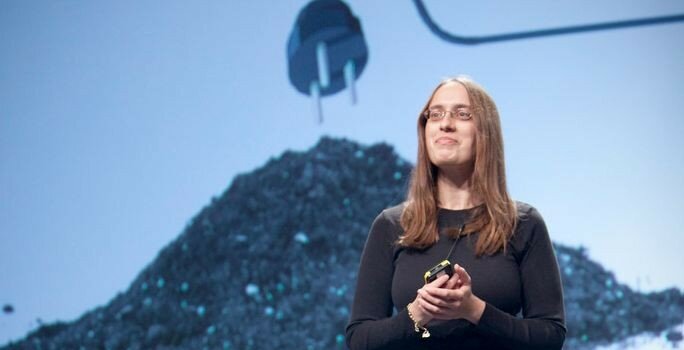
What many in developing nations need isn’t the ability to keep the lights on 24/7. For most, just having enough power to recharge a cell phone would be life-changing. That’s why Harvard Ph.D student Aviva Presser Aiden decided to look for a much smaller solution. One that’s as simple as a pile of dirt, actually.
A few years ago, the former engineer was working in Africa, looking to get more electric light into remote parts of the continent. While others focused on harnessing solar power, Aiden and her colleagues were more interested in the dirt beneath their feet. Previous research has revealed that soil microbes can be a natural source of energy. Certain naturally occurring soil microbes produce free electrons during the course of their ordinary metabolic processes. A Microbial Fuel Cell (MFC) uses a conductive surface to harvest these electrons and use them as a power source.
In 2011, Aiden’s idea for an MFC-based cell phone charger caught the attention of the Bill & Melinda Gates Foundation. The Foundation gave Aiden and her Harvard team $100,000 to turn the concept into a reality.
If you’re wondering how in the heck you convince soil-dwelling microbes to charge your phone, this explanation from PS Mag will help: “First you need some kind of jar, with a piece of graphite or some other non-corrosive metal, at the bottom. Then put in dirt with very little oxygen, and another piece of graphite. Soil microbes are constantly making electrons, but if there’s oxygen about they’ll put the electrons into the oxygen. If there isn’t any oxygen, they’ll dump the electrons on pieces of metal—i.e. the graphite.”
Unlike solar panels, MFCs do not require any sophisticated materials: they can be easily assembled in only a few minutes. If Aiden’s concept is successful, Africans may soon be able to assemble their own chargers almost entirely from scratch, and at minimal cost that will be recouped with the very first recharge.
Aiden plans to return to Uganda this month with a collection of dirt-power kits for real world testing.
(via Revmodo)

Monday, August 13, 2012

Trading Recycling for Food and Services


Sustainable Energy awareness platform Revmodo recently reported on the growing success and popularity of recycle for food and services programs that first took off in Brazil and most recently spread to Mexico. It is truly touching to see the enormous success of everyday people donating their time to help reduce waste. It will be very interesting to see future generations come of age in an area demonstrating such a strong example of working to create a more sustainable future as well as the importance of fresh, locally grown produce.

Take a look at the full story below; Do you think a system such as this is possible in the United States? Why or why not? We would love to hear from you in the comments.

The city of Jundiai, Brazil, once struggled with litter-cluttered streets and trash-filled waterways. But 10 years ago, the city government launched a new program, called Delicious Recycling, designed to get more residents to recycle. In exchange for collecting cans and bottles, the city gives residents fresh produce grown in a local public garden. Now, the garden grows more than 30,000 plants to keep up with demand.

Other cities in Central and South America — particularly in Brazil — have similar programs. Curitiba, Brazil, began a recycling incentive program even earlier, offering transportation passes in exchange for recyclables. Residents of local shantytowns are employed to collect more trash, and the recyclable materials are sold to raise money for social services. The city now recycles 70 percent of its waste.

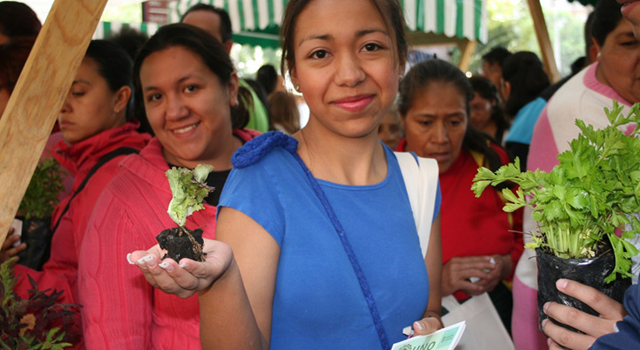
Inspired by the other programs, Mexico City is also now offering food in exchange for recycling.
The city has a major challenge with waste; it closed the largest landfill in the world last year, a 927-acre space that collected more than 76 million tons of trash. Now, the closed landfill will be tapped to generate power through its methane emissions. But every day, the city produces around 12,600 metric tons of new trash, and the government is looking for ways to dramatically cut that. The waste-to-food program is helping. When residents bring in their recycling, they’re given “green points” that can be spent at a local farmers’ market. It’s been a success so far, and the first market was so popular that all three tons of food were quickly given away.