Showing posts with label almond. Show all posts

Tuesday, May 5, 2015

11 Healthiest Cooking Oils

Olive oil isn't your only option. From coconut to sesame, learn how to take advantage of the flavor, nutrition, and cooking profiles of the many healthy oils available at your natural foods store.

Confused by all the processing methods and terms? Here's your cheat sheet:
  • Expeller-pressed: Oil is mechanically extracted by squeezing nuts, seeds, fruits, legumes, or grains under very high pressure, without using solvents.
  • Cold-pressed: Oil is expeller-pressed, but friction is reduced so the temperature is kept below 120 degrees during processing.
  • Refined: Tiny particles may remain in extracted oils; to make refined oils, particles are filtered out. Refined oils may also be bleached and deodorized to create a neutral flavor and color.
  • Unrefined: Tiny particles remain in the oil, enhancing flavor, aroma, and nutritional value. Because particulate matter lowers an oil’s smoke point, unrefined oils should only be used unheated or for very low-heat applications.
  • Heat extraction: Pressed oils may also be heated during the extraction process to break down the material and allow greater quantities of oil to be extracted.
  • Chemical extraction: Solvents like hexane are used to break down plant walls and allow oils to be more easily extracted.

Almond Oil

Made by expeller pressing the oil in ground almonds; available refined and unrefined.

Benefits: Increases healthy HDL cholesterol while lowering harmful LDL, supports immune function and liver health, alleviates irritable bowel syndrome, and may reduce colon cancer risk.

Smoke point: 420 degrees

Flavor: Light, clean, and mildly sweet; unrefined has a nutty, toasty flavor with buttery undertones.

Uses: Refined‘s high smoke point makes it best for stir-frying, roasting, grilling, and other high-heat applications. Use unrefined for salad dressings, in dips, and to drizzle on cooked dishes.

Price: $8 to $10 for 16 ounces

Fats breakdown: 70% mono, 17% poly, 8% sat


Avocado Oil

Made by grinding and then expeller pressing avocado flesh; available refined and unrefined.

Benefits: Decreases inflammation and improves cholesterol balance; may increase absorption of antioxidant carotenoids.

Smoke point: 520 degrees

Flavor: Rich, clean taste and lush mouthfeel. Unrefined is emerald green, with a buttery flavor and grassy undertones. Refined has a mild, neutral flavor with the slightest hint of avocado taste.

Uses: Refined is best for high-heat grilling, frying, or roasting. Use unrefined for salad dressing, in pesto, or as a dip for bread. Refrigerate.

Price: $10 to $12 for 8 ounces

Fats breakdown: 71% mono, 14% poly, 12% sat


Canola Oil

Made from rapeseed, a mustard-family plant; usually chemically extracted using solvents, but also expeller-pressed. To avoid GMOs, buy organic; 80 percent of canola is genetically modified.

Benefits: Lowers total and LDL cholesterol and triglycerides; improves insulin sensitivity.

Smoke point: 400 degrees

Flavor: Extremely neutral but provides a dense mouthfeel; pale color.

Uses: Good for high-heat roasting, broiling, baking, and stir-frying, or as a blank canvas for creating mayonnaise or salad dressings.

Price: $8 to $10 for 1 liter

Fats breakdown: 63% mono, 28% poly, 7% sat


Coconut Oil

White and solid at room temperature; clear and liquid when warmed. Virgin coconut oil is expeller-pressed; also available refined.

Benefits: Antibacterial, antifungal, and antiviral; may reduce total and LDL cholesterol while raising HDL cholesterol.

Smoke point: 350 degrees (unrefined); 400 degrees (refined)

Flavor: Unrefined has a creamy, oily texture, caramel-buttery flavor, and rich scent and taste. Refined is more neutral.

Uses: Refined works great for sautéing, stir-frying, roasting, and grilling. Use unrefined in baked goods, Asian-inspired dishes, or as a spread.

Price: $7 to $14 for 16 ounces

Fats breakdown: 6% mono, 2% poly, 87% sat


Flaxseed Oil

Made by pressing crushed brown flaxseeds, a process that removes healthy lignans. Some brands add lignans back to make "high-lignan" flaxseed oil.

Benefits: High in alpha-linolenic acid (ALA); may reduce risk of diabetes, cancer, arthritis, osteoporosis, and autoimmune and neurological disorders.

Smoke point: Do not heat

Flavor: Warm and nutty with bitter undertones and an aggressive, but not unpleasant, aroma.

Uses: Drizzle on oatmeal or cooked vegetables, use in salad dressings, and toss with quinoa or other grains. Refrigerate.

Price: $8 to $9 for 16 ounces

Fats breakdown: 19% mono, 68% poly, 9% sat


Grape Seed Oil

Extracted from grape seeds (generally from wine grapes), typically via chemical solvents; to avoid solvents, choose expeller-pressed.

Benefits: High in vitamin E; however, contains high levels of omega-6s and polycyclic aromatic hydrocarbons (PAHs), a result of the extraction process.

Smoke point: Do not heat.

Flavor: Neutral in flavor and aroma, with a rich, heavy texture.

Uses: Good for moisture-rich baking, dressings, and mayonnaise, where a neutral flavor is needed.

Price: $8 to $12 for 16 ounces

Fats breakdown: 17% mono, 71% poly, 12% sat


Hemp Oil

Made by cold-pressing Cannabis sativa seeds (part of the marijuana family but with no THC, the psychoactive component).

Benefits: Contains chlorophyll and toco-pherols, antioxidants that support immune function and protect the heart.

Smoke point: Do not heat.

Flavor: Earthy, grassy flavor with mushroom undertones; deep green color.

Uses: Use in dips, dressings, and pesto, or drizzle on steamed kale or sweet potatoes. Refrigerate.

Price: $12 to $16 for 16 ounces

Fats breakdown: 14% mono, 77% poly, 6% sat


Olive Oil

Extra-virgin is cold-pressed from the first olive pressing; "virgin" or "pure" is heat-extracted. Organic or California Olive Oil Council (COOC) labels signal no adulteration with cheap oils.

Benefits: Increases heart-protective HDL cholesterol; polyphenol antioxidants promote bone growth and reduce cancer risk; rich in vitamin K.

Smoke point: 420 degrees

Flavor: Extra-virgin, from the first pressing, has leafy, herbal, peppery under-tones. All varieties offer robust flavor, rich texture, and a green-gold hue.

Uses: Grilling, baking, and sautéing. Drizzle extra-virgin on tomatoes and steamed greens. Use any kind in salad dressings.

Price: $9 to $15 for 1 liter (pure); $12 to $20 for 1 liter (extra-virgin)

Fats breakdown: 73% mono, 11% poly, 14% sat


Rice Bran Oil

Extracted from the germ and inner husk of rice grains; most kinds are chemically extracted. Look for cold-pressed varieties, which are not heated during extraction.

Benefits: Contains vitamin E tocotrienols that lower LDL cholesterol, stem inflammation, and reduce cancer risk; rich in vitamin K.

Smoke point: 490 degrees

Flavor: Light and clean, with a fresh, neutral flavor and delicate aroma.

Uses: High-heat stir-frying, grilling, roasting or sautéing, or in dressings or mayonnaise when a neutral flavor is desired.

Price: $7 to $9 for 16 ounces

Fats breakdown: 39% mono, 35% poly, 20% sat


Sesame Oil

Made by expeller-pressing or chemically extracting oil from sesame seeds; available refined or unrefined. Seeds roasted before pressing yield fragrant, toasted sesame oil.

Benefits: Rich in anti-oxidants and abundant in lignans and phenols, which may ease diabetes symptoms.

Smoke point: 410 degrees

Flavor: Light and nutty; toasted sesame oil is dark brown, with a distinctive roasted scent.

Uses: Ideal for broiling and high-temperature stir-frying. Unrefined works well for light sautées, tossed with grains, or in salad dressings. Lightly drizzle toasted oil over finished dishes.

Price: $8 to $10 for 16 ounces

Fats breakdown: 40% mono, 42% poly, 14% sat

Walnut Oil

Made from dried and expeller-pressed walnuts; available refined and unrefined.

Benefits: Contains omega-3 fats that protect against prostate cancer and diabetes, reduce inflammation, promote heart health, and stave off bone loss.

Smoke point: 400 degrees

Flavor: Bold and pleasantly heavy, with a decadent nut flavor and earthy notes.

Uses: Refined is good for moderate-heat sautéeing and baking. Use unrefined as a finishing oil: Toss with cooked beets, add to salad dressings, and drizzle over cream soups. Refrigerate.

Price: $10 to $14 for 8 ounces

Fats breakdown: 23% mono, 63% poly, 9% sat

Friday, January 16, 2015

11 Vegan Cheese Recipes That Will Change Your Life


1. Baked Almond Feta

http://www.maplespice.com/2011/04/baked-almond-feta-with-dill-oil.html

This recipe is unbelievably good, full of flavor and remarkably like feta. It crumbles like feta but is also creamy enough in the centre to spread onto crusty bread, crackers, toasted bagels - whatever you like. Also, the original recipe drizzled a thyme and rosemary infused oil over top, you can also try dill.

2. Vegan Unprocessed Cheese Slices


http://www.maplespice.com/2012/11/vegan-unprocessed-cheese-slices.html

Yes, there are vegan "processed cheese" style slices out there but lets face it. They're gross. Try preparing this childhood favorite that’s perfect for sandwiches. Get the recipe here.

3. Muenster Cheese


http://books.google.com/books?id=6rTPl_JTVrUC&lpg=PT200&ots=8LjPeLibC0&dq=uncheese%20cookbook%20publishing&pg=PT170#v=onepage&q&f=false

This mild uncheese complements almost every food. Serve it in slices with crisp fruit such as pears or apples, add diced cubes of your favorite steamed vegetables, or create cold sandwiches or toasty grilled cheese.

4. Extra Sharp Cheddar Cheese Ball


http://vedgedout.com/2013/11/15/kick-ace-extra-sharp-raw-vegan-holiday-cheddar-cheese-ball-virtual-vegan-potluck-edition/

You can serve this cheese ball with any of your favorite raw vegetables, or even put sliced honey crisp apples on the tray, the combination of the sweet crisp apples and the piquant cheese will be amazing. Perfect for a potluck or any party, find this yummy recipe here.

5. Cashew-less Vegan Queso


http://minimalistbaker.com/cashew-less-vegan-queso/#_a5y_p=1583858

This recipe uses eggplant to make a delicious queso, add in a few Tbsp of slightly drained Rotel (just like real queso dip!) or your favorite chunky salsa. This really sends the texture and flavor over the top to mock the real thing.

6. Green Goddess Gouda

http://www.veganricha.com/2014/03/green-goddess-gouda-cheese-and-vegan-st.html

This cheese is a green goddess dressing made into cheese with some of elements of the gouda. Add more agar for a more set cheese that you can grate it. It makes an amazing grilled cheese! Omit the agar and use it to top a salad. 

7. Vegan Swiss Cheese


http://nouveauraw.com/raw-recipies/spreads-cheeses/vegan-swiss-cheese/

Agar is used and it requires boiling water to dissolve and to activate its magic. Magic meaning, agar is the key ingredient that gives that cheese texture to this recipe.  The fun part is that you can use any mold to shape it in.  This recipe is guaranteed to please and makes a great gift!

8. Sage and Gouda Vegan Cheese Ball


http://namelymarly.com/sage-and-gouda-vegan-cheese-ball/

This vegan cheese ball is so flavorful with its crispy sage, salty pistachios, and the sweet chopped craisins encrusting the outside. It really makes for a delicious appetizer. Get the recipe.

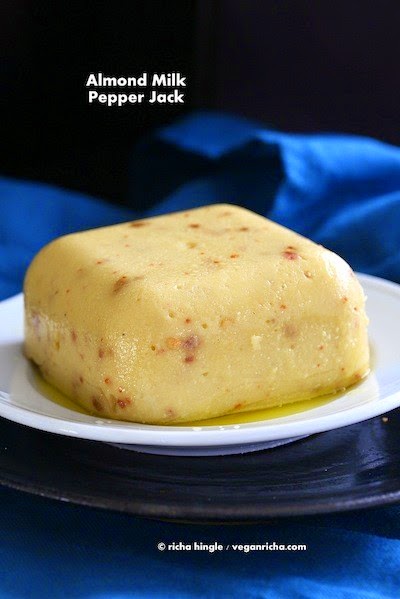
9. Almond Milk Pepper Jack


http://www.veganricha.com/2014/08/almond-milk-pepper-jack-cheese-vegan-glutenfree-recipe.html

This vegan cheese has almond milk, starches and agar to thicken and stretch, chickpea flour for taste and texture and voila! You can also make this with coconut milk or cashew milk. The cheese with cashew milk will be whiter on melting. The cheese shreds with a large grater! Use it on a pizza or grilled sammie.

10. Raw Vegan “Goat” Cheese


http://www.forkandbeans.com/2013/01/22/raw-vegan-goat-cheese-dip/


A non-dairy version of the original, but without the soy. This is the beauty of raw foods–anything can happen with a scoop of cashews. Even cheese. Get the recipe here.

11. Nacho Cheese Slices


http://www.veganricha.com/2014/09/nut-free-vegan-nacho-cheese-slices.html

These Nut Free Vegan Nacho Cheese Slices, have no nuts, no oil, no agar, no thickener, no seed, no gluten, no grain.  Grilled cheese, anyone?

Tuesday, August 19, 2014

Need a Pizza Crust Recipe? Here are 10 that Don’t Use Flour


When it comes to finding a good pizza crust recipe, many are on a lifelong search. Because let’s be honest- there’s nothing better than pizza made at home. But what if you can’t tolerate traditional flour? Or even any kind of flour at all? Is a good pizza crust recipe then simply an unattainable dream? No, my friend, it is not. There are plenty of ways to make creative pizza crusts without going anywhere near a bag of flour.

Here are 10 different pizza crust recipes that use everything from polenta to broccoli for the pizza base.

1. Polenta Pizza Crust
While you may think of polenta as a creamy side dish, it can also be used to make up a pizza. You can even make them in smaller rounds, since mini pizzas are perfect as a dinner party appetizer.

2. Almond Flour Pizza Crust
Using a bit of arrowroot flour to hold it all together, this almond flour pizza crust is the perfect base for a margherita pizza.

3. Cauliflower Pizza Crust
Cauliflower for a pizza crust? As long as you have a little cheese and egg, yes. The perfect way to make sure you’re eating enough vegetables too. And not to worry, if you need a dairy-free version, there’s that too.

4. Broccoli Pizza Crust
Don’t let broccoli feel left out with all the cauliflower pizza crusts you’ll be making. The concept for broccoli pizza crust is the same as with cauliflower, but you get a very green crust, which will brighten up the dinner table.

5. Carrot Pizza Crust
If you’ve got an overload of carrots, why not turn them into a pizza? This crust, which is made using grated carrots, can also work well for other crust-worthy recipes, like a quiche.

6. Zucchini Crust Pizza
Summer days are close, and when they get here, chances are you’ll be wondering what to do with all of that zucchini. Your answer? Test out this creative pizza crust recipe.

7. Portobello Mushroom Pizza
If you really want to simplify the pizza making process, you can skip the crust entirely and opt for portobello mushrooms instead. They make perfect individual pizzas and you don’t have to do any more work than layering on a few toppings.

8. Sweet Potato Pizza Crust
This pizza crust recipe involves mashing together cooked sweet potatoes with almond flour. The result is a crust with a crispy outside and soft center that’s full of nutrients.

9. Plantain Pizza Crust
Plantains are common in Caribbean cooking, but often, those of us living further north don’t always know what to do with them. Why not use them to make pizza? The plantains are mixed with a little tapioca starch and coconut flour to hold the crust together.

10. Butternut Squash Pizza Crust
This recipe takes on the same concept as the portobello mushroom pizzas, using the shape and consistency of butternut squash to simply serve as a crust replacement. All you have to do is slice the squash in the desired thickness and top away.
[via Organic Authority]

Friday, October 18, 2013

Nut Butter Battle: Almond vs. Peanut

In recent years, almond butter was somehow anointed the chosen nut butter among health-conscious eaters, who smear it on their sprouted breads and gaze upon peanut butter as its low-brow relative.

But the creamy almond treat is not cheap (it's often about double the price of peanut), and when pressed, most people really can't tell you why they're willing to splurge.

So, we asked top nutritionists and health coaches to really break down the health differences between the two nut butters we're obsessed with most. (That is, unless you've already moved on to the new superfood-infused nut butters).

Which is better for you—almond or peanut? Welcome to the nut butter battle...

Macronutrients

When it comes to the big guys—carbs, protein, and fat—almond and peanut butter are like fraternal twins. "You can see a gram difference here or there, but it doesn't really make a difference," says Pure Nutrition founder Christian Henderson, MS, RD. A single two-tablespoon serving of either is high in calories (200) but comes with lots of protein (about 7g) and healthy fats.

Some nutritionists and health coaches point to almond's slightly higher concentration of good fats, but the difference is nominal. "Almonds have a little bit less saturated fat, but I feel a little bit silly saying that, since they're so close," says SPE Certified's senior culinary nutritionist Natalia Hancock, RD.

Micronutrients

Within the nitty gritty nutrients is where a difference starts to emerge between the butters.

"Almond is better for vitamin E and magnesium, which are two very important micronutrients," Henderson explains. "Vitamin E is an antioxidant and magnesium is important for bone health and your central nervous system." This is especially powerful since vitamin E is not found in a wide variety of foods.

Almond butter also has more calcium and iron than peanut.

Natural and Organic

No matter which nut butter you're choosing, looking out for added sugar and preservatives is a must; ingredient lists should include little more than plain old nuts. You can satisfy this requirement with either butter, but "when you go shopping for almond butter, it's almost all natural brands, you don’t see the Jiffy," says health coach and Sakara Life founder Danielle DuBoise. "It's just easier to choose a natural, no-added-sugar, no-preservatives almond butter."

And when it comes to organic, you have to be more careful with peanuts, says Henderson. "Peanuts are just one of those crops like soybeans and corn that are so overgrown and overprocessed in America. They're hard to grow, so many pesticides are often used on peanuts," she says. "If the peanut butter is not organic, you don’t want to be anywhere near it."

Other Factors

Aside for nutrition facts, there are a few other factors experts consider. Peanuts crops are susceptible to fungi called aflatoxins, which are associated with an array of diseases. The FDA does regulate the presence of aflatoxins, but some say you can't be too careful. "I worry about that, so I just err on the side of caution," DuBoise reasons.

Henderson also says that she's noticed from observations in her practice that almond butter has worked better for her clients struggling with weight loss. "Peanuts just tend to be more addictive for people; almonds tend to be more filling." Peanuts also may cause more bloating, since they're technically legumes, not nuts.

Taste and Uses

Of course, since both butters can be part of a healthy diet, a lot of decisions come down to which just works better, for your taste buds or whatever you're whipping up in the kitchen. "They each have their own place," says Hancock, who works with top chefs to create flavorful, healthy meals around the country. "I think peanut butter tastes better with bananas and almond tastes better with apples."

And while almond butter works really well in smoothies, peanut butter does tend to have more culinary uses, she says. "I'll use peanut butter in a stir fry, Thai style, and I do a really great African spicy sweet potato soup with peanut butter in it that’s really delicious."