Showing posts with label food waste. Show all posts

Friday, April 24, 2015

Cooking With Vegetables From Root to Stem

Ever hear about something that is a new trend and all the rage and think, “I’ve always done that?” One of the food trends for this year is for chefs to put the focus on vegetables. Similar to the whole “nose-to-tail” practice used in cooking meat, there is now a “root-to-stem” practice where no part of a vegetable or fruit goes to waste. Well, it may be a new trend in the culinary world but I’ve been cooking that way for years. Other people may lop off the tops of carrots, beets and radishes, throw away the fronds from a bulb of fennel, and discard the stalks from a head of broccoli, but I cook with all of it. With the price of food rising and the increased amount of food waste, it only makes sense to get the most out of the food we buy. The leaves, stems, stalks and skins of vegetables have their own unique tastes and textures so it’s like getting multiple veggies in one package. Here are some ways you can start cooking from root to stem.

1. Asparagus Stems


Whenever I cook asparagus, I trim the tough, woodsy ends off. Then they go in a storage bag into the freezer until it’s time to make stock. Add the stems to the pot with the celery, onions, and water. Season with herbs and spices, bring to a boil and simmer for at least half an hour. Strain and store in the freezer until you’re ready to use it. Or use the whole asparagus right away to make this delicious and refreshing Raw Asparagus Soup.

2. Beet Greens


Beets are delicious and so are the greens that come attached to them. Use them to make Beet Greens Pesto or sauté them as in these Beet Greens with Garlic and Toasted Almonds and Sautéed Beet Red Greens. I love to use them to make a salad to go along with my Borscht soup. See more ways to use beet greens in Beet and Carrot Greens: How to Use Them Instead of Toss Them.

3. Broccoli Stalks and Leaves


There was a time when I preferred to buy broccoli crowns because I thought I was getting more edible food for my money. Then I realized that the broccoli stalks are delicious and really filling. Now I get upset if my broccoli doesn’t come with the stalks attached. When I cook broccoli, I cut off the florets and then get to work on the stalks. They can be peeled to remove the outer peel but I usually just chop them up and add them with the florets to whatever I’m cooking. Use the stalks in stir-fries and salads like this Broccoli Salad with Quinoa, Scallions and Roasted Cashews. Another way to use the stalks is to use a julienne peeler to make broccoli “noodles” or a regular peeler to shave the stalk into thin ribbons. Use these noodles raw or cooked in lighter pasta dishes like this Tomato Basil Broccoli Noodle and White Bean Salad and this Tofu Scramble with Broccoli Noodles. The leaves are edible as well. Add them to salads and stir-fries just as you would any other dark, leafy greens.

4. Carrot Tops


When I was a kid, we fed the carrot tops to our parakeets. Today, I use them in lots of dishes. Carrot greens can be bitter so blanch them first. Use them to make pesto, vegetable stock, and salads. Add them to sautés, stir-fries and smoothies. Running low on parsley or cilantro? No problem! Carrot greens can stand in for them in recipes or as a garnish. See all the ways to use carrot tops in Beet and Carrot Greens: How to Use Them Instead of Toss Them.

5. Cauliflower Stems and Leaves


Cauliflower is hot right now. You knew that but did you know you can eat the stem and the leaves? Every time we read a cauliflower recipe, it tells us how to remove the leaves and cut the florets off the stem. When I cook cauliflower, I cut off the florets and then I chop up the stem and cook it with florets. It takes just as long to get tender as the florets do. You can also leave the stems attached when you cut the head of cauliflower into steaks as in this Cauliflower Piccata. The next time you make Roasted Buffalo Cauliflower Bites, leave the stems attached to the florets so you have a “handle” to hold each piece by. Use the leaves by adding them to the dish towards the end of cooking so they slightly wilt.

6. Celery Stalks and Leaves


Celery is an under-appreciated vegetable as it is; don’t make it feel even worse by throwing away its outer stalks and pretty, tender leaves. Every bit of the celery is edible. Use all the stalks, inner and outer, in your dishes. You can peel the stalks to make them less “stringy.” Make celery the main attraction as in this Braised Celery dish. Celery is very healthy, so add it to your smoothies and juices turn it into soup and enjoy it in this Onion, Celery and Mushroom Stuffing. Use the celery leaves in soups and salads or as a garnish instead of parsley.

7. Chard Stems


Whenever I get rainbow chard, I make sure that I use the stems. They are too pretty to throw away! They can be blanched until tender and used to make pickled relishes. I like to chop them up and saute them before adding the greens in dishes like this yummy Swiss Chard with Onions, Currants and Pine Nuts and Gluten-Free Lemon Swiss Chard Pasta.

8. Fennel Stalks and Fronds


Fennel can be used from bulb to fronds. The bulbs have overlapping layers of fennel, sort of like a cabbage. The stalks are similar to celery in both texture and crunch. The feathery fronds look like fresh dill but taste like anise and make a beautiful garnish. Fennel seeds can be bought whole or ground and add a bright note to dishes. Check out 10 Ways to Cook with Fennel Tonight and then try this Orange Fennel Salad with Agave-Mustard Dressing, Mizuna, Fennel, and Mulberry Salad and Roasted Fennel.

9. Jackfruit Cores


When I first cooked with jackfruit, recipe instructions said to cut the outer part of the sliced jackfruit away from the core and discard the core. That would have meant throwing away about half of the jackfruit that came in the can. I didn’t understand that since the core is really tender so I just cut up the entire slice and cooked it. Read Have You Tried Cooking With Jackfruit Yet? Get Started With These Recipes! Then use the meat and the core to make Jackfruit Philly Cheesesteaks, Jackfruit Ropa Vieja, and BBQ Jackfruit.

10. Leek Greens


Leeks are relatives of onions and garlic, but they have a milder taste than either of them. They are most often used as an aromatic for soups and stews, but they can also be the main ingredient of dishes. Leeks can be eaten raw in salads, sautéed until tender, braised to make them soft and sweet or grilled until charred. Most recipes tell you to cut the green leaves off and discard them but they are edible and delicious. Cook them along with the rest of the leeks or cook them as you would other leafy greens. Use them to make this Pureed Lentil Dip with Caramelized Leeks, Sweet Potato, Carrot and Leek Soup, Cheesy Leek and Potato Gratin, and Mushroom and Leek Risotto With ‘Parmesan’ Tempeh.

11. Potato Skins


Like so many of my other vegetables, I don’t peel potatoes before cooking with them. I just scrub them clean and cook. If you do peel your potatoes, don’t throw the peels away. Cook them the same way you cook fries. You can fry them or you can bake them in the oven. Simply toss the peels with a bit of olive oil and seasonings – my choices are garlic powder, paprika, and black pepper. Then cook them in the oven for about 20-25 minutes at 425 degrees. When they are browned and crispy, sprinkle with kosher salt and munch away. They make a great snack or use them as a crunchy garnish as you would crispy fried onions. It’s like having Potato Skins or French Fries without the actual potato.

12. Radish Leaves


One year I had a ton of radishes. The green leaves on radishes do not last long so you have to use them right away. I used the radishes to make my Caramelized Radishes and the leaves to make Radish Leaf Pesto that became an amazing pasta sauce. To make it: combine 4 cups fresh chopped radish leaves, ½ cup chopped walnuts, 3 cloves garlic, the zest and juice of half a lemon and 2 Tbs. vegan parmesan in a food processor. Stream in up to ¼ cup extra-virgin olive oil while processing the ingredients. When the pesto is smooth, season with kosher salt and black pepper to taste. When the pasta is al dente, reserve 1 cup of the cooking water and add it, little by little, to the pesto to loosen it up a bit. Toss the pasta in the pesto sauce and serve hot. Radish leaves can also be used in salads but they can be bitter so you might want to blanch them first.

Learning how to use all the parts of a vegetable is like trying new foods. When we cook from root to stem, we not only lessen the amount of food we waste but we gain a larger variety of healthy and delicious dishes we can make. Try it and let us know how it goes.

Tuesday, December 16, 2014

Reducing Food Waste Takes More Than Finishing Your Plate


In southeast Costa Rica near the Panamanian border, there’s a group of farmers growing bananas and cocoa without pesticides. Two indigenous groups work communally owned land in the buffer zone surrounding La Amistad National Park. Their cooperative is called the Talamanca Small Farmers Association.

But Talamanca’s growers face the same discouraging problem year after year: They work in a rural area. Some farmers transport their bananas for an hour by boat, and then another three hours by truck, to a processing plant owned by a Chiquita subsidiary. Often, the bananas have to wait for the truck, and they rot. It rains a lot there — the roads frequently flood in the wet season — and sometimes the farmers lose whole truckloads of bananas waiting for the waters to recede. The estimated losses are 40 percent of the crop, said Stephanie Daniels of the Sustainable Food Lab, which has been working with Talamanca to solve the problem of spoilage.

Between 30 and 40 percent of the food grown around the world is lost: spoiled, wasted, or eaten by vermin. Saving even a portion of that could make a huge difference for poor farmers and the environment. Combine a reduction in food waste with increases in farm yields and better livelihoods for the poorest, and we’d have a realistic scenario in which we could improve overall human health and happiness without expanding our agricultural footprint.

As the example of Talamanca illustrates, solving the waste problem can make more food available to eaters while enriching the farmers. (Feeding the world is really a problem of enriching the poor, as grist has written about here. If you want to catch up on the theory and background, here’s the full series.)
The banana fields of Talamanca by: Stephanie Daniels

As Daniels explained it, solving the waste problem is an important step forward to the larger goal of plugging small farmers into the world market. There are people all around the world who want what these Costa Rican farmers grow and are willing to pay a premium for it. Stonyfield Farms buys their bananas to mix with yogurt. People in Switzerland eat their unusual fruits. Basically, there’s a lot of wealth that wants to go to rural Costa Rica in exchange for the stuff that’s already growing there — but instead, a lot of that stuff is rotting on the ground.

And so Talamanca is working on a solution. With money from the government, from Stonyfield, and from the Danone Ecosystem Fund, it’s investigating building a small-scale processor: A machine to peel the bananas, squish them, and aseptically seal them into shelf-stable bags. Today, the farmers depend on Chiquita’s machinery; if they had the food processing technology, they would make a lot more money — and have a lot more control over their destiny.

Around The World

The farmers of Costa Rica aren’t alone. This year the Rockefeller Foundation and the Global Knowledge Initiative produced an in-depth report on food waste in Africa, which showcased dozens of Talamanca-like stories. When farmers simply have airtight bags for their beans, cowpeas, and corn, the lack of oxygen kills insects inside, resulting in millions of dollars in savings. Farmers are using cassava graters and solar driers to process crops that rot easily. They are tapping into the world market with cellphones.

This is a systems-based report, looking at the entire network of farmers, buyers, agricultural educators, and technological capacity. As I read it, it became clear that reducing food waste is not necessarily an end unto itself, but something that comes naturally if you are trying to help poor farmers sell their food and earn a living wage.

North America

Food waste, however, looks very different depending where on Earth you stand. In poorer countries, the bulk of food waste is due to lack of technology and the inability of farmers to sell their goods. In the richer countries, food waste is all about culture.

World Resources Institute

“It truly is wasted in this country,” said Dana Gunders of the NRDC, the author of this landmark report. “If we took someone out of Cambodia — or their consumer expectations for food — and combined that with the U.S. technology for preserving food, realistically we could cut a lot of our food waste.”

People often come to Gunders to ask if they should go ahead and eat moldy bread. But she said that sort of thing is a tiny part of the problem.

“It is about eating carrot tops, in a way — but it’s really about having 4,000 sandwiches left over at a conference. It’s about plowing under an entire field because the market shifted.” And it’s about throwing away tons of produce because it doesn’t fit the exacting standards of size and aesthetics that we’ve come to expect and enshrined in our regulations.

Cutting post-harvest waste can be a huge boon to small farmers. But in this country, where a large share of the waste occurs at the consumer level, the impact is a little less clear. Perhaps having more food around would mean fewer farms; that could be good for the environment or bad, depending on what replaced them.

But Gunders thinks that food waste won’t decrease so fast that it dramatically outstrips the rising demand. If we are able to cut waste in this country, that would probably mean that more food produced in the U.S. might be exported as animal feed, as rising affluence increases the demand for meat. Or the land might increase biofuel production. Neither of these outcomes gets environmentalists too excited, but both would reduce the pressure to expand farmland in more sensitive areas.

The Takeaway

If we continue business as usual, we’re going to need a lot more food by 2050. This is what food futurists have been calling “the food gap.” The World Resources Institute has suggested that a reasonable goal might be cutting our current food waste in half. Just doing that would take care of a fifth of the food gap.

When we talk about food waste in richer countries, we are mostly talking about consumer waste — reducing that is important for cutting the food gap. But when we talk about food waste in poorer countries we are talking about losses (the yellow and red bars on the graph above) that take money out of farmers’ pockets. And there, the potential in reducing waste is even greater: By enriching small farmers, it would reduce poverty — which is the ultimate goal, and the root cause of hunger.

[part of the Hungry, Hungry Humans series on grist]

Monday, August 4, 2014

8 Essential Tips for Avoiding Food Waste


None of us like wasting food. We definitely don't set out to do it. But, as hard as we try it inevitably seems to happen in one way or another. The Kitchn talks a lot about food waste, like, ways to avoid it, great habits to to help you prevent it, the useful tips to minimize it.

Here are their eight favorite reader tips on how to avoid food waste and make full use of the good food you buy. Too great not to share!!

1. When in doubt, freeze it.

We freeze! All the time. Even a small amount of stew in the freezer is the beginning of a great shepherds pie! - cecilia g

Being mindful about freezing items nice and early on is important, too; if you think you may not finish it in time, just freeze it! You can always defrost later. Leftover pizza, cooked veggies, some leftover sauces (i.e. pesto) etc....you can freeze more than you think. - lesleyrocket

I have been freezing milk for years. My friends think it's weird but it works. We buy milk in bulk when it is on sale, freeze the extra. I have never had it go sour. - Melizza

2. Keep perishables at eye level in the refrigerator.

One trick I learned is to put some produce at eye level instead of hiding it in the drawer. Then rotate it. - Emmi

I put a small plastic tray on the top shelf of the fridge. It's called The Triage Box. If it's there, count on using it. It currently holds the last of the blueberries, leftover sliced strawberries, the last of the berry coulis, simple syrup that won't go bad soon but I know I'll forget, and the last of the red miso that should get used before it dries up. I just realized I have tamarind paste and olivada that need to find their way to that box, stat. - cmcinnyc

I've tried rearranging the stuff in my fridge so that the most perishable items are the most "in your face" when you open the door. Condiments are on the bottom shelf while produce is front and center. That way its a bit harder to forget that you have that head of lettuce and you're reminded to use it. - elissa

3. Store condiments in the crisper.

I use the freshener drawers to keep condiments in. They're not going to wilt if I forget they're there. Other items are in clear plastic bags and good quality clear plastic containers. - shotsi

4. Plan ahead... but not too far ahead.

I've started making meal plans, and they have really worked! I plan for usually three days in advance. I found that if I plan further out than that we end up wasting food due to an impromptu invite to dinner, etc.! - Dionna

A trick I find useful is to buy less and more often. I can't come up with a meal plan for the whole week, and stick to it. So what I do is buy for 2 or 3 days, which makes it easier to stick to the plan, and if something unexpected comes up food won't go bad and you can make it the following day. - chispita

I also agree on not overplanning. If I plan out all the meals for a week, often times stuff comes up (late home from work, last minute going out with a friend, etc.) and I don't have time to cook everything I bought to eat. I think it's good to leave a few gaps in your meal plan and a pantry stocked with goods (pasta, canned or frozen food) that can be used to fill the gaps if needed. - illuminatedpst

5. Repurpose leftovers.

I often turn leftovers into new meals...leftover taco-fixings become omelets or breakfast burritos the next morning. Leftover beef or pork roast becomes chopped bbq or stew the next day. Small portions of meats or cheeses get added into new casseroles, fritters, empanadas or stuffed into homemade biscuits. Leftover pasta becomes baked ziti or spaghetti pie the next day. Leftover roasted veggies make great soups and pot pies. - marymccreery

I make a clear-out-the-fridge vegetarian soup and freeze it in 2 oz containers. Something I learned from justbento.com is to make the soup with almost no water to create a concentrate. The frozen concentrate thaws in my lunchbox so, when it's time to eat, all that's needed is some boiling water to warm up the vegetables and dilute the seasonings. Takes up half the room in the freezer, which is great since space is at a premium. - Chinadoll

Never underestimate the power of pizza! We use leftovers all the time as pizza toppings. Those are some of my family's favorite meals. If you don't eat wheat products, use a cauliflower crust instead! - meganvanfleet

I make preserves out of rinds of melons. I also make a greens gumbo out of greens like carrot tops, radish tops, beet greens, mustard, etc. - makeroux10

6. Make an "eat this soon" list.

We keep a "eat this soon" list on corner the kitchen whiteboard. It really helps, especially when you can quickly see something to pack for lunch. - MaryCooksalot

Put a white board on your fridge and keep an inventory of everything you have in there. As you eat the items, erase them and consult the board before going shopping. Helps with both using things that may have been overlooked, as well making sure you don't overbuy when you go to the grocery store. - ecandle96

7. Keep a broth bag in the freezer.

I always keep a 'broth bag' in the freezer. In the bag go: carrot ends, the knobs and peelings from most veggies, mushroom stalks, herb stems (when all I needed was the leaves), the occasional potato peels, the garlic scapes that are about to go bad, even the papery garlic shells. Just anything that would be good in broth. Then when the bag's full, I make a nice stock, adding whatever's still necessary. - if1hadwords

8. Store food properly.

Fresh herbs can really invigorate your cooking, but it can be truly frustrating to buy a big bunch of parsley, use 25% of it. But my wife taught me a surprisingly simple way to dramatically extend the shelf life of fresh herbs (and other types of produce as well) in our fridge: Place the herbs in the plastic bag, add a couple of tablespoons of water into the bag, and then tie the bag with a loose knot. - Daniel Koontz
[via The Kitchn]

Friday, July 26, 2013

5 Ways to Curb Food Waste At Home


We’re excited to see an influx of new devices designed to eliminate food waste. From student design projects to crowd-funded food savers to apps that help manage expiration dates, there are all sorts of high tech options on the horizon that hold promise for food waste crusaders. Read on for a round-up of food waste innovations, plus some common sense tips to help you reduce food waste today!

1. Keep Ethylene in Check.

Tired of that sinking feeling when you reach in the fruit bowl for the last tomato, only to find it’s molded on the bottom? Designer Jagjit Chodha has designed a fruit bowl that prevents food waste by sensing ethylene levels. (Increasing ethylene levels indicate that fruit is starting to go bad.) The bowl lights up to alert you when levels increase, which means that your fruit is about to get moldy and you should eat it soon. Choda designed and showcased the bowl as part of the Made In Brunel Show at London’s Brunel University. The fruit bowl is not yet in production, but you can help slow the ripening of your produce by storing ethylene-producing items separate from ethylene-sensitive items. Here’s a handy list.

2. Vacuum-Seal Your Food.

Vacuum sealing your food may seem like a cumbersome step, but it can help your food last up to five times longer than other storage methods. VacuVita is a new vacuum-sealing system that has been running a strong crowd-funding campaign on IndieGoGo. Though there have been other vacuum-sealing products on the market for years, like FoodSaver and TightVac products, VacuVita’s sleek design and sustainable objective seem to have hit a nerve with the public. (With only a few days left of their campaign earlier this week, the brand had raised over $200,000, well over their $75,000 goal.) VacuVita uses small, reusable containers instead of plastic bags that feature a futuristic led light and soft bleep sound to let you know the food was successfully vacuum sealed. The brand offers a variety of colors and sizes, though they are not in full production yet.

3. Try a Food-Waste App.

Fridge Pal is an app designed, in simplest terms, to help you keep track of what is in your refrigerator. Remember the chives you found in a puddle at the back of your fridge last week? The sip of rotten milk you took as a child? The two bottles of red wine vinegar you now own because you forgot you already had red wine vinegar? Fridge Pal is designed to stop that from happening. You simply scan the bar codes of your groceries or add items manually. According to PureWow’s coverage of the app, “Fridge Pal will then add those items to a virtual fridge, freezer or pantry so you can see at a glance what you have in the house.” The expiration date of each item is displayed right next to it, and the app even sends you reminders when an item is about to expire. The app also provides recipes based on what you already have and helps you to create your shopping list. It even reminds you if you have left the grocery store without one of the items on your list.

4. Make a Low-Tech List.

It’s not going to personally remind you that you forgot the asparagus as you’re walking out of the grocery store, but a chalkboard or marker board mounted on the fridge can be a cheap, simple way of keeping track of what you have in there. Keep a list of the fresh produce, meat and dairy in order of when it was purchased (or write the expiration date next to it). This way, you can just look at the list to see what needs to be used up without ransacking the fridge every time you need to make dinner or a grocery list. Once something is used up, just erase it!

5. Bookmark This Website.

The Still Tasty website is a great resource for looking up nearly any food you can think of to find out the best way to store it and how long it will last before spoiling. The site has all sorts of helpful information—did you know milk should be stored in the main area of the fridge, not the door, and it can be frozen?—but its stand-out feature allows you to type in any food to receive a full run down on how to make that food last as long as possible, if you can freeze it, when it expires, etc. Still Tasty also has an app with similar features to Fridge Pal.

All of these items are part of a trend encouraging us to eliminate food waste. Have vacuum-sealed containers been around for a while? Yes. Have some families been keeping close track of what’s in their refrigerator? Sure. But, a focus on our nation’s food waste problem is encouraging more people to curb their food waste and bringing in new inventors and start-ups looking to build upon what our grandmothers always told us: Don’t waste your food.

Wednesday, January 30, 2013

Food Waste Creates Guilt, Garbage


Food waste does more than hurt consumers' pocketbooks – it tugs at their heart strings, too.
According to a new study from the Shelton Group, 39 percent of Americans feel guilty about wasting food. The percentage of participants who felt remorse for food waste was significantly larger than any other action polled in the survey. Comparatively, 27 percent of participants said they felt guilty for water waste and 21 percent for not recycling.

“All of us could be better at shopping, cooking and using up leftovers,” Suzanne Shelton, founder and CEO of Shelton Group, said in a press release. “Keeping food from going to waste will benefit our wallets as well as the environment. And we’ll all feel a lot less guilty.”

But tackling the issue of food waste is no small feat. This week, the Natural Resources Defense Council (NRDC) reported that Americans waste 40 percent of the country's annual food supply. The waste is piling up in landfills and further depleting consumers' wallets.

Food for Thought: What if We Had to Pay for the Food We Waste?

“As a country, we’re essentially tossing every other piece of food that crosses our path – that’s money and precious resources down the drain,” said Dana Gunders, NRDC project scientist with the food and agriculture program, in a separate press release. “With the price of food continuing to grow and drought jeopardizing farmers nationwide, now is the time to embrace all the tremendous untapped opportunities to get more out of our food system. We can do better.”

The NRDC reported that food waste is the single largest component of solid waste in U.S. landfills. The annual waste equates to up to $2,275 in discarded food by the average American family of four.

The waste can be attributed to food suppliers and consumers alike, but  the highest amount of food wasted occurs in restaurants and kitchens, not grocery stores. Reducing the nation’s annual waste by 15 percent would save enough food to feed 25 million Americans annually, according to the NRDC.

[via Earth 911]

Tuesday, December 4, 2012

saving food from the refrigerator

4o-0

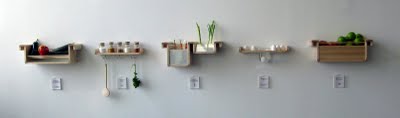
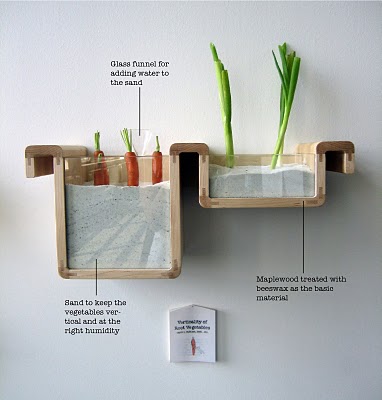
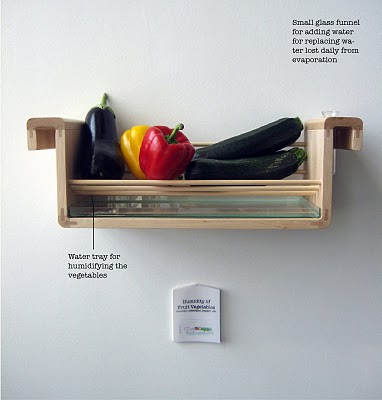
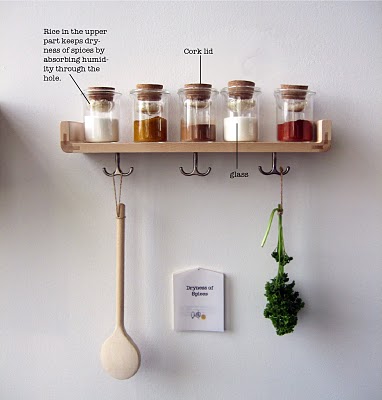
Although we think and talk about food on a constant basis, do we really know how best to preserve it or do we become lazy and leave the responsibility to technology? Design Academy Eindhoven graduate Jihyun Ryou thinks we no longer understand how to treat food. Her Save Food from the Fridge project involves placing certain foods on a group of "knowledge shelves" outside the fridge. With the goal of a better relationship with our food we may be able to waste less and conserve more energy, without sacrificing design aesthetics.
"Observing the food and therefore changing the notion of food preservation, we could find the answer to current situations such as the overuse of energy and food wastage. My design is a tool to implement that knowledge in a tangible way and slowly it changes the bigger picture of society. I believe that once people are given a tool that triggers their minds and requires a mental effort to use it, new traditions and new rituals can be introduced into our culture." - Jihyun Ryou
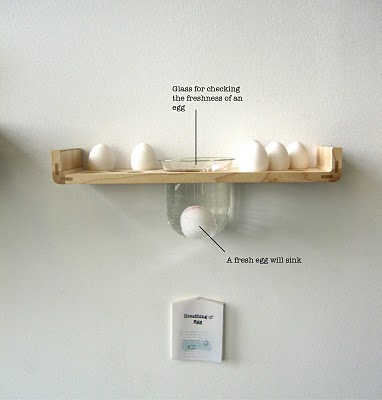
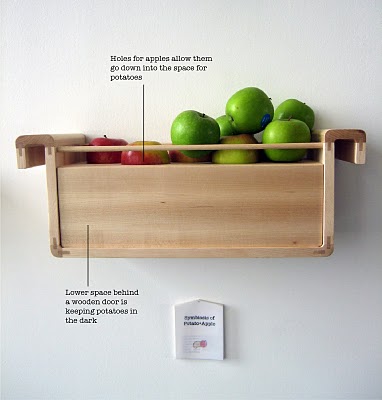
Her beautifully designed storage shelves aim to "re-introduce and re-evaluate traditional oral knowledge of food, which is closer to nature. Furthermore, it aims to bring back the connection between different levels of living beings, we as human beings and food ingredients as other living beings." For instance, the egg holder shelf includes a drop down cup of water to test the eggs. A ripe egg will always sink in water, so before breaking it open you can check to see its freshness. There is also a set of spice jars equipped with lids that hang down small bags of rice inside the jar. The rice is said to absorb humidity and keep the spices dry. There is even a hybrid apple/potato holder which keeps potatoes in a dark cabinet. Particularly focusing on the food preservation, it looks at a feasible way of bringing that knowledge into everyday life.

4o-5
4o-1
4o-2
4o-3
4o-4