Showing posts with label FDA. Show all posts

Wednesday, January 15, 2014

Packaged Food Products That Still Contain Trans Fats

In November, the Food and Drug Administration made a preliminary determination that partially hydrogenated oils — one of the primary sources of trans fats — are no longer “generally recognized as safe.” If this is finalized, partially hydrogenated oils will be categorized as food additives requiring approval to be used in food.

Trans fats have been used since the mid-1900s to improve the flavor, texture and shelf life of many processed foods. Though they naturally occur in meat and dairy, their use in processed foods has been more of a concern because of their significantly larger role in the American diet.

This type of fat is even more harmful to cardiovascular health than saturated fat. It increases levels of “bad” LDL cholesterol and lowers levels of “good” HDL cholesterol. Research from the Harvard School of Public Health Department of Nutrition estimates that eliminating trans fats from the U.S. food supply could prevent up to 1-in-5 heart attacks and related deaths.
Today, trans fats can be found in fast food and a wide range of processed food products, such as cookies, cake mixes, piecrusts, frozen pizza, microwave popcorn and chips. And while the FDA declared in 2006 that trans fats must be included in the Nutrition Facts label of packaged food, manufacturers can claim a product contains 0 grams of trans fat if there’s 0.5 grams or less per serving. This can be deceptive for obvious reasons: How many times have you eaten more than the "serving size?" (In Canada, manufacturers can only claim 0 grams of trans fats for products containing less than 0.2 grams.)

Many manufacturers adjusted their formulas in 2006 out of fear of consumer backlash since they had to list trans fats on packaging, but some brands have stubbornly refused to eliminate the harmful ingredient. Here are some of the many products that still contain trans fat:


Bisquick

1.5 grams per serving


Pop Secret Butter

5 grams per serving (about a third of the bag)


Pop Secret Kettle Corn

5 grams per serving


Jolly Time Blast O Butter Popcorn

4 grams per serving


Pillsbury Shape Sugar Cookies

2.5 g trans fat per serving (2 cookies)

Turkey Hill Party Cake Ice Cream

1 gram per ½ cup serving


Sara Lee Classic New York Style Cheesecake

3 grams per serving


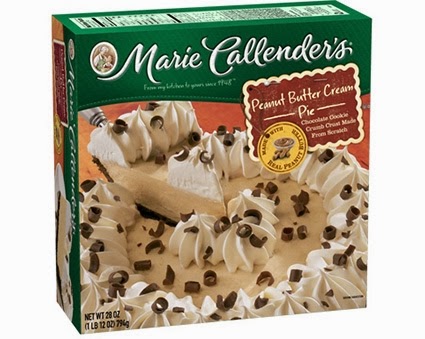
Marie Callender’s Peanut Butter Crème Pie

4 grams per serving


Marie Callender’s Chocolate Satin Pie

4 grams per serving


Marie Callender’s Lattice Apple Pie

3 grams per serving


Marie Callender’s Peach Cobbler

3.5 grams per serving


Popeye’s Breakfast Hashbrowns

It's not a "packaged food," but we had to include it because how in the world did they manage to get 10 GRAMS of trans fat per serving in these things? Sheesh.


Betty Crocker Helper Complete Meals Chicken & Buttermilk Biscuits

3 grams per serving


Betty Crocker Pie Crust Mix

2.5 grams per serving


Pillsbury Creamy Supreme Fudge Icing

1.5 grams per serving


Gardetto’s Special Request Roasted Garlic Rye Chips

3 grams per serving


Walmart’s Great Value Stick Margarine

3 grams per serving


Pillsbury Grands Cinnamon Rolls with Icing

2 grams per serving (1 roll with icing)

Land O Lakes Margarine Sticks

3 grams per serving (1 tablespoon)

Thursday, December 5, 2013

Designer Genes: The 7 Most Common Genetically Modified Foods

Genetically modified material sounds a little bit like science fiction territory, but in reality, much of what we eat on a daily basis is a genetically modified organism (GMO). Whether or not these modified foods are actually healthy is still up for debate -- and many times, you don't even know that you are buying something genetically modified.

It is not required to label GMOs in the U.S. and Canada, but there are substantial restrictions, and even outright bans, on GMOs in many other countries.

However, by 2018, Whole Foods Market will start labeling GMOs in the U.S. This grocery chains' locations in Britain already provide GMO labeled products, as required by the European Union. According to the EU, GMO refers to plants and animals"in which the genetic material has been altered in a way that does not occur naturally by mating and/or natural recombination."

1. Corn

Almost 85 percent of corn grown in the U.S. is genetically modified. Even Whole Foods's brand of corn flakes was found to contain genetically modified corn. Many producers modify corn and soy so they are resistant to the herbicide glyphosate, which is used to kill weeds.

2. Soy

Soy is the most heavily genetically modified food in the country. The largest U.S. producer of hybrid seeds for agriculture, Pioneer Hi-Bred International, created a genetically engineered soybean, which was approved in 2010. It is modified to have a high level of oleic acid, which is naturally found in olive oil. Oleic acid is a monounsaturated omega-9 fatty acid that may lower LDL cholesterol (traditionally thought of as "bad" cholesterol) when used to replace other fats.

3. Yellow Crookneck Squash and Zucchini

Numbers of this GMO veggie are relatively small, but genetically modified yellow squash and zucchini can be found in two different species in the U.S. The species contain protein genes that protect against viruses. Just like their other GMO counterparts, you won't be able to tell the difference between non-GMO and GMO zucchini or squash.

4. Alfalfa

Cultivation of genetically engineered alfalfa was approved in 2011, and consists of a gene that makes it resistant to the herbicide Roundup, allowing farmers to spray the chemical without damaging the alfalfa.

5. Canola

Canola is genetically engineered form was approved in 1996, and as of 2006, around 90 percent of U.S. canola crops are genetically modified.

6. Sugar Beets

A very controversial vegetable, sugar beets were approved in 2005, banned in 2010, then officially deregulated in 2012. Genetically modified sugar beets make up half of the U.S. sugar production, and 95 percent of the country's sugar beet market.

7. Milk

To increase the quantity of milk produced, cows are often given rBGH (recombinant bovine growth hormone), which is also banned in the European Union, as well as in Japan, Canada, New Zealand and Australia.

Looking Forward: Do GMO Apples Give Us A Glimpse Of The Future?

GMO apples are currently under review by the USDA, and have been since 2010, when the company Okanagan Specialty Fruits, Inc., developed apple varieties that don't turn brown for an entire two weeks after slicing.

Polyphenol oxidase (PPO) is an enzyme that causes the browning of Golden Delicious and Granny Smith apples, and scientists are now able to deactivate the gene. Some studies do show stripping fruits of PPO can impact a plant's susceptibility to diseases. The creators say they simply want people to eat more apples and while activating this gene slows the process of browning, it's still a natural process.

It's clear that other parts of the world view GMOs as health threats, but it's still an ongoing debate here in America. For now, many GMOs have been deemed safe by organizations like the Food and Drug Administration and the U.S. Department of Agriculture.

Friday, November 8, 2013

Put Down That Doughnut: FDA Takes on Trans Fats

(CNN) -- So long, margarine: Artificial trans fat in foods may eventually become a thing of the past.

The Food and Drug Administration on Thursday took a first step toward potentially eliminating most trans fat from the food supply, saying it has made a preliminary determination that a major source of trans fats -- partially hydrogenated oils -- is no longer "generally recognized as safe."

If the preliminary determination is finalized, according to the FDA, then partially hydrogenated oils will become food additives that could not be used in food without approval. Foods with unapproved additives cannot legally be sold.

Trans fat can be found in processed foods including desserts, microwave popcorn products, frozen pizza, margarine and coffee creamer, and has been linked to an increased risk of heart disease.

Partially hydrogenated oil is formed when hydrogen is added to liquid oils to make solid fats, like shortening and margarine. It increases the shelf life and the flavor of foods. Partially hydrogenated vegetable oil, or shortening, was used in American kitchens as early as 1911.

However, in recent years many food manufacturers have taken steps to limit or eliminate trans fat from their products.

McDonald's, for instance, stopped cooking its french fries in trans fat more than a decade ago. The company's website says all its fried menu items are free of trans fat.

New York City in 2007 adopted a regulation banning partially hydrogenated vegetable oils and spreads in restaurants.

Mayor Michael Bloomberg said Thursday that he was encouraged by the FDA's move.

"The groundbreaking public health policies we have adopted here in New York City have become a model for the nation for one reason: They've worked. Today, New Yorkers' life expectancy is far higher than the national average, and we've achieved dramatic reductions in disease, including heart disease. The FDA deserves great credit for taking this step, which will help Americans live longer, healthier lives," Bloomberg said.

Trans fat intake among American consumers decreased from 4.6 grams per day in 2003 to about a gram a day in 2012, according to the FDA.

However, "current intake remains a significant public health concern," FDA Commissioner Margaret Hamburg said in a written statement.

There is no safe level of consumption of trans fat, Hamburg said. It has been shown to raise the "bad," or LDL, cholesterol.

"Through our efforts at product reformulation and the development of suitable alternatives, trans fats that are not naturally occurring have been drastically reduced in the food supply," the Grocery Manufacturers Association, which represents more than 300 food, beverage and consumer product companies, said in a prepared statement.

"Since 2005, food manufacturers have voluntarily lowered the amounts of trans fats in their food products by over 73%."

Other countries are also working to reduce trans fat in the food supply. Policies in Brazil, Costa Rica, Denmark, the Netherlands, South Korea and the United States have proved effective over the past two decades, the World Health Organization said in April. The WHO has called for eliminating trans fat from the global food supply.

The FDA has opened a 60-day comment period on the determination "to collect additional data and to gain input on the time potentially needed for food manufacturers to reformulate products that currently contain artificial trans fat should this determination be finalized," the agency said.

There are two phases to the process, FDA officials said Thursday. The agency will evaluate the comments and evidence received during the comment period.

"If we finalize our conclusion, then we are inviting comments from industry on what would be an appropriate phaseout," said Michael Taylor, the agency's deputy commissioner for foods.

"The timeline would be based on the comments we get. Given the public health impact, we want to move as quickly as we can."

The National Restaurant Association noted in a statement the industry's "tremendous strides" in reducing or eliminating trans fats.

"We plan to discuss the impact of this proposal on the industry and submit comments, and we will continue to work with our members and the manufacturing supply chain to address any new federal standards that may arise out of this process," said Joan McGlockton, the association's vice president of industry affairs and food policy.

Hamburg called Thursday's move "an important step toward protecting more Americans from the potential dangers of trans fat."

The American Heart Association, the American Medical Association and the Center for Science in the Public Interest were among those praising the move.

"The scientific evidence is clear -- eating food with trans fat increases production of 'bad' cholesterol, which is a risk factor for heart disease," the AHA said.

So what should consumers do in the meantime? Choose products that have the lowest combined amount of saturated fat, cholesterol and trans fat, the FDA said.

Under current regulations, companies can claim their food has 0 grams of trans fat if the food contains less than 0.5 grams of trans fat per serving, according to Mical Honigfort, a consumer safety officer at the FDA. But if partially hydrogenated oil is listed in the ingredients, there may still be a small amount of trans fat present.

Nancy Brown, the Heart Association's CEO, said she hopes the FDA goes a step further and revises labels for foods that are trans fat free.
 The preliminary determination was based on "available scientific evidence and the findings of expert scientific panels," the FDA said.

The determination covers only partially hydrogenated oils, not trans fat that naturally occurs in some meat and dairy products. Trans fat is also present at very low levels in other edible oils, such as fully hydrogenated oils, where it is "unavoidably produced during the manufacturing process," according to the FDA.

Avoiding foods containing artificially produced trans fat could prevent 10,000 to 20,000 heart attacks and 3,000 to 7,000 coronary heart disease deaths each year, according to one study from the U.S. Centers for Disease Control and Prevention.


"Artificial trans fat is a uniquely powerful promoter of heart disease, and today's announcement will hasten its eventual disappearance from the food supply," said Michael Jacobson, the Center for Science in the Public Interest's executive director. "Not only is artificial trans fat not safe, it's not remotely necessary. Many companies, large and small, have switched to healthier oils over the past decade. I hope that those restaurants and food manufacturers that still use this harmful ingredient see the writing on the wall and promptly replace it."
[via CNN Health]

Monday, August 12, 2013

Tests Show Most Store Honey Isn’t Honey

More than three-fourths of the honey sold in U.S. grocery stores isn’t exactly what the bees produce, according to testing done exclusively for Food Safety News. The results show that the pollen frequently has been filtered out of products labeled “honey.” The removal of these microscopic particles from deep within a flower would make the nectar flunk the quality standards set by most of the world’s food safety agencies. The food safety divisions of the World Health Organization, the European Commission and dozens of others also have ruled that without pollen there is no way to determine whether the honey came from legitimate and safe sources.
In the U.S., the Food and Drug Administration says that any product that’s been ultra-filtered and no longer contains pollen isn’t honey. However, the FDA isn’t checking honey sold here to see if it contains pollen.

Ultra filtering is a high-tech procedure where honey is heated, sometimes watered down and then forced at high pressure through extremely small filters to remove pollen, which is the only foolproof sign identifying the source of the honey. It is a spin-off of a technique refined by the Chinese, who have illegally dumped tons of their honey – some containing illegal antibiotics – on the U.S. market for years.

Food Safety News decided to test honey sold in various outlets after its earlier investigation found U.S. groceries flooded with Indian honey banned in Europe as unsafe because of contamination with antibiotics, heavy metal and a total lack of pollen which prevented tracking its origin.

Food Safety News purchased more than 60 jars, jugs and plastic bears of honey in 10 states and the District of Columbia.

The contents were analyzed for pollen by Vaughn Bryant, a professor at Texas A&M University and one of the nation’s premier melissopalynologists, or investigators of pollen in honey.

Bryant, who is director of the Palynology Research Laboratory, found that among the containers of honey provided by Food Safety News:
  • 76 percent of samples bought at groceries had all the pollen removed, These were stores like TOP Food, Safeway, Giant Eagle, QFC, Kroger, Metro Market, Harris Teeter, A&P, Stop & Shop and King Soopers.
  • 100 percent of the honey sampled from drugstores like Walgreens, Rite-Aid and CVS Pharmacy had no pollen.
  • 77 percent of the honey sampled from big box stores like Costco, Sam’s Club, Walmart, Target and H-E-B had the pollen filtered out.
  • 100 percent of the honey packaged in the small individual service portions from Smucker, McDonald’s and KFC had the pollen removed.
  • Bryant found that every one of the samples Food Safety News bought at farmers markets, co-ops and “natural” stores like PCC and Trader Joe’s had the full, anticipated, amount of pollen.
And if you have to buy at major grocery chains, the analysis found that your odds are somewhat better of getting honey that wasn’t ultra-filtered if you buy brands labeled as organic. Out of seven samples tested, five (71 percent) were heavy with pollen. All of the organic honey was produced in Brazil, according to the labels.

The National Honey Board, a federal research and promotion organization under USDA oversight, says the bulk of foreign honey (at least 60 percent or more) is sold to the food industry for use in baked goods, beverages, sauces and processed foods.  Food Safety News did not examine these products for this story.

Some U.S. honey packers didn’t want to talk about how they process their merchandise.

One who did was Bob Olney, of Honey Tree Inc., in Michigan, who sells its Winnie the Pooh honey in Walmart stores.  Bryant’s analysis of the contents of the container made in Winnie’s image found that the pollen had been removed.

Olney says that his honey came from suppliers in Montana, North Dakota and Alberta. “It was filtered in processing because North American shoppers want their honey crystal clear,” he said.

The packers of Silverbow Honey added: “The grocery stores want processed honey as it lasts longer on the shelves.”

However, most beekeepers say traditional filtering used by most will catch bee parts, wax, debris from the hives and other visible contaminants but will leave the pollen in place.

Ernie Groeb, the president and CEO of Groeb Farms Inc., which calls itself “the world’s largest packer of honey,” says he makes no specific requirement to the pollen content of the 85 million pounds of honey his company buys.

Groeb sells retail under the Miller’s brand and says he buys 100 percent pure honey, but does not “specify nor do we require that the pollen be left in or be removed.”

He says that there are many different filtering methods used by beekeepers and honey packers.

“We buy basically what’s considered raw honey. We trust good suppliers. That’s what we rely on,” said Groeb, whose headquarters is in Onsted, Mich.

Why Remove the Pollen?

Removal of all pollen from honey “makes no sense” and is completely contrary to marketing the highest quality product possible, Mark Jensen, president of the American Honey Producers Association, told Food Safety News. I don’t know of any U.S. producer that would want to do that. Elimination of all pollen can only be achieved by ultra-filtering and this filtration process does nothing but cost money and diminish the quality of the honey,” Jensen said.

“In my judgment, it is pretty safe to assume that any ultra-filtered honey on store shelves is Chinese honey and it’s even safer to assume that it entered the country uninspected and in violation of federal law,” he added.

Richard Adee, whose 80,000 hives in multiple states produce 7 million pounds of honey each year, told Food Safety News that “honey has been valued by millions for centuries for its flavor and nutritional value and that is precisely what is completely removed by the ultra-filtration process.”

“There is only one reason to ultra-filter honey and there’s nothing good about it,” he says.

“It’s no secret to anyone in the business that the only reason all the pollen is filtered out is to hide where it initially came from and the fact is that in almost all cases, that is China,” Adee added.

The Sioux Honey Association, who says it’s America’s largest supplier, declined repeated requests for comments on ultra-filtration, what Sue Bee does with its foreign honey and whether it’s ultra-filtered when they buy it. The co-op markets retail under Sue Bee, Clover Maid, Aunt Sue, Natural Pure and many store brands.

Eric Wenger, director of quality services for Golden Heritage Foods, the nation’s third largest packer, said his company takes every precaution not to buy laundered Chinese honey.

“We are well aware of the tricks being used by some brokers to sell honey that originated in China and laundering it in a second country by filtering out the pollen and other adulterants,” said Wenger, whose firm markets 55 million pounds of honey annually under its Busy Bee brand, store brands, club stores and food service.

“The brokers know that if there’s an absence of all pollen in the raw honey we won’t buy it, we won’t touch it, because without pollen we have no way to verify its origin.”

He said his company uses “extreme care” including pollen analysis when purchasing foreign honey, especially from countries like India, Vietnam and others that have or have had “business arrangements” with Chinese honey producers.

Golden Heritage, Wenger said, then carefully removes all pollen from the raw honey when it’s processed to extend shelf life, but says, “as we see it, that is not ultra-filtration.

“There is a significant difference between filtration, which is a standard industry practice intended to create a shelf-stable honey, and ultra-filtration, which is a deceptive, illegal, unethical practice.”

Some of the foreign and state standards that are being instituted can be read to mean different things, Wenger said “but the confusion can be eliminated and we can all be held to the same appropriate standards for quality if FDA finally establishes the standards we’ve all wanted for so long.”

Groeb says he has urged FDA to take action as he also “totally supports a standard of Identity for honey. It will help everyone have common ground as to what pure honey truly is!”

What’s Wrong With Chinese Honey?

Chinese honey has long had a poor reputation in the U.S., where – in 2001 – the Federal Trade Commission imposed stiff import tariffs or taxes to stop the Chinese from flooding the marketplace with dirt-cheap, heavily subsidized honey, which was forcing American beekeepers out of business.

To avoid the dumping tariffs, the Chinese quickly began transshipping honey to several other countries, then laundering it by switching the color of the shipping drums, the documents and labels to indicate a bogus but tariff-free country of origin for the honey.

Most U.S. honey buyers knew about the Chinese actions because of the sudden availability of lower cost honey, and little was said.

The FDA — either because of lack of interest or resources — devoted little effort to inspecting imported honey. Nevertheless, the agency had occasionally either been told of, or had stumbled upon, Chinese honey contaminated with chloramphenicol and other illegal animal antibiotics which are dangerous, even fatal, to a very small percentage of the population.

Mostly, the adulteration went undetected. Sometimes FDA caught it.

In one instance 10 years ago, contaminated Chinese honey was shipped to Canada and then on to a warehouse in Houston where it was sold to jelly maker J.M. Smuckers and the national baker Sara Lee.

By the time the FDA said it realized the Chinese honey was tainted, Smuckers had sold 12,040 cases of individually packed honey to Ritz-Carlton Hotels and Sara Lee said it may have been used in a half-million loaves of bread that were on store shelves.

Eventually, some honey packers became worried about what they were pumping into the plastic bears and jars they were selling. They began using in-house or private labs to test for honey diluted with inexpensive high fructose corn syrup or 13 other illegal sweeteners or for the presence of illegal antibiotics. But even the most sophisticated of these tests would not pinpoint the geographic source of the honey.

Food scientists and honey specialists say pollen is the only foolproof fingerprint to a honey’s source.

Federal investigators working on criminal indictments and a very few conscientious packers were willing to pay stiff fees to have the pollen in their honey analyzed for country of origin. That complex, multi-step analysis is done by fewer than five commercial laboratories in the world.

But, Customs and Justice Department investigators told Food Safety News that whenever U.S. food safety or criminal experts verify a method to identify potentially illegal honey – such as analyzing the pollen – the laundering operators find a way to thwart it, such as ultra-filtration.

The U.S. imported 208 million pounds of honey over the past 18 months. Almost 60 percent came from Asian countries – traditional laundering points for Chinese honey. This included 45 million pounds from India alone.

And websites still openly offer brokers who will illegally transship honey and scores of other tariff-protected goods from China to the U.S.

FDA’s Lack of Action

The Food and Drug Administration weighed into the filtration issue years ago.

“The FDA has sent a letter to industry stating that the FDA does not consider ‘ultra-filtered’ honey to be honey,” agency press officer Tamara Ward told Food Safety News.

She went on to explain: “We have not halted any importation of honey because we have yet to detect ‘ultra-filtered’ honey. If we do detect ‘ultra-filtered’ honey we will refuse entry.”

Many in the honey industry and some in FDA’s import office say they doubt that FDA checks more than 5 percent of all foreign honey shipments.

For three months, the FDA promised Food Safety News to make its “honey expert” available to explain what that statement meant.  It never happened. Further, the federal food safety authorities refused offers to examine Bryant’s analysis and explain what it plans to do about the selling of honey it says is adulterated because of the removal of pollen, a key ingredient.

Major food safety standard-setting organizations such as the United Nations’ Codex Alimentarius, the European Union and the European Food Safety Authority say the intentional removal of pollen is dangerous because it eliminates the ability of consumers and law enforcement to determine the actual origin of the honey.

“The removal of pollen will make the determination of botanical and geographic origin of honey impossible and circumvents the ability to trace and identify the actual source of the honey,” says the European Union Directive on Honey.

The Codex commission’s Standard for Honey, which sets principles for the international trade in food, has ruled that “No pollen or constituent particular to honey may be removed except where this is unavoidable in the removal of foreign matter. . .”  It even suggested what size mesh to use (not smaller than 0.2mm or 200 micron) to filter out unwanted debris — bits of wax and wood from the frames, and parts of bees — but retain 95 percent of all the pollen.

Food Safety News asked Bryant to analyze foreign honey packaged in Italy, Hungary, Greece, Tasmania and New Zealand to try to get a feeling for whether the Codex standards for pollen were being heeded overseas. The samples from every country but Greece were loaded with various types and amounts of pollen. Honey from Greece had none.

You’ll Never Know

In many cases, consumers would have an easier time deciphering state secrets than pinning down where the honey they’re buying in groceries actually came from.

The majority of the honey that Bryant’s analysis found to have no pollen was packaged as store brands by outside companies but carried a label unique to the food chain. For example, Giant Eagle has a ValuTime label on some of its honey. In Target it’s called Market Pantry, Naturally Preferred  and others. Walmart uses Great Value and Safeway just says Safeway. Wegmans also uses its own name.

Who actually bottled these store brands is often a mystery.

A noteworthy exception is Golden Heritage of Hillsboro, Kan. The company either puts its name or decipherable initials on the back of store brands it fills.

“We’re never bashful about discussing the products we put out” said Wenger, the company’s quality director. “We want people to know who to contact if they have questions.”

The big grocery chains were no help in identifying the sources of the honey they package in their store brands.

For example, when Food Safety News was hunting the source of nine samples that came back as ultra-filtered from QFC, Fred Myer and King Sooper, the various customer service numbers all led to representatives of Kroger, which owns them all. The replies were identical: “We can’t release that information. It is proprietary.”

One of the customer service representatives said the contact address on two of the honeys being questioned was in Sioux City, Iowa, which is where Sioux Bee’s corporate office is located.

Jessica Carlson, a public relations person for Target, waved the proprietary banner and also refused to say whether it was Target management or the honey suppliers that wanted the source of the honey kept from the public.

Similar non-answers came from representatives of Safeway, Walmart and Giant Eagle.

The drugstores weren’t any more open with the sources of their house brands of honey. A Rite Aid representative said “if it’s not marked made in China, than it’s made in the United States.” She didn’t know who made it but said “I’ll ask someone.”

Rite Aid, Walgreen and CVS have yet to supply the information.

Only two smaller Pacific Northwest grocery chains – Haggen and Metropolitan Market – both selling honey without pollen, weren’t bashful about the source of their honey. Haggen said right off that its brand comes from Golden Heritage. Metropolitan Market said its honey – Western Family – is packed by Bee Maid Honey, a co-op of beekeepers from the Canadian provinces of Manitoba, Saskatchewan, Alberta and British Columbia.

Pollen? Who Cares?

Why should consumers care if their honey has had its pollen removed?

“Raw honey is thought to have many medicinal properties,” says Kathy Egan, dietitian at College of the Holy Cross in Worcester, Mass.  ”Stomach ailments, anemia and allergies are just a few of the conditions that may be improved by consumption of unprocessed honey.”

But beyond pollen’s reported enzymes, antioxidants and well documented anti-allergenic benefits, a growing population of natural food advocates just don’t want their honey messed with.

There is enormous variety among honeys. They range in color from glass-clear to a dark mahogany and in consistency from watery to chunky to a crystallized solid. It’s the plants and flowers where the bees forage for nectar that will determine the significant difference in the taste, aroma and color of what the bees produce. It is the processing that controls the texture.

Food historians say that in the 1950s the typical grocery might have offered three or four different brands of honey.  Today, a fair-sized store will offer 40 to 50 different types, flavors and sources of honey out of the estimated 300 different honeys made in the U.S.. And with the attractiveness of natural food and the locavore movement, honey’s popularity is burgeoning. Unfortunately, with it comes the potential for fraud.

Concocting a sweet-tasting syrup out of cane, corn or beet sugar, rice syrup or any of more than a dozen sweetening agents is a great deal easier, quicker and far less expensive than dealing with the natural brew of bees.

However, even the most dedicated beekeeper can unknowingly put incorrect information on a honey jar’s label.

Bryant has examined nearly 2,000 samples of honey sent in by beekeepers, honey importers, and ag officials checking commercial brands off store shelves. Types include premium honey such as “buckwheat, tupelo, sage, orange blossom, and sourwood” produced in Florida, North Carolina, California, New York and Virginia and “fireweed” from Alaska.

“Almost all were incorrectly labeled based on their pollen and nectar contents,” he said.

Out of the 60 plus samples that Bryant tested for Food Safety News, the absolute most flavorful said “blackberry” on the label. When Bryant concluded his examination of the pollen in this sample he found clover and wildflowers clearly outnumbering a smattering of grains of blackberry pollen.

For the most part we are not talking about intentional fraud here. Contrary to their most fervent wishes, beekeepers can’t control where their bees actually forage any more than they can keep the tides from changing. They offer their best guess on the predominant foliage within flying distance of the hives.

“I think we need a truth in labeling law in the U.S. as they have in other countries,” Bryant added.

FDA Ignores Pleas

No one can say for sure why the FDA has ignored repeated pleas from Congress, beekeepers and the honey industry to develop a U.S. standard for identification for honey.

Nancy Gentry owns the small Cross Creek Honey Company in Interlachen, Fla., and she isn’t worried about the quality of the honey she sells.

“I harvest my own honey. We put the frames in an extractor, spin it out, strain it, and it goes into a jar. It’s honey the way bees intended,” Gentry said.

But the negative stories on the discovery of tainted and bogus honey raised her fears for the public’s perception of honey.

She spent months of studying what the rest of the world was doing to protect consumers from tainted honey and questioning beekeepers and industry on what was needed here. Gentry became the leading force in crafting language for Florida to develop the nation’s first standard for identification for honey.

In July 2009, Florida adopted the standard and placed its Division of Food Safety in the Department of Agriculture and Consumer Services in charge of enforcing it.  It’s since been followed by California, Wisconsin and North Carolina and is somewhere in the state legislative or regulatory maze in Georgia, Virginia, Maryland, Ohio, New York, Texas, Kansas, Oregon, North Dakota, South Dakota, West Virginia and others.

John Ambrose’s battle for a national definition goes back 36 years. He said the issue is of great importance to North Carolina because it has more beekeepers than any other state in the country.

He and others tried to convince FDA that a single national standard for honey to help prevent adulterated honey from being sold was needed. The agency promised him it would be on the books within two years.

“But that never happened,” said Ambrose, a professor and entomologist at North Carolina State University and apiculturist, or bee expert. North Carolina followed Florida’s lead and passed its own identification standards last year.

Ambrose, who was co-chair of the team that drafted the state beekeeper association’s honey standards says the language is very simple, ”Our standard says that nothing can be added or removed from the honey. So in other words, if somebody removes the pollen, or adds moisture or corn syrup or table sugar, that’s adulteration,” Ambrose told Food Safety News.

But still, he says he’s asked all the time how to ensure that you’re buying quality honey.  ”The fact is, unless you’re buying from a beekeeper, you’re at risk,” was his uncomfortably blunt reply.

Eric Silva, counsel for the American Honey Producers Association said the standard is a simple but essential tool in ensuring the quality and safety of honey consumed by millions of Americans each year.

“Without it, the FDA and their trade enforcement counterparts are severely limited in their ability to combat the flow of illicit and potentially dangerous honey into this country,” Silva told Food Safety News.

It’s not just beekeepers, consumers and the industry that FDA officials either ignore or slough off with comments that they’re too busy.

New York Sen. Charles Schumer is one of more than 20 U.S. senators and members of Congress of both parties who have asked the FDA repeatedly to create a federal “pure honey” standard, similar to what the rest of the world has established.

They get the same answer that Ambrose got in 1975:  ”Any day now.”

Friday, January 11, 2013

Big Food Wants GMO Labels

Are Wal-Mart and Big Food Lobbying the FDA for a GMO Labeling Law?

Could it be that consumer backlash has dulled the enthusiasm of biotech cheerleaders? Or is Big Food just cozying up to the FDA so they can derail the growing anti-GMO movement?

 
High-level executives from some of the U.S.’s largest food corporations are meeting with the FDA behind closed doors this week to lobby for a mandatory federal GMO labeling law. Could it be that bad press and consumer backlash have dulled the enthusiasm of these former biotech cheerleaders? Or is Big Food just cozying up to the FDA so they can derail the growing organic and anti-GMO movement and finagle a federal labeling law so toothless it won’t be worth the ink it takes to sign it?

According to informed sources in Washington, DC, representatives of Wal-Mart, General Mills, Pepsi-Frito Lay, Mars, Coca-Cola and others are meeting with the FDA this week. Wal-Mart came under fire recently for selling unlabeled and likely hazardous GMO sweet corn in its stores. General Mills, Pepsi, Mars and Coca Cola have been the targets of numerous consumer boycotts, including a social media-powered boycott of "Traitor Brands: "natural” and organic brands whose parent companies contributed millions of dollars to defeat Prop 37, the Nov. 6 California Ballot Initiative to label GMO foods and ban the routine industry practice of marketing GMO foods as "natural" or "all natural."

The “Traitor Brands” boycott, initiated by the Organic Consumers Association, has been gaining steam as other groups pick up the flag. The boycott hasn’t gone unnoticed by company executives, either. Honest Tea CEO Seth Goldman sent the OCA a letter defending his brand’s position, a position not unlike the one taken recently by Ben & Jerry’s.  Both companies absolve their brands of any responsibility for their parent companies’ donations to the NO on 37 campaign, claiming that they have no say in corporate-level decisions.

But a look at the Facebook pages of some of the "Traitor Brands" reveals consumers’ anger and sense of betrayal. Brands like Honest Tea, Kashi, Muir Glen, Naked Juice, Cascadian Farms, Horizon, Silk, and Ben & Jerry’s, once sought out by quality-conscious, loyal consumers willing to pay a little extra for organic, sustainably produced products, have been tarnished by their association with the hardline anti-right-to-know policies of Coca-Cola, Kellogg’s, General Mills, Pepsi, Dean Foods, and Unilever.

Add to that the growing controversy surrounding the pending commercialization of genetically engineered (GE) salmon; the prospect of upcoming high-profile GMO labeling legislative battles in Vermont and Connecticut; and I-522, a major ballot initiative working its way toward a November 2012 vote in Washington State, and it makes sense that the Big Food elite may be preparing for a tactical retreat from the largest food fight in U.S. history.

Is it possible that the threat posed by the growing grassroots GMO labeling movement has prompted a number of Fortune 500 corporations to abandon Monsanto and the biotech industry, and rethink the PR and bottom-line costs of clinging to their anti-right-to-know positions? After all, it’s not as if these companies are incapable of making GMO-free products. Though many Americans don’t know it, Wal-Mart, General Mills, Coca-Cola, Pepsi, Nestle, Unilever, Kellogg’s, Starbucks - even McDonald’s - are GMO-free in Europe, thanks to strict GMO labeling laws.

Maybe Big Food, faced with the inevitability of states passing mandatory GMO labeling laws, is ready to throw in the towel? As Jennifer Hatcher, senior vice president of government and public affairs for the Food Marketing Institute, explained in November, big food corporations are happy they headed off mandatory GMO labeling by defeating Prop 37 in California but,  “. . . we hope we don’t have too many of them, because you can’t keep doing that over and over again . . .”.

Or is this just a case of Big Food and indentured FDA bureaucrats conspiring to confuse consumers and slow the momentum of the nation’s fast-growing right-to-know and anti-GMO movement? Is this a “bait and switch” deal to get us to shut up, a tactic to derail the grassroots Movement that appears on track to pass strict GMO labeling laws in Washington, Vermont and Connecticut this year?

We should be wary of any compromise deal at the federal level, one that would preempt the passage of meaningful state GMO labeling laws that have real teeth. We don’t want to end up with a law like the one Japan passed in 2001. That law exempted all GMO foods except corn and soy from being labeled, allowed up to 5% GMO content in individual ingredients, and exempted cooking oils and other foods where transgenic DNA is difficult to detect. Similarly, a GMO law passed by Brazil under pressure from consumers and farmers contained no real requirements for enforcement, until a recent court decision against Nestle.

And let’s not forget what happened in late 2010 in another closed-door meeting, when members of the “Organic Elite,” including Whole Foods, tried to engineer a compromise with Monsanto and the USDA over “co-existence” between GMO alfalfa and organic crops.

Grassroots activism and marketplace pressure can bring about major changes in corporate behavior and even in public policy. When major food corporations, under pressure from consumers, break ranks with Monsanto and the biotech industry, GMO public policy and marketplace dynamics change dramatically.

The consumer-led rejection since 1994 of Monsanto’s recombinant Bovine Growth Hormone by family-scale dairy farmers and major dairy brands has kept rBGH marginalized. Currently less than 10% of U.S. dairy cows are injected with Monsanto’s (now Elanco’s) rBGH, a hormone linked to increased risk of cancer in humans, as well as major animal health damage. Thanks to consumer pressure, many leading dairy brands in the U.S. are labeled as “rBGH (or rBST) free;”  while rBGH is banned outright in Canada, Europe, Japan, and most industrialized nations.

In 2000, McDonald’s, Burger King, Pringles and McCain opposed Monsanto’s genetically engineered “New Leaf” potatoes. Their opposition kept these Bt-spliced “Frankenspuds” off the market. 

Similarly, opposition to Monsanto’s GE wheat in 2003, not only by U.S. wheat farmers, but also by General Mills and Frito-Lay, killed the commercialization of this multi-billion dollar crop. And it was consumer pressure that forced Starbucks and other coffee brands to keep GE coffee off the market.

If it’s true that Wal-Mart and a number of big food corporations are ready to compromise and allow labels on genetically engineered foods, don’t hold your breath for the Obama Administration’s FDA to quickly change course. For 20 years FDA bureaucrats, led by Michael “Monsanto” Taylor, the Obama-appointed FDA Food Safety Czar, have blocked all attempts to require mandatory federal GMO labeling. Our best chance to regain our right to know what’s in our food and begin to drive GMOs off the market is to stay on the offensive. We need to pass mandatory GMO labeling laws in the current frontline states of Washington, Vermont and Connecticut, and we need to step up the pressure on Food Inc. with our boycott of their “Traitor Brands."

And even after we win mandatory GMO labeling on produce and processed foods, which will realistically take at least several years, we will still need to fight for labels on GMO-fed, factory-farmed meat, dairy, and eggs, a more comprehensive labeling law that even the EU does not yet have in place.  At least 80% of GMO crops grown in the U.S. are destined for animal feed in factory farms. If we’re going to stop these environmentally disastrous farming practices, we’ll have to demand labeling of factory-farmed food. And that will require an unprecedented campaign of public education, direct action, and grassroots mobilization, similar to the campaign we are already waging for GMO labeling.

Hats off to the thousands of activists and millions of consumers and voters who have made GMOs and GMO labeling burning issues in the U.S. Wal-Mart and the Big Food lobby would not be sitting down behind closed doors this week asking the FDA to take action if it were not for the growing online/marketplace/political activism of our nationwide organic anti-GMO movement. But, as more and more of us understand, this monumental food fight is not just about labeling GMOs. We are fighting, as well, for a healthy and sustainable food and farming system, a green and equitable economy, a stable climate, and a real democracy where citizens, not corporations and their indentured politicians, rule.